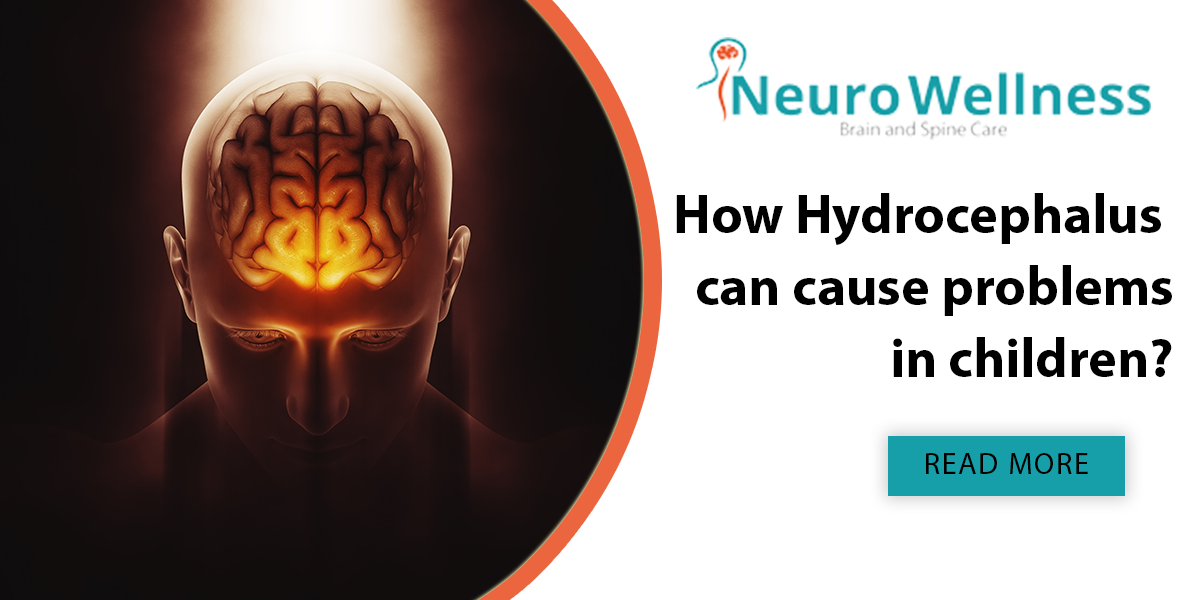
The buildup of fluid in the cavities (ventricles) deep within the brain is known as hydrocephalus. The extra fluid expands the ventricles, which exerts pressure on the brain.

The brain and spinal column are generally bathed in cerebrospinal fluid, which circulates through the ventricles. However, excessive cerebrospinal fluid pressure associated with hydrocephalus can harm brain structures and result in a variety of symptoms.

Hydrocephalus can occur anyone at any age with depends on the  cause, however it is more common in infants and individuals aged 60 and up (normal pressure hydrocephalus). Hydrocephalus can be treated surgically to restore and maintain normal cerebrospinal fluid levels in the brain. Managing symptoms of functional deficits caused by hydrocephalus often necessitates a variety of interventions.

Hydrocephalus in Children – Key Symptoms & Risks

✔️ Unusually large head size → Excess fluid buildup
✔️ Bulging soft spot on head → Pressure on brain
✔️ Vomiting & irritability → Raised intracranial pressure
✔️ Seizures → Severe fluid pressure impact
✔️ Developmental delays → Affecting growth & learning
✔️ Eye problems → Vision issues due to nerve pressure

Symptoms of hydrocephalus:

The signs and symptoms of hydrocephalus differ depending on the age at which it first appears:

• Infants

In babies, common indications and symptoms of hydrocephalus include:

Changes in head:

• A head that is exceptionally big.
• A rise in the size of the head in a short period of time.
•
Fontanel on the top of the head

Physical signs and symptoms:

• Vomiting
• Feeding problems
•
Seizures
•
Downward looking eyes (sunsetting of the eyes)
•
Muscle tone and strength deficiencies
•
Touch sensitivity is poor
•
Poor growth

Toddlers and older children:

Signs and symptoms in toddlers and older children may include:

Physical signs and symptoms:

• Headache
• Double eyesight or hazy vision
•
Downward looking yes (sunsetting of eyes)
•
A toddler’s head is abnormally enlarged
•
Lethargy or sleepiness
•
Vomiting or nausea
•
Unstable equilibrium
•
Coordination issues
•
Appetite problems
•
Seizures
•
Urinary incontinence

Changes in behaviour and cognition:

• Irritability
• Personality shifts
•
School performance is declining
•
Delays or difficulties with previously learned tasks like walking or talking

Young and middle aged adults:

The signs and symptoms for this age group is as follows:

• Headache
• Lethargy
•
Urinary incontinence or a frequent urge to urinate
•
Vision impairment
•
Memory, focus and other  thinking skills decline, which may have an impact on job performance

Older adults:

The following are the most prevalent indicators and symptoms of hydrocephalus in individuals aged 60 and above:

• Urinary incontinence or a frequent urge to urinate
• Loss of memory
•
Other thinking or reasoning skills gradually declining
•
Difficulty in walking, which is typically described as a shuffling stride or a stuck feeling in the feet
•
Coordination or balance issues

When to consult a doctor?

 For infants and toddlers who are experiencing the following signs and symptoms, seek emergency medical attention:

• The sound of a high pitched scream or cry
• Sucking or feeding difficulties
•
Recurrent, unexplained vomiting
•
A reluctance to move the head or lie down
•
Having trouble in breathing
•
Seizures

Causes of hydrocephalus:

An imbalance between the amount of cerebrospinal fluid produced and the amount absorbed into the bloodstream causes hydrocephalus.

Cerebrospinal fluid is produced by the tissues that line the brain’s ventricles. It travels through interconnected channels in the ventricles. The fluid eventually finds its way into the regions around the brain and spine. It is predominantly absorbed by the blood vessels.

Cerebrospinal fluid is vital for brain function because of the following reasons:

• It Allows the comparatively hefty brain to float within the skull by keeping it buoyant
• To protect the brain from harm, it is cushioned.
•
Getting rid of waste materials produced by the brain’s metabolism
•
Flowing back and forth between the brain cavity and the spinal column to maintain a constant pressure within the brain, correcting for fluctuations in blood pressure.

Complications:

 Long term hydrocephalus consequences can vary greatly and are frequently impossible to foresee. If hydrocephalus has advanced by the time a child is born, it can cause serious intellectual, developmental and physical impairments. Less severe instances may have few, if any, major sequelae if treated properly.

Adults who have had a considerable reduction in memory or other thinking skills have a slower recovery and more lasting problems after hydrocephalus therapy.

The severity of complications is determined by the following factors:

• There may be underlying medical or developmental issues
• Initial symptom severity
•
Diagnosis and treatment should be done as soon as possible

Summary: Neurowellness is a Bangalore Spine Specialist Clinic providing high quality brain and spine care at an inexpensive price. This center is one of the most cost effective and gives high quality treatment choices to the patients.

Pediatric Hydrocephalus Care in Bangalore

“Worried about your child’s head growth or developmental issues? Neurowellness Brain & Spine Clinic provides expert pediatric neurosurgery and long-term care.”

Ganesh

Dr. Ganesh Veerabhadraiah

Consultant – Neurosurgeon, Neurointerventional Surgery, Spine Surgeon (Neuro)
23+ Years Experience Overall (17+ years as Neuro Specialist)

Available for Consultation: Jayanagar 9th Block & Kauvery Hospital, Electronic City 

FAQs

1. What causes hydrocephalus in children?

It occurs when cerebrospinal fluid builds up in the brain due to blockage, overproduction, or poor absorption.

2. What are the common symptoms of pediatric hydrocephalus?

Rapid head growth, bulging fontanelle, vomiting, seizures, and developmental delays.

3. How is hydrocephalus treated in children?

Treatment usually involves surgery like shunt placement or endoscopic third ventriculostomy (ETV).

4. Can hydrocephalus in children be cured?

It can be managed successfully with timely surgery and lifelong follow-up care.

5. Where can I find pediatric neurosurgeons in Bangalore for hydrocephalus?

Neurowellness Brain & Spine Clinic offers advanced pediatric neurosurgery and hydrocephalus care.

Ganesh

About Author

Dr. Ganesh Veerabhadraiah

Dr. Ganesh Veerabhadraiah, consultant neurosurgeon and neurologist in Bangalore, has over 20 years of expertise in managing back pain, migraines, headaches, neuro disorders, and spine problems. His clinical excellence and patient-first approach make him a neuro doctor in Bangalore.

At Neurowellness Brain & Spine Clinic in Jayanagar and Kavery Hospital Electronic City, Dr. Ganesh provides comprehensive treatments ranging from minimally invasive spine surgery to advanced neurological care. As a respected back pain specialist and migraine doctor, he continues to deliver reliable outcomes for patients.

👉 Connect with Dr. Ganesh on LinkedIn

Spinal fixation stabilizes your spine using screws, rods, or plates. It’s done for injuries, disc issues, or degeneration.

Recovery varies, but most patients benefit from pain relief and structural support.

Concerned about spine pain or instability?

Book a spine consultation at Neurowellness, Bangalore.

Spinal Fixation Surgery in Bangalore 

Spinal fixation is a vital neuro-spine procedure used to stabilize a damaged spinal column. Whether caused by trauma, degenerative conditions, or other spinal disorders, this surgical intervention provides relief from pain and restores stability. Let’s explore the key aspects of spinal fixation, its applications, and its benefits.

If you’re suffering from spinal instability due to trauma, scoliosis, or disc degeneration, we offer advanced spinal fixation surgery in Bangalore performed by an experienced neurosurgeon, Dr. Ganesh Veerabhadraiah. Our minimally invasive techniques reduce recovery time and ensure long-term stability and pain relief for patients in Electronic City and across South Bangalore.

Get Expert Spinal Fixation Surgery in Bangalore

“Looking for safe and advanced spine care? Dr. Ganesh Veerabhadraiah and team specialize in spinal fixation with modern techniques.”

Ganesh

Dr. Ganesh Veerabhadraiah

Consultant – Neurosurgeon, Neurointerventional Surgery, Spine Surgeon (Neuro)
23+ Years Experience Overall (17+ years as Neuro Specialist)

Available for Consultation: Jayanagar 9th Block & Kauvery Hospital, Electronic City 

What is lumbar fixation?

It is a neuro spine procedure to stabilize the spinal column which is damaged. Fixation can be done using rods, plates, and cages.
Lumbar fixation is a surgical procedure that involves stabilizing the spinal column using specialized hardware. The technique ensures proper alignment of the spine, especially when it has been compromised due to injury or disease. Surgeons use rods, plates, or cages to achieve fixation, allowing the spine to heal and regain its stability.

When spinal fixation is advised?

It is advised in cases where a patient has severe pain may be in the neck, back causing neurological problems and damaging to the neural elements in the spinal column where it is compromising the stability of the spine.

Spinal fixation is typically recommended for patients experiencing:

• Severe neck or back pain
• Neurological issues due to nerve compression
•
Structural instability of the spine

It is crucial when the spinal column is damaged to the extent that it compromises neural elements or spinal stability.

What are the conditions in which spinal fixation is advised?

Some common medical conditions where spinal fixation is advised include:

• Cervical Disc Prolapse: Bulging discs causing nerve compression.

• Post-Cervical Laminectomy: To maintain spinal stability after removing pressure on the spinal cord.

• Lumbar Listhesis: Slipped vertebrae leading to spinal misalignment.

• Lumbar Spondylosis: Degeneration of spinal discs and joints.

• Pott’s Spine: Tuberculosis infection affecting the spine.

What are the materials/hardware used?

Over the years, the materials used in spinal fixation have evolved to ensure durability, biocompatibility, and patient comfort. Early procedures used steel implants, but modern spinal fixation relies on advanced materials like:

• Titanium Rods and Plates: Lightweight and corrosion-resistant.

• PEEK Cages: Flexible polymer cages used to support spinal alignment.

• Titanium Mesh: Durable structures that provide added support.

These materials ensure the procedure is more effective and reduces the risk of complications.

What are the common different procedures performed?

• TLIF (Transforaminal Lumbar Interbody Fusion): Minimally invasive fusion technique.

• PLIF (Posterior Lumbar Interbody Fusion): Fusion performed through the back.

• ACDF (Anterior Cervical Discectomy and Fusion): Common for cervical disc issues.

• Lateral Mass Fixation: Stabilizes the cervical spine.

• Disc Replacement: Involves replacing damaged discs with artificial ones.

What are the complications in spinal fixation?

• Nerve root injury
• Spinal cord injury
•
Implants failure
•
But in recent years all these complications are very slim due to advances in medical science!

Spinal Fixation at NeuroWellness

NeuroWellness Brain and Spine Clinic in Bangalore offers expert consultation and treatment for spine-related problems. With experienced spine surgeons and modern techniques, patients receive the best care tailored to their needs.

Consult Spine Surgeons in Bangalore

If you’re experiencing chronic back or neck pain, consult the specialists at NeuroWellness. They provide cost-effective solutions, from diagnosis to advanced treatments like spinal fixation.

At NeuroWellness you will get the best and cost-effective treatment for spine related problems by the Spine surgeon in Bangalore.

Please visit

Neurowellness
Brain and Spine Clinic
#1224, Ground-Floor, 26th Main, Jayanagar 9th Block
BANGALORE – 560069

Phone No
72596 69911
73490 17701

Website www.neurowellness.in

Facebook www.facebook.com/neurowellness.in/

FAQs

1. What is spinal fixation surgery?

Spinal fixation surgery involves using screws, rods, or plates to stabilize parts of the spine that are weakened due to injury, degeneration, or deformity.

2. How long is the recovery from spinal fixation?

Initial recovery takes 4–6 weeks, with full recovery and return to normal activities taking 3–6 months depending on the procedure and physiotherapy.

3. Is spinal fixation permanent?

In most cases, yes. The hardware remains in the body permanently unless complications arise. Bone fusion around the hardware is the goal.

4. Who needs spinal fixation?

People with spinal fractures, severe disc degeneration, spinal instability (like spondylolisthesis), or post-laminectomy instability may require fixation.

1. What is Balloon Kyphoplasty?

It is a spinal procedure to restore the height of the fractured vertebral bone. It relieves the back pain by stabilizing the spine after the procedure.

2. When it is done?

It is done in vertebral fracture due to osteoporosis and bone has lost its height. There will be severe back pain, most commonly after the trivial fall.

3. When you need it?

It can happen in people after the age of 50 years after a trivial fall. Vertebral fracture causing severe pain, unable to walk. Evaluation is done with MRI, CT and bone scan.

4. How kyphoplasty is done?

It is a minimally invasive spine procedure and a modified vertebroplasty technique. Here Spine Surgeons in Bangalore inflate the balloon in the fractured vertebra to restore the height of the vertebra to stabilize the fracture. Then bone cement is filled into space. Anaesthesia preferred is general but it can be done under local anaesthesia in some cases. The duration can be 1 hour to 2 hours.

Ganesh

Dr. Ganesh Veerabhadraiah

Consultant – Neurosurgeon, Neurointerventional Surgery, Spine Surgeon (Neuro)
23+ Years Experience Overall (17+ years as Neuro Specialist)

Available for Consultation: Jayanagar 9th Block & Kauvery Hospital, Electronic City 

5. What are the complications of the procedure?

There is no procedure without complications

Neurowellness in Bengaluru provides consultation and treatment to all spine-related problems by the Spine surgeon in Bangalore.

Balloon Kyphoplasty Surgery in Bangalore

“Living with spine fractures or severe back pain? Neurowellness Brain & Spine Clinic offers advanced balloon kyphoplasty for safe recovery.”

FAQs

1. What is balloon kyphoplasty surgery?

Balloon kyphoplasty is a minimally invasive procedure to treat spinal fractures by restoring height and stabilizing the bone.

2. Who needs balloon kyphoplasty?

It is recommended for patients with spinal fractures due to osteoporosis, injury, or tumors.

3. What are the risks of balloon kyphoplasty?

Yes, it is generally safe with quick recovery and minimal complications when performed by experienced surgeons.

4. How long does recovery take after balloon kyphoplasty?

Most patients resume light activities within a few days and feel significant pain relief within weeks.

5. Where can I get balloon kyphoplasty in Bangalore?

Neurowellness Brain & Spine Clinic offers advanced balloon kyphoplasty surgery in Bangalore.

Ganesh

About Author

Dr. Ganesh Veerabhadraiah

Dr. Ganesh Veerabhadraiah, consultant neurosurgeon and neurologist in Bangalore, has over 20 years of expertise in managing back pain, migraines, headaches, neuro disorders, and spine problems. His clinical excellence and patient-first approach make him a neuro doctor in Bangalore.

At Neurowellness Brain & Spine Clinic in Jayanagar and Kavery Hospital Electronic City, Dr. Ganesh provides comprehensive treatments ranging from minimally invasive spine surgery to advanced neurological care. As a respected back pain specialist and migraine doctor, he continues to deliver reliable outcomes for patients.

👉 Connect with Dr. Ganesh on LinkedIn