Like any other problem your neck symptoms are classified as mild, moderate, severe. A complete neurological evaluation is done. We always correlate neurologically the symptoms…


Written and medically reviewed by Dr Ganesh Veerabhadraiah, Senior Neurosurgeon & Spine Specialist, NeuroWellness Brain & Spine Clinic, Bengaluru. Last reviewed: September 2026.
A cervical collar, also called a neck collar, neck brace or cervical orthosis, is a medical support device used to limit movement of the neck in selected cervical spine conditions, injuries and after some procedures.
Cervical collars range from soft foam collars that provide light support to rigid collars designed to restrict neck movement more substantially. The correct type, fit and duration depend on the reason it was prescribed, your symptoms, imaging findings and your treating specialist’s advice.
A cervical collar is not a routine treatment for everyday neck stiffness or posture-related neck pain. For many common types of neck pain, keeping the neck gently mobile is preferable unless a doctor has specifically advised immobilisation.
If you have persistent neck pain, arm pain, numbness or weakness, you can consult the NeuroWellness team for a spine and neurosurgery evaluation. NeuroWellness provides brain and spine care through its Bengaluru clinics.
What is a cervical collar used for?
A doctor may recommend one for selected neck injuries, some cervical spine conditions, after certain surgeries, or when temporary restriction of neck movement is required.
How long should you wear a cervical collar?
There is no single duration that is appropriate for everyone. It depends on the diagnosis, type of collar, healing progress and instructions from your treating doctor.
Can you sleep with a cervical collar?
Some people prescribed a rigid collar are advised to keep it on while sleeping, whereas other patients may be allowed to remove their collar. Follow the instructions given for your specific condition. NHS hospital guidance similarly advises patients prescribed rigid collars not to remove them during sleep unless their clinical team says otherwise.
Can wearing a cervical collar too long cause problems?
Prolonged rigid-collar use can contribute to pressure injuries, skin problems, swallowing difficulty and other complications, which is why medical supervision is important.
A cervical collar is an orthotic device worn around the neck to provide support and restrict some movement of the cervical spine.
The cervical spine consists of seven vertebrae in the neck and surrounds the spinal cord while allowing movement of the head and neck. A collar may be used when a clinician wants to reduce movement temporarily while an injury or surgical area is assessed or heals.
Different collars provide different levels of support. A soft collar may mainly provide comfort and a reminder to limit movement, whereas a rigid collar is designed to restrict movement more substantially.
Because the underlying reason for neck pain varies considerably, patients should avoid buying and using a collar for prolonged periods without knowing the cause of their symptoms.
If your pain travels from the neck into the arm or is associated with numbness or weakness, read our guide to cervical disc prolapse/PIVD.
The purpose of a cervical collar is to provide temporary neck support or movement restriction when clinically appropriate.
A doctor may recommend a cervical collar in situations such as:
A cervical collar should not automatically be used for every episode of neck pain. The NHS specifically advises against routine neck-collar use for ordinary neck pain unless a doctor tells the patient otherwise.
For posture-related neck pain, muscle stiffness and many uncomplicated neck-pain conditions, treatment may instead involve movement, ergonomics, rehabilitation and appropriate exercises.
NeuroWellness offers physiotherapy and rehabilitation services in Bangalore, including care for neck and spine-related problems. NeuroWellness
You can also read the NeuroWellness guide to neck-pain exercises and when to stop.
Different cervical collars provide different levels of support. The right type should be selected according to the condition being treated rather than simply choosing the firmest collar available.
| Cervical collar type | Support level | Common clinical context |
|---|---|---|
| Soft cervical collar | Light | Temporary support in selected non-surgical conditions |
| Hard / rigid collar | Higher | Selected injuries or post-operative care when prescribed |
| Philadelphia collar | Rigid | Immobilisation in selected trauma or post-operative situations |
| Miami J collar | Rigid | Cervical immobilisation when specifically prescribed |
| Halo device | Very high | Specialist management of selected cervical instability/injuries |
A soft cervical collar is usually made from foam covered with fabric. It provides relatively light support and does not immobilise the cervical spine as completely as a rigid device.
It may be considered for short-term use in selected patients, depending on the diagnosis and clinician’s advice.
Because prolonged immobilisation can contribute to stiffness and reduced muscle conditioning, a soft collar should not become an indefinite solution for chronic neck pain.
A rigid collar uses firmer materials to restrict neck movement more substantially.
It may be prescribed after certain cervical spine injuries or procedures. Patients using a rigid collar should follow their surgical or medical team’s instructions closely regarding:
A Philadelphia collar is a type of rigid cervical orthosis with front and back sections.
It is used when greater restriction of neck movement is required. It should be fitted and managed according to the treating team’s instructions.
The Miami J is another rigid cervical collar designed to provide cervical support and motion restriction.
Correct sizing and fitting are important because a poorly fitted rigid collar can create pressure points and skin irritation.
A halo device provides much greater immobilisation than a routine soft or hard neck collar and is used only in selected specialist situations.
It is managed by an appropriate spine, neurosurgical or trauma team rather than self-fitted by patients.
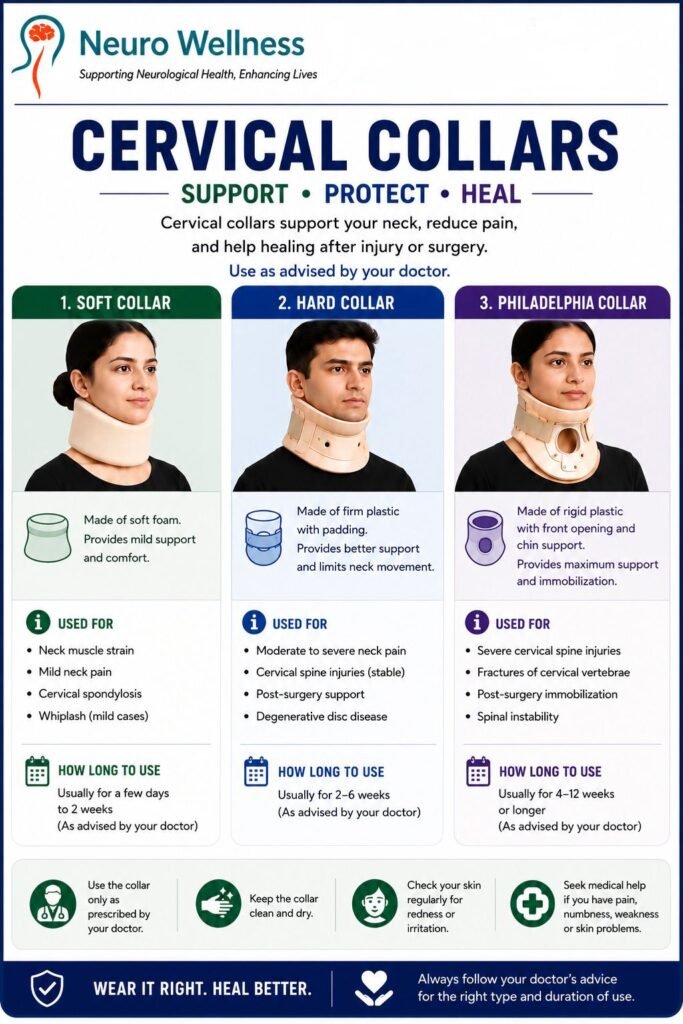
The main difference is the degree of motion restriction.
A soft collar:
A rigid collar:
There is no universally “best” cervical collar.
The best option is the collar that is appropriate for the underlying diagnosis and has been correctly fitted and prescribed.
If you have been advised surgery or are unsure whether surgery is actually required, NeuroWellness also provides a brain and spine surgery second-opinion service, where existing MRI/CT reports and treatment recommendations can be reviewed.
One of the most common questions patients ask is whether a neck collar is good for cervical spondylosis.
Cervical spondylosis refers to degenerative changes affecting the discs, joints and other structures in the neck. Symptoms can include neck pain and stiffness and, in some people, arm pain, tingling or weakness if nerves are affected.
A collar may sometimes be used for temporary symptom support, but it is not a long-term treatment for the degenerative process itself.
It may be appropriate for some patients for limited periods, but it should not be self-prescribed as a permanent treatment.
For uncomplicated neck pain, maintaining movement is generally encouraged rather than routinely immobilising the neck. nhs.uk
When a collar is considered appropriate for a non-surgical condition, a clinician may choose a softer form of support rather than a rigid post-operative collar.
However, the choice depends on:
Continuous long-term use should not be started without medical advice.
If you depend on a collar because neck pain returns whenever you remove it, the underlying problem should be reassessed rather than simply increasing collar use.
For rehabilitation and strengthening options, see NeuroWellness physiotherapy services.
There is no universal safe duration that applies to every cervical collar user.
How long you need a collar depends on:
| Situation | General approach |
|---|---|
| Uncomplicated everyday neck stiffness | A collar is usually not routinely recommended |
| Selected non-surgical neck conditions | Short-term or intermittent use may be advised |
| Cervical injury | Duration depends on injury type and stability |
| After cervical spine surgery | Follow the surgeon’s individual post-operative protocol |
| Cervical fracture | Follow specialist advice and imaging-based review |
Post-operative collar practice can vary according to the procedure and surgeon. A 2024 systematic review found that collar use after cervical spine surgery remains an area where benefits vary by procedure, so a fixed duration should not be presented as appropriate for every patient.
Use it for the duration specifically advised for your diagnosis.
If pain continues after the prescribed period or you feel unable to function without the collar, arrange reassessment rather than continuing it indefinitely.
Post-operative instructions depend on the procedure and the surgeon.
For more detailed information, read:
How Long Should You Wear a Cervical Collar After Surgery?
This keeps post-operative advice separate from general cervical-collar guidance and avoids using one duration for every operation.
Correct fit matters.
A poorly fitted collar may provide inadequate support or create unnecessary pressure on the skin.
General fitting principles include:
Guy’s and St Thomas’ NHS guidance similarly advises patients to ensure the collar is snug without interfering with breathing and to inspect the skin regularly. Guy’s and St Thomas’ NHS Trust
Keep the skin and collar lining clean and dry.
Watch contact areas including:
Contact your clinical team if you notice persistent redness, blisters, broken skin or increasing discomfort.
This depends on why the collar was prescribed.
Patients using rigid collars for an injury or after certain procedures may be instructed to keep the collar on while sleeping.
Hospital guidance for prescribed rigid collars commonly advises keeping the neck in a neutral position while sleeping and not removing the collar at night unless specifically instructed. Leeds Teaching Hospitals NHS Trust
If your clinical team has instructed you to keep it on:
Some patients using a soft collar for a non-surgical condition may be allowed to remove it at night.
Do not assume this applies to you if the collar was prescribed for an injury or after surgery.
If there is any uncertainty, ask the clinician who prescribed the collar.
Cervical collars can be useful when appropriately prescribed, but prolonged or poorly managed immobilisation can also cause complications.
A systematic review of prolonged hard-collar use reported complications including pressure ulcers and dysphagia, with pressure injury being one of the most frequently reported problems. PubMed
Possible cervical collar side effects include:
Heat, moisture and friction beneath the collar can irritate the skin.
Regular skin checks are particularly important with rigid collars.
A rigid collar can concentrate pressure around areas such as the chin, jaw and back of the head.
Persistent redness or broken skin should be assessed.
Some people experience difficulty or discomfort swallowing when wearing a rigid collar. Dysphagia has been reported among complications associated with prolonged hard-collar immobilisation.
Keeping the neck immobilised for prolonged periods can contribute to stiffness and reduced muscle conditioning.
NHS hospital patient guidance also notes that long-term collar use can contribute to neck-muscle stiffness and weakness.
Because a rigid collar limits neck rotation, activities requiring free head movement can become unsafe.
Patients should not drive while wearing a cervical collar that restricts movement.
A neck collar generally should not be treated as a default solution for:
For uncomplicated neck pain, the NHS advises maintaining neck movement rather than routinely wearing a collar unless a clinician advises otherwise.
If your neck pain is related to prolonged screen use or workstation posture, read:
Text Neck Pain Treatment and Prevention
For guided rehabilitation, visit:
Arrange medical assessment if neck symptoms are persistent, worsening or associated with neurological symptoms.
Seek prompt medical attention if you develop:
If your symptoms suggest a disc or nerve problem, you may also find the Cervical PIVD guide useful.

Consultant – Neurosurgeon, Neurointerventional Surgery, Spine Surgeon (Neuro)
23+ Years Experience Overall (17+ years as Neuro Specialist)
Available for Consultation: Jayanagar 9th Block & Kauvery Hospital, Electronic City
A cervical collar is used to provide temporary neck support or restrict movement in selected cervical injuries, after some procedures and in certain cervical-spine conditions. It should be used according to a clinician’s recommendation rather than routinely for ordinary neck pain.
Common types include soft foam collars, rigid cervical collars, Philadelphia collars, Miami J collars and specialist immobilisation devices such as halo systems. They provide different levels of support and are not interchangeable.
There is no standard duration suitable for everyone. Wear it for the period recommended for your specific condition and arrange reassessment if symptoms persist.
Sometimes. Patients prescribed a rigid collar may need to wear it overnight, while some people using a soft collar may be allowed to remove it. Follow the instructions given by your treating clinician.
It may provide temporary support in selected patients, but it is not a long-term treatment for cervical spondylosis. Rehabilitation, appropriate exercise and treatment of the underlying problem are usually more important.
Potential problems include skin irritation, pressure injuries, swallowing discomfort, stiffness and muscle deconditioning, particularly with prolonged rigid immobilisation.
Neither is universally better. A soft collar offers lighter support, while a rigid collar restricts movement more substantially. The appropriate choice depends on the diagnosis.
Driving should be avoided when the collar restricts your ability to turn your head safely. NHS guidance specifically advises against driving while wearing a cervical collar that restricts neck movement.
Do not begin neck exercises while immobilisation has been prescribed unless your treating clinician or physiotherapist has cleared you to do so.
After clearance, rehabilitation may be used to restore mobility and strength. See the NeuroWellness neck pain exercise guide.
Consider specialist assessment if pain persists despite conservative treatment or is accompanied by radiating arm pain, numbness, weakness, balance problems or other neurological symptoms.
A stroke can happen to anyone — at any age — and often without warning. But in most cases, it can be prevented.
At Neurowellness Bangalore, our neurosurgeons emphasize that knowing your risk factors early can make the difference between recovery and lifelong disability.
A stroke can However, if you have specific risk factors, your chances of having a stroke increase. Some risk factors of stroke can be altered or managed, while others cannot. Today, an increasing number of people are putting their most valuable asset their brains under protection. Are you one of them?
A stroke occurs when blood flow to a part of the brain is blocked or reduced, depriving brain tissue of oxygen. Within minutes, brain cells begin to die.
There are two main types:
| Type | Description | Treatment Approach |
|---|---|---|
| Ischemic Stroke | Caused by blockage in an artery (≈ 85 % of cases) | Clot-dissolving drugs, stenting |
| Hemorrhagic Stroke | Caused by bleeding within the brain | Surgery, blood-pressure control |
1. A previous stroke or pre-existing cardiovascular disease such as a heart attack.
2. Age: 60 years old or older.
3. Family history: Members in the family that have suffered a stroke
4. Gender: Males are at a higher risk than females.
5. Race: Black, Asian, and Hispanic
6. Sickle cell disease, polycythemia, protein C/S deficiency, hyperhomocysteinemia, etc., are blood diseases that cause excessive clotting.
7. Mitral stenosis (a type of valvular disease)
8. Genetics or heredity: People with a family history of stroke have a higher risk of having a stroke.
Risk factors of stroke that can be altered, treated, or controlled medically include
1.High blood pressure: persistent Blood pressure of 140/90 or above can cause damage to the brain’s blood vessels (arteries).
2. Heart disease: There is a strong association between heart disease and stroke. Several types of cardiac disease are known to increase the risk of stroke. Stroke, like coronary heart disease, is a risk factor. Atherosclerosis (hardening of the arteries) increases the risk of stroke in people with coronary heart disease, angina, or who have had a heart attack.
3. Diabetes: Control your blood sugar if you have Type 1 or Type 2 diabetes. Diabetes mellitus is a risk factor for stroke on its own. Many diabetics also have high blood pressure, high cholesterol, and are overweight, all of which increase their risk. Even though diabetes is curable, it still raises your risk of stroke.
4. Smoking: Cigarette smoke contains nicotine and carbon monoxide, which harms the cardiovascular system and increases the risk of stroke. When birth control tablets are taken with cigarette smoking, the risk of stroke is considerably increased.
5. History of TIAs: Mini-strokes is a term used to describe TIAs. The symptoms are similar to those of a stroke, although they don’t stay as long. You’re almost ten times more likely to suffer a stroke if you’ve had one or more TIAs than someone your age and sex who hasn’t.
6. High red blood cell count: The blood thickens and clots are more likely when the quantity of red blood cells increases significantly. This increases the chances of having a stroke.
7. High blood cholesterol and lipids: High cholesterol levels can contribute to artery thickening or hardening (atherosclerosis), which is caused by plaque buildup. Plaque is a buildup of fatty substances, cholesterol, and calcium in the arteries. The amount of blood flow to the brain can be reduced by plaque accumulation on the inside of the arterial walls. When the brain’s blood supply is cut off, a stroke develops.
8. Lack of physical activity
9. Obesity
10. Excessive alcohol consumption: Blood pressure rises if you drink more than two drinks every day. Stroke can occur as a result of binge drinking.
11. illegal drugs: Abuse of intravenous (IV) drugs increases the risk of a stroke due to blood clots (cerebral embolisms). Cocaine and other narcotics have been linked to heart attacks, strokes, and a variety of other cardiovascular issues.
12. Abnormal heart rhythm: Some types of heart disease can increase your chances of having a stroke. The most potent and modifiable heart risk factor for stroke is having an abnormal heartbeat (atrial fibrillation).
13. Cardiac structural abnormalities: Long-term (chronic) heart damage can be caused by damaged heart valves (valvular heart disease). This can increase your risk of stroke over time.
Where you reside: Strokes are more common in the southeast than in other parts of the country. This could be due to variances in lifestyle, race, smoking habits, and diet between regions.
Temperature, season, and climate: Stroke deaths are more common during periods of excessive heat.
Social and economic factors: Strokes are more likely in low-income people, according to some studies.
Neurowellness provides high-quality Advanced Stroke treatment in Bangalore at an affordable cost in comparison with the other medical treatment options worldwide.
Consultant – Neurosurgeon, Neurointerventional Surgery, Spine Surgeon (Neuro)
23+ Years Experience Overall (17+ years as Neuro Specialist)
Available for Consultation: Jayanagar 9th Block & Kauvery Hospital, Electronic City
Neurowellness Bangalore offers 24×7 neuro-emergency and stroke rehabilitation services with advanced imaging and AI-assisted monitoring.
Chronic stress raises blood pressure and inflammation, both of which heighten stroke risk.
While older adults are more vulnerable, strokes are rising among people aged 35–50 due to poor lifestyle habits.
Yes. Machine-learning models analyze health data to identify early patterns of vascular instability.
Control BP, quit smoking, exercise daily, and schedule yearly health check-ups.
Cervical disc prolapse (also called cervical PIVD or slipped disc in the neck) occurs when an intervertebral disc in the cervical spine bulges or ruptures and compresses a nearby nerve root or the spinal cord. It affects approximately 5.5 per 1,000 adults annually (Spine Journal, 2015), with peak incidence between ages 40–60. The most common levels are C5–C6 and C6–C7. Symptoms include neck pain, arm pain radiating below the elbow, numbness or tingling in specific fingers, and grip weakness.
Around 80–90% of cases resolve without surgery within 6–12 weeks of physiotherapy, anti-inflammatory medication, and activity modification. Surgery (typically ACDF or microdiscectomy) is required when neurological deficits progress, when spinal cord compression is present (cervical myelopathy), or when conservative treatment fails after 6–8 weeks.
Cervical disc prolapse — medically termed Prolapsed Intervertebral Disc (PIVD) or cervical disc herniation — occurs when the soft inner core of a spinal disc (the nucleus pulposus) pushes through the tougher outer layer (annulus fibrosus) and compresses structures in the cervical spine.
The cervical spine has seven vertebrae (C1–C7) separated by six intervertebral discs. These discs act as shock absorbers and allow neck movement. When a disc prolapses, it can press on:
• A nerve root — causing pain, numbness, or weakness that radiates into the arm (cervical radiculopathy)
• The spinal cord — causing more widespread neurological symptoms involving both arms and legs (cervical myelopathy — a more serious condition)
It is commonly called a “slipped disc in the neck,” though the disc does not actually slip — it protrudes or herniates outward.
How common is it?
Cervical disc prolapse affects approximately 5.5 per 1,000 adults per year, with a lifetime prevalence of around 107 per 100,000 population (Spine Journal, 2015). It is significantly more common in Bangalore’s IT and software workforce, where prolonged forward-head posture during screen work accelerates cervical disc degeneration.
For comparison with lower spine conditions, read about: lumbar disc prolapse
Symptoms vary based on which disc level is affected and whether the disc is compressing a nerve root or the spinal cord.
• Neck pain on one side, often sharp or burning
• Pain radiating from the neck into the shoulder, upper arm, forearm, or specific fingers
• Numbness or tingling in the arm or hand — in a pattern that corresponds to the affected nerve level
• Weakness in specific arm or hand muscles
For symptom relief strategies, explore: Exercises to relieve neck pain
• Pain that worsens when tilting the head backward or toward the affected side
• Pain that improves when raising the arm above the head (Shoulder Abduction Relief Sign — a classic cervical radiculopathy indicator)
• Headaches originating from the back of the neck (occipital)
• Clumsiness or weakness in both hands — difficulty buttoning clothes, writing, or using keys
• Unsteady gait or balance problems — particularly walking in the dark
• Electric shock sensation down the spine when bending the neck forward (Lhermitte’s sign)
• Weakness in both legs
• Urinary urgency or difficulty initiating urination
• Dropping objects frequently
Cervical myelopathy is a more urgent condition than radiculopathy. It indicates the spinal cord itself is compressed and requires prompt neurosurgical evaluation — not watchful waiting.
This is one of the most-searched questions for this topic on AI platforms. The specific pattern of symptoms tells your doctor — and you — which disc level is likely involved before even doing an MRI.
| Disc level | Nerve affected | Pain location | Numbness/tingling | Muscle weakness |
|---|---|---|---|---|
| C4–C5 | C5 root | Neck to shoulder/upper arm | Outer shoulder | Deltoid (shoulder abduction) |
| C5–C6 | C6 root (most common) | Neck → thumb and index finger | Thumb, index finger | Biceps, wrist extension |
| C6–C7 | C7 root (most common) | Neck → middle finger | Middle finger | Triceps, wrist flexion |
| C7–T1 | C8 root | Neck → ring and little finger | Ring and little fingers | Hand grip, finger extension |
Most cervical disc prolapses occur at C5–C6 or C6–C7, accounting for approximately 70% of all cervical disc herniation cases (Journal of Bone and Joint Surgery, 2018).
If you have numbness in your thumb and index finger with biceps weakness — that is a C6 root pattern. If your middle finger is affected with triceps weakness — that is a C7 root pattern. These patterns guide both diagnosis and surgical planning.a
After age 30, cervical discs progressively lose water content and elasticity. The outer annulus fibrosus develops micro-tears. Over time, even normal neck movements can cause the degenerated disc to herniate. By age 60, radiological evidence of cervical disc degeneration is present in over 90% of men and 80% of women — though most are asymptomatic (Spine, 2010).
Forward head posture — the position most people adopt when looking at a screen, using a mobile phone, or working at a poorly positioned workstation — increases cervical disc pressure significantly. For every centimetre the head moves forward from its neutral position over the spine, the effective weight on the cervical disc increases by approximately 4.5 kg (Hansraj, Surgical Technology International, 2014). An adult head weighing 5 kg effectively imposes 27 kg of force on the cervical spine when the head is 5 cm forward. This is the primary mechanism of cervical disc degeneration in IT professionals.
This is also commonly seen in conditions discussed under low back pain types
Whiplash injuries (sudden flexion-extension), falls, contact sports, or road traffic accidents can cause acute disc herniation even in young adults with previously healthy discs.
• Smoking — reduces disc nutrition through microvascular changes
• Obesity — increases mechanical load on cervical discs
• Genetic predisposition — disc degeneration has a hereditary component
• Repetitive heavy overhead lifting
• Vibration exposure (drivers, heavy machinery operators)
This distinction confuses many patients and is frequently searched on AI platforms.
| Feature | Cervical disc prolapse (PIVD) | Cervical spondylosis |
|---|---|---|
| What it is | Disc material herniating and compressing nerves | Degenerative wear of discs, joints, and bone spurs over time |
| Age of onset | Can affect younger adults (30–50) | Usually 50+ |
| Pain character | Acute, sharp, radiating into arm | Dull, aching, intermittent, often bilateral |
| Arm symptoms | Common — specific nerve root pattern | Less specific, intermittent |
| MRI appearance | Soft disc herniation compressing root | Bone spurs, disc space narrowing, facet joint changes |
| Progression | Can resolve with treatment | Slowly progressive, degenerative |
| Treatment | More likely to respond to injections + physio | Longer management, may need surgery for myelopathy |
In practice, many patients have both — a degenerated cervical spine (spondylosis) with superimposed acute disc herniation. The MRI and clinical examination differentiate the two.
The neurological examination assesses: neck movement range, reflexes (biceps C5/C6, triceps C7), muscle strength in specific groups, sensation in dermatomal patterns, and special tests including:
• Spurling’s test — the neck is extended and rotated toward the affected side while the examiner applies gentle axial pressure. Reproduction of arm pain is a positive test for cervical radiculopathy (sensitivity 30–60%, specificity 85–97%).
• Shoulder Abduction Relief test — the patient raises the arm above the head. Reduction of arm pain indicates nerve root compression rather than peripheral nerve or shoulder pathology.
• Lhermitte’s sign — electric shock sensation on neck flexion indicates cervical cord involvement.
MRI with and without contrast visualises disc morphology, nerve root compression, spinal cord signal changes, and soft tissue detail. It is the single most important diagnostic investigation for cervical disc prolapse and should be obtained in any patient with arm symptoms, neurological deficit, or symptoms not resolving after 4–6 weeks.
Useful for assessing overall alignment, disc space height, and gross degenerative changes. Does not show soft disc herniations directly. Used alongside MRI rather than as a substitute.
Provides better bone detail than MRI — useful for surgical planning, particularly for identifying bone spurs contributing to nerve compression.
Quantifies nerve root dysfunction and helps localise the affected level when clinical and MRI findings are discordant. Particularly useful when symptoms are bilateral or widespread.a
Rest and activity modification (acute phase — first 1–2 weeks) Avoiding movements and activities that aggravate symptoms. This means limiting prolonged screen work, heavy lifting, and overhead activities. Complete bed rest is not recommended — maintaining gentle activity speeds recovery.
Medications
• Non-steroidal anti-inflammatory drugs (NSAIDs): ibuprofen, naproxen, or diclofenac reduce disc-related inflammation and nerve root irritation
• Neuropathic pain agents: gabapentin or pregabalin for burning, electric-type nerve pain
• Muscle relaxants: for associated cervical muscle spasm
• Short-course oral corticosteroids: occasionally used for severe acute radiculopathy to rapidly reduce nerve root oedema
Physiotherapy (most important long-term treatment)
• Cervical traction — decompresses disc and nerve root; effective in radiculopathy
• Manual therapy — mobilisation of facet joints to improve movement
• Deep cervical flexor strengthening — the most important long-term preventive exercise for cervical disc disease
• Postural correction and ergonomic retraining — essential for IT professionals
Cervical epidural steroid injection Targeted injection of corticosteroid around the affected nerve root reduces inflammation and provides significant pain relief in 60–70% of patients. Effects typically last 3–6 months and can be repeated. Allows physiotherapy to proceed more effectively during the recovery period.
Cervical collar Short-term use (1–2 weeks maximum) during the acute phase reduces neck movement and relieves nerve root tension. Not for prolonged use — see the cervical collar guide for full details.
Surgery is considered when:
• Progressive neurological deficit — worsening weakness, increasing numbness despite 6–8 weeks of treatment
• Cervical myelopathy — spinal cord compression symptoms (this is a more urgent indication)
• Severe, disabling pain not controlled with conservative treatment and injections
• Neurological deficit that is already established and not recovering
Anterior Cervical Discectomy and Fusion (ACDF) The most common surgery for cervical disc prolapse. The disc is removed through a small incision at the front of the neck, nerve root decompression is achieved, and the disc space is stabilised with a bone graft or cage. 90–95% of carefully selected patients achieve significant improvement. Recovery: return to desk work in 2–4 weeks; full recovery 6–12 weeks.
Cervical disc replacement (arthroplasty) At appropriate levels, the disc can be replaced with an artificial disc that preserves movement, rather than fusion which restricts it. Best suited for single-level disease in younger patients without significant facet joint degeneration.
Posterior cervical foraminotomy A minimally invasive approach from the back of the neck to widen the nerve exit hole (foramen). Preserves neck movement. Suitable for specific disc and bone spur configurations.
Book a Consultation for Cervical Disc Prolapse in Bangalore →
This is one of the most-searched questions by newly diagnosed patients — and was completely absent from the original blog.
Avoid these activities during an acute disc prolapse flare:
• Heavy overhead lifting — increases axial load on cervical discs
• Contact sports — risk of sudden cervical spine impact
• Neck extension exercises (looking up forcefully) — narrows the foramen and compresses the nerve root
• Sit-ups and crunches — creates neck flexion strain
• Cycling in an aggressive forward-lean position — sustains cervical flexion
• Carrying heavy bags on one shoulder — creates lateral cervical stress
Safe to continue (with guidance):
• Walking
• Swimming (backstroke preferred over freestyle)
• Gentle stretching under physiotherapy supervision
• Deep cervical flexor strengthening (chin tucks) as prescribed
| Phase | Timeframe | What typically happens |
|---|---|---|
| Acute phase | Week 1–2 | Pain at its worst, rest + medication, avoid aggravating activities |
| Sub-acute phase | Week 3–6 | Pain reduces, physiotherapy begins, nerve symptoms start to improve |
| Active recovery | Week 6–12 | Return to modified work, strengthening programme, most patients significantly better |
| Full recovery | 3–6 months | Complete resolution in most non-surgical cases; gradual return to all activities |
| Surgical recovery (ACDF) | 2–12 weeks | Return to desk work 2–4 weeks; full activity clearance at 8–12 weeks |
Approximately 80–90% of cervical disc prolapse patients without spinal cord involvement recover without surgery within this timeframe (New England Journal of Medicine, 2007 — SPORT trial equivalents for cervical disease).
WHAT: Prolapse of an intervertebral disc in the cervical spine (C3–C7) compressing a nerve root (radiculopathy) or the spinal cord (myelopathy).
MOST COMMON LEVELS: C5–C6 (C6 nerve root — thumb/index finger numbness) and C6–C7 (C7 nerve root — middle finger numbness).
KEY SYMPTOMS: Neck pain + arm pain radiating below the elbow + specific finger numbness/tingling + arm or grip weakness.
URGENT RED FLAGS (see neurosurgeon immediately): Both hand weakness or clumsiness, unsteady walking, Lhermitte’s sign (electric shock on neck bending), bladder urgency.
DIAGNOSIS: Clinical examination + MRI cervical spine (gold standard).
TREATMENT: 80–90% resolve without surgery. Physiotherapy + NSAIDs + epidural injections first line. Surgery for progressive deficit or myelopathy.
SURGERY: ACDF (anterior cervical discectomy and fusion) — 90–95% success rate in well-selected patients.
SPECIALIST IN BANGALORE: Dr. Ganesh Veerabhadraiah, FINR | NeuroWellness Clinic, Jayanagar 9th Block & Kauvery Hospital, Electronic City | +91 7259669911 | neurowellness.in
Cervical disc prolapse is a highly treatable condition when diagnosed early and managed correctly. The majority of patients recover without surgery through structured physiotherapy, posture correction, and targeted medical care. However, ignoring progressive neurological symptoms can lead to permanent nerve or spinal cord damage.
If symptoms persist beyond 6 weeks, worsen, or include red flags like balance issues or hand weakness, timely evaluation by a spine specialist is critical. For expert diagnosis, surgical decision-making, and advanced care options including minimally invasive spine surgery, consult Dr. Ganesh Veerabhadraiah at NeuroWellness.
Cervical disc prolapse (PIVD — Prolapsed Intervertebral Disc) occurs when the soft inner nucleus of a cervical disc pushes through the outer annular layer and compresses a nerve root or the spinal cord. A disc bulge is an earlier stage where the outer layer has weakened and the disc extends beyond its normal boundary but has not fully ruptured. Disc prolapses cause more severe and specific neurological symptoms than a simple bulge. Both are diagnosed on MRI — the management depends on symptoms and neurological findings, not just the imaging appearance.
Yes — approximately 80–90% of cervical disc prolapse cases with nerve root compression (radiculopathy) resolve without surgery within 6–12 weeks of appropriate conservative treatment including physiotherapy, anti-inflammatory medication, and activity modification. The herniated disc material is gradually reabsorbed by the immune system over weeks to months. Surgery is reserved for cases with progressive neurological weakness, failed conservative treatment, or spinal cord compression (myelopathy), which does not reliably resolve spontaneously.
For non-surgical cases, most patients experience significant improvement within 6–8 weeks and full recovery within 3–6 months. The acute pain phase typically lasts 1–3 weeks. Nerve symptoms (tingling, numbness) take longer to resolve than pain — sometimes 3–6 months even after the disc has reduced. For ACDF surgery, return to desk work is typically 2–4 weeks; full physical clearance is 8–12 weeks. Recovery is faster when physiotherapy is started early and posture is corrected.
Cervical radiculopathy arm pain is typically sharp, burning, or electric in character — quite different from a dull muscular ache. It follows a specific path from the neck through the shoulder and down the arm into particular fingers, corresponding to the compressed nerve root. C6 compression produces pain into the thumb and index finger; C7 into the middle finger. The pain often worsens with neck extension or rotation toward the affected side, and frequently improves when the arm is raised above the head (shoulder abduction relief sign).
Cervical disc prolapse is an acute or sub-acute herniation of disc material compressing a nerve, producing specific arm symptoms. Cervical spondylosis is a chronic degenerative condition involving disc space narrowing, bone spur (osteophyte) formation, and facet joint degeneration — typically causing diffuse neck and shoulder stiffness without sharp arm radiation. Spondylosis affects most adults over 50 on imaging. PIVD can occur in younger adults even without spondylosis. Many patients have both — a spondylotic spine with superimposed acute disc herniation — requiring individual assessment.
Surgery is recommended when: there is progressive neurological weakness in the arm or hand despite 6–8 weeks of conservative treatment; when cervical myelopathy is present (spinal cord compression causing clumsiness in hands, unsteady walking, or both arm and leg weakness); when severe, disabling pain does not respond to injections and physiotherapy; or when neurological deficit is established and not recovering. ACDF (anterior cervical discectomy and fusion) achieves 90–95% improvement in carefully selected patients and is a well-established, safe procedure.
Under physiotherapy supervision: chin tucks (deep cervical flexor activation) — the most important therapeutic exercise for cervical disc disease; cervical traction (manually or with a home traction device as prescribed); scapular retraction exercises; and shoulder blade strengthening. Avoid neck extension exercises, heavy overhead lifting, contact sports, and prolonged cervical flexion (looking down at phone or screen) during the acute phase. A physiotherapist should design a specific programme based on your MRI level and symptom pattern.
Most cases of cervical radiculopathy (nerve root compression only) resolve fully without permanent damage when treated appropriately. However, cervical myelopathy — when the disc compresses the spinal cord rather than just a nerve root — is more serious. Prolonged, untreated spinal cord compression can cause permanent gait problems, hand weakness, and bladder dysfunction. Myelopathy does not reliably improve without surgery. Any symptoms suggesting spinal cord involvement (unsteady walking, both hand weakness, Lhermitte’s sign) require urgent neurosurgical evaluation rather than watchful waiting.
About Author
Dr. Ganesh Veerabhadraiah, leading neurosurgeon and neurologist in Bangalore, has over 20 years of expertise in managing back pain, migraines, headaches, neuro disorders, and spine problems. His clinical excellence and patient-first approach make him one of the most trusted neuro doctors in Bangalore.
At Neurowellness Brain & Spine Clinic in Jayanagar and Kavery Hospital Electronic City, Dr. Ganesh provides comprehensive treatments ranging from minimally invasive spine surgery to advanced neurological care. As a respected back pain specialist and migraine doctor, he continues to deliver reliable outcomes for patients.
👉 Connect with Dr. Ganesh on LinkedIn