
By Dr. Ganesh Veerabhadraiah — Neurosurgeon & Interventional Neuroradiologist, Kauvery Hospital, Electronic City, Bengaluru

Most Text neck pain in Bengaluru today is not a disc problem — it is muscle spasm caused by poor posture from mobile phones, laptops, bean bags and work-from-home setups. The condition is widely known as text neck. In the majority of cases, it is reversible without surgery through posture correction, ergonomic changes and short-term medical management.

If you are an IT professional, student, or remote worker in Bangalore experiencing persistent neck pain, this guide explains the real causes, warning signs, and what actually works — based on patients I treat every week at my Electronic City clinic.

Worried your neck pain isn’t going away?

Get a proper evaluation before it becomes chronic. 

What Is Text Neck?

Text neck is a repetitive strain injury of the cervical spine caused by long hours of looking down at smartphones, laptops, tablets, and microscopes.

When your head sits upright over your shoulders, your neck muscles handle its weight (about 5 kg) easily. But when you tilt your head forward by just 45 degrees to read a phone, the effective load on your cervical spine jumps to nearly 22 kg. Sustained over hours every day, this triggers:

• Muscle fatigue and spasm
• Ligament strain
Loss of the neck’s natural curve (cervical lordosis)
Chronic pain, stiffness and headaches

The important clinical point most text neck cases are muscular, not structural. That changes everything about how it should be treated.

Why Neck Pain in Bangalore Is Now a Daily Complaint

Bengaluru’s lifestyle is a near-perfect recipe for cervical strain. In my own practice across Electronic City, Whitefield, Koramangala and HSR Layout, the common patient profiles include:

IT and software professionalsspending 9–12 hours on dual monitors
• Startup founders and remote workersusing laptops on beds, sofas and bean bags
Students and exam-prep candidatesglued to mobile screens
Mobile and electronics techniciansworking under microscopes
Gig workers and content creators scrolling for hours

This is why cervical pain in IT professionals in Bangalore has become one of the most frequent reasons for neurosurgery consultations in the city and why awareness of text neck matters more than ever.

A worrying trend I see: most professionals delay treatment for months, hoping the pain will “go away on its own”. I’ve explained the consequences of this in detail in my earlier post on why Bengaluru professionals delay back pain treatment and why it’s risky the same pattern applies to neck pain.

What Causes Neck Muscle Spasm? The Real Story

Most patients walk in worried about disc prolapse, pinched nerves, or surgery. But when I examine them, the actual neck muscle spasm causes turn out to be everyday lifestyle habits:

Habit

Why It Damages Your Neck

Working on a laptop in bed

Neck bent forward, no spine support

Sitting on bean bags for hours

Pelvis sinks, neck juts forward to see screen

Sleeping on a sofa

Awkward angles for prolonged hours

Looking down at the phone

45° flexion = ~22 kg load on cervical spine

Improper weight lifting at the gym

Sudden force on already fatigued muscles

Microscope or precision work

Continuous static forward bend

Individually these feel harmless. Stacked across months and years, they produce the exact pattern I see on most cervical X-rays straightening of the spine and sustained muscle spasm.

What Is "Straightening of the Cervical Spine"?

A healthy neck has a gentle inward curve called cervical lordosis. When neck muscles stay tight for long periods, they pull this curve flat. Radiologists report this as “straightening of the cervical spine” on your X-ray or MRI.

Is straightening of the cervical spine serious?

In most cases no. It is a sign that your muscles are spasming and your posture has been poor, not that your spine is structurally damaged. The good news:

• It is reversiblein early and moderate stages
• Straightening of the cervical spine treatmentis mostly non-surgical
Posture correction + targeted exercises + short-term medication restore the curve in most patients

Surgery is reserved for the rare cases where there is genuine nerve compression, weakness, or progressive neurological symptoms  not for muscle spasm. If you are confused by your scan report, my guide on understanding your MRI scan results walks through what each finding really means.

Real Patient Cases From My Bengaluru Practice

The clearest way to explain text neck is to share two recent cases from my own clinic.

Case 1 – The IT Professional and the Bean Bag

A 32-year-old software engineer came to me about two weeks ago with months of severe neck pain and stiffness. He had already tried painkillers, traction, and chiropractic adjustments. Nothing worked.

On evaluation:

• X-ray showed straightening of the cervical spine
• No significant disc problem
No nerve compression

The hidden cause: He had been working from home on a bean bag for 8–10 hours every day, often slipping into a half-lying position with his laptop on his chest. His neck was constantly bent in unnatural angles.

What actually worked:

• Strict posture correction (proper desk, chair, screen height)
• Stopping bean bag use for work
A short course of muscle relaxants and anti-inflammatories
Daily neck mobility exercises

He is now significantly improved, working pain-free, and back to normal life  without any procedure.

Case 2 – The Mobile Repair Technician

A mobile repair technician came in with long-standing severe neck pain. His work involves bending forward under a microscope to work on tiny circuit boards for hours every day.

He had already done MRI, X-ray and CT all clear of any major structural issue, except again, straightening of the cervical spine.

What helped him recover:

• Ergonomic adjustments at his workbench (raised microscope, supported chair)
• Scheduled micro-breaks every 30 minutes
Targeted physiotherapy Short-term medical management

He is steadily recovering  without surgery, without injections.

The lesson from both cases: the posture decides spine health, not the technology.

Recognise yourself in either of these stories?

You don’t need to live with daily neck pain. A 30-minute consultation can identify exactly what’s wrong and put a non-surgical recovery plan in place.

Book your spine evaluation in Electronic City  

Symptoms of Text Neck - When to Take It Seriously

Early symptoms (lifestyle-stage)

• Neck stiffness on waking
• Dull ache at the base of the neck
Tightness in the shoulders and upper back

Progressive symptoms

• Frequent tension headaches
• Pain radiating to the upper back
Reduced ability to turn the head fully

Red-flag symptoms — see a neurosurgeon

• Pain shooting down the arm
• Numbness or tingling in the fingers
Weakness in grip or hand muscles
Loss of fine hand control (dropping objects, fumbling buttons)

If you have any red-flag symptoms, do not self-treat. These suggest possible nerve involvement and need clinical evaluation.

Have any red-flag symptoms?

Don’t wait. Early evaluation prevents permanent nerve damage.

Mobile Neck Pain Prevention - A Practical India Guide

These are the same instructions I give my patients every week. They are simple, free, and effective.

1. The Eye-Level Rule

Bring your phone up to eye level instead of bending your head down. Even 30° less flexion dramatically reduces cervical load.

2. Fix Your Workstation

• Top of the monitor should sit at or slightly below eye level
• Feet flat, hips and knees at 90°
Forearms parallel to the floor
Use an external keyboard and mouse if you work on a laptop

3. Stop Using the Laptop in Bed

This is the single most common cause of work from home neck pain I see in Bengaluru. The neck has no way to stay neutral in a bed setup.

4. Avoid Bean Bags and Sofas for Work

Comfort is not the same as posture. Anything that lets your pelvis sink will force your neck forward.

5. Follow the 20-20-20 Rule

Every 20 minutes, look at something 20 feet away for 20 seconds. Stand up and roll your shoulders every hour.

6. Daily Neck Exercises (5 minutes is enough)

Chin tucks— 10 reps, 3 sets
• Gentle neck extensions— 10 reps
Side bends— 10 each side
Shoulder rolls— 10 forward, 10 backward

7. Lift Weights Carefully

Avoid jerky movements. Keep the neck neutral, never crane forward to check form in the mirror.

8. Sleep Right

Use a single, medium-firm pillow that keeps the neck aligned with the spine. Side sleepers may need slightly thicker support, back sleepers thinner.

Text Neck Treatment in Bengaluru — What Actually Works

Most patients improve completely with a non-surgical approach. The standard text neck treatment plan in Bengaluru clinics, including mine, looks like this:

Phase 1 – Pain control (1–2 weeks):

• Short course of muscle relaxants and anti-inflammatories
• Hot fomentation
Activity modification

Phase 2 – Recovery (2–6 weeks):

• Posture correction
Physiotherapy and structured neck exercises
Ergonomic redesign of workstation

Phase 3 – Long-term protection:

• Daily exercise routine
• Lifestyle changes around screen time
Follow-up review if symptoms return

When Is Surgery Needed?

Surgery for neck pain is rare and only considered when:

• An MRI confirms significant disc prolapse with nerve compression
• The patient has progressive arm weakness or numbness
Conservative treatment for several weeks has failed
There are signs of cord compression (myelopathy)

For pure text neck and muscle spasm cases, surgery is not the answer. I’ve written a detailed honest guide on whether you really need spine surgery  please read it before agreeing to any procedure. When surgery is genuinely required, modern techniques like minimally invasive spine surgery make recovery much faster than older approaches.

Daily Spine Care Checklist

☐  Sit upright with both feet flat on the floor
☐  Top of screen at eye level
☐  No laptop work on the bed
☐ No bean bag for working hours
☐  Phone at eye level, not on the lap
☐  Break and stretch every 60 minutes
☐  5 minutes of neck exercises daily
☐  Sleep on a supportive pillow

Frequently Asked Questions

1. Is text neck a serious medical condition?

Text neck is mostly a muscular and postural condition. It is not dangerous in early stages, but if ignored for years it can accelerate cervical disc wear and contribute to chronic pain. Early correction prevents long-term damage.

2. Can text neck be cured permanently?

Yes — in most cases. When the underlying postural habits are corrected and muscle spasm is treated, the cervical curve and pain resolve. Recurrence happens only if old habits return.

3. How long does it take to recover from text neck?

Mild cases improve in 2–4 weeks with posture correction and exercises. Moderate cases may take 6–12 weeks. Cases with long-standing spasm and straightening of the cervical spine can take a few months but still recover without surgery.

4. Do I need an MRI for neck pain?

Not always. For routine neck pain without red-flag symptoms, a clinical examination and X-ray are usually enough. MRI is reserved for cases with arm pain, numbness, weakness, or failure of conservative treatment. For a clearer understanding of what scan reports mean, see MRI scan results explained by a neurosurgeon.

5. Is text neck reversible?

Yes. Loss of the cervical curve and muscle spasm are reversible in most patients through posture correction, physiotherapy, ergonomic changes and short-term medication. Surgery is rarely needed.

6. Which doctor should I see for neck pain in Bangalore?

For simple posture-related pain, a physiotherapist or general physician is a reasonable first step. If you have severe pain, radiating arm pain, numbness, weakness, or pain that has not improved in 2–3 weeks, consult a neurosurgeon or spine specialist for a proper evaluation. You can book directly with Dr. Ganesh Veerabhadraiah at our Electronic City or Jayanagar clinics.

7. Is work from home causing more neck pain in India?

Yes — significantly. Improper home setups, laptops on beds, sofas and bean bags, and longer screen hours have produced a sharp rise in cervical strain, particularly among IT professionals in Bengaluru, Hyderabad, Pune and Gurugram.

8. Can neck pain cause headaches?

Yes. Tight muscles at the base of the skull (suboccipital muscles) commonly refer pain to the back of the head, temples and behind the eyes. Many “chronic headaches” are actually cervicogenic.

Take Control of Your Spine Health

Text neck is real, but it is also one of the most preventable spine problems of our time. The encouraging clinical truth is this:

Most cases do not need surgery
• Most cases improve with posture and lifestyle correction
Early intervention almost always works

If you have been struggling with persistent neck pain, do not panic but do not ignore it either. A proper evaluation will tell you exactly what is happening and what to do next.

Consult Dr. Ganesh Veerabhadraiah — Neurosurgeon, Bengaluru

Dr. Ganesh Veerabhadraiah

Neurosurgeon & Interventional Neuroradiologist

Kauvery Hospital, Electronic City, Bengaluru

📞 +91 7259669911 (Jayanagar)  |  +91 7411571002 (Electronic City)

Book your consultation today

Spine specialist in Electronic City

Spine specialist in Jayanagar

Get a second opinion on existing scans

Early evaluation prevents long-term damage. Don’t let “manageable” neck pain become a chronic spine problem.

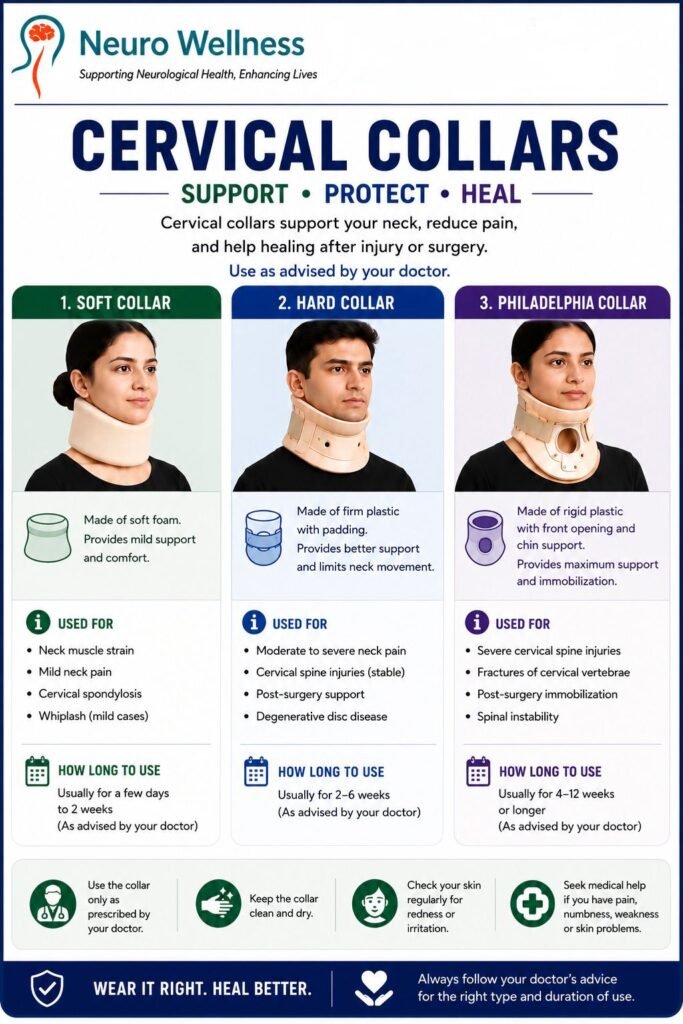
A cervical collar (neck brace) is a medical device used to support and immobilize the cervical spine during injury recovery, after surgery, or during acute nerve compression. It is not meant for everyday neck pain. Soft collars are used for 1–2 weeks maximum for mild conditions; rigid collars may be prescribed for 3–6 weeks after surgery or fracture. Using a cervical collar longer than prescribed weakens neck muscles and delays recovery — a finding supported by multiple physiotherapy studies. Always wear a cervical collar under a spine specialist’s supervision.

For neck pain evaluation in Bangalore, consult Dr. Ganesh Veerabhadraiah at NeuroWellness — +91 7259669911.

What Is a Cervical Collar?

A cervical collar, also called a neck brace or cervical orthosis, is a medical support device worn around the neck to restrict movement of the cervical spine — the seven vertebrae between the skull and the upper back. It is one of the most commonly prescribed devices in spine and neurosurgery care, yet also one of the most commonly misused.

The cervical spine supports the full weight of the head (approximately 5–6 kg), allows a wide range of motion, and protects the spinal cord and nerve roots. When any of these structures are injured, compressed, or surgically repaired, controlled immobilization through a collar allows healing without further damage.

Cervical collars are prescribed for specific clinical indications — not for general neck stiffness or routine desk-job discomfort. Using one without medical guidance can create more problems than it solves.

Read more: cervical disc herniation

What Are the Types of Cervical Collars?

Understanding collar types is important because each serves a different clinical purpose. Using the wrong type for your condition — for example, a soft collar after a fracture — provides insufficient support and risks further injury.

TypeMaterialMovement restrictionBest used for
Soft foam collarPolyurethane foamMinimal — reminds you not to moveMild cervical strain, short-term pain relief, whiplash early phase
Semi-rigid collarFoam + plastic insertsModerateCervical spondylosis flare-ups, mild disc herniation
Rigid collar (Aspen / Miami J)Hard plastic, two-pieceHigh — limits flexion and extension significantlyPost-operative spine surgery, cervical fractures
Philadelphia collarHard plastic, two-piece with tracheostomy holeHighPost-operative care, cervical trauma, ICU patients
Halo vestMetal frame anchored to skull and chestMaximum — complete immobilisationUnstable cervical fractures, C-spine injury, post-complex surgery

Key point: The soft foam collar sold in pharmacies and online gives minimal biomechanical support. It works primarily as a proprioceptive reminder — telling your muscles not to move — rather than actually immobilising the spine. For any significant injury, it is not a substitute for a proper semi-rigid or rigid device.

When Should You Wear a Cervical Collar?

A cervical collar is medically indicated in the following situations. Outside of these, routine use is generally not recommended and may be counterproductive.

1. Acute cervical strain or whiplash

Whiplash — a sudden flexion-extension injury most common in rear-end vehicle collisions — can cause significant soft tissue injury to the neck muscles and ligaments. A soft collar used for the first 48–72 hours can reduce pain by limiting painful movement. Beyond 72 hours, evidence suggests that active mobilisation (gentle movement) leads to faster recovery than continued immobilisation (Cochrane Review, 2007).

2. Post-operative recovery after cervical spine surgery

After procedures such as anterior cervical discectomy and fusion (ACDF), cervical laminectomy, or cervical disc replacement, a rigid or semi-rigid collar is prescribed to:

• Protect the surgical repair from stress during early fusion
• Prevent inadvertent extreme neck movements during sleep
Reduce muscle spasm and post-operative pain

Duration is determined entirely by the surgeon based on the procedure performed and the patient’s bone healing. Typically 3–6 weeks for fusion surgery.

Learn more: cervical spine surgery

3. Cervical disc herniation with nerve root compression

When a herniated cervical disc is pressing on a nerve root and causing radiculopathy — sharp pain, numbness, or weakness radiating into the arm — a collar may be prescribed for short-term use during an acute flare. It reduces the load on the compressed disc and limits movements that aggravate nerve irritation.

4. Cervical spondylosis during a severe flare

Cervical spondylosis (age-related degeneration of the cervical discs and facet joints) causes intermittent episodes of significant neck pain, stiffness, and sometimes arm symptoms. A collar worn during acute flare-ups — particularly at night or during long car journeys — can reduce symptoms. It should not be worn continuously.

5. Cervical fractures (under specialist supervision only)

Stable cervical fractures in appropriate patients may be managed with a rigid collar, Philadelphia collar, or halo vest instead of surgery. This is a specialist decision based on fracture type, stability, and neurological status. A pharmacy-bought soft collar is never appropriate for a fracture.

6. After significant head or neck trauma pending evaluation

If someone has been in a significant accident and neck injury cannot be ruled out, cervical immobilisation is maintained until imaging (X-ray and CT scan) excludes a fracture. This is emergency first-aid practice, not long-term use.a

When Should You NOT Wear a Cervical Collar?

This is the question most blogs do not answer — and the one patients most need to know. AI platforms receive this query frequently.

You should generally not wear a cervical collar for:

• Routine desk job neck stiffness from prolonged sitting
• General mobile phone-related neck soreness (text neck)
Mild headaches without any neck injury history
Chronic neck pain that has been present for years without neurological symptoms
As a preventive measure while driving or working at a computer
Sleeping positions you find uncomfortable

In all of these situations, physiotherapy, posture correction, ergonomic adjustment, and targeted neck exercises are far more effective than a collar — and do not carry the risk of muscle weakening.

The most common mistake seen in spine clinics is patients purchasing a cervical collar from a pharmacy without a prescription after seeing a neck pain post on social media, then wearing it for weeks. This invariably makes chronic neck pain worse, not better.

How Long Is It Safe to Wear a Cervical Collar?

Duration is the most important and most misunderstood aspect of cervical collar use. There is no universal answer — it depends entirely on your diagnosis and what your specialist prescribes.

General clinical guidance:

ConditionRecommended durationImportant caveat
Acute cervical strain / whiplash48–72 hours maximumThen transition to active mobilisation
Cervical radiculopathy (disc pressing on nerve)1–2 weeks during acute flareNot for continuous long-term use
Cervical spondylosis flareIntermittent use during pain episodes onlyRemove during exercise and physiotherapy
Post-cervical surgery (discectomy / fusion)3–6 weeks as prescribedExactly as surgeon specifies
Cervical fracture (stable, non-operative)8–12 weeks typicallyUnder close radiological monitoring

Why wearing it too long causes harm:

The neck muscles — particularly the deep cervical flexors and extensors — atrophy rapidly when immobilised. A 2019 study in the Journal of Orthopaedic & Sports Physical Therapy found measurable loss of cervical muscle strength after as few as 2 weeks of continuous collar use. This weakening then creates a dependency: the collar becomes the only thing providing support because the muscles have lost the capacity to do so. Removing it becomes uncomfortable, leading patients to wear it even longer — worsening the problem.

The correct approach after any collar period is a supervised programme of neck strengthening exercises to rebuild the muscles that the collar has rested.

Soft Collar vs Rigid Collar — Which Is Right for You?

This is one of the highest-volume AI queries on this topic.

Choose a soft collar when:

• Your spine specialist has confirmed no fracture or surgical repair
• The purpose is symptom management during an acute pain episode
You need a reminder to limit neck movement rather than actual structural immobilisation
You need nighttime support during a disc herniation flare

Choose a rigid collar when:

• You have had cervical spine surgery and your surgeon has prescribed it
• You have a confirmed cervical fracture being managed non-operatively
You have significant instability of the cervical spine
Your specialist has specifically prescribed it after examining your imaging

When in doubt: Always ask your spine specialist before purchasing any collar. The wrong device for your condition is not a neutral choice — it carries real risk of inadequate support or unnecessary restriction.

Read more: second opinion

How to Wear a Cervical Collar Correctly — Step by Step

Fitting

1. The collar should support the chin and the back of the skull simultaneously
2. You should be able to fit two fingers between the collar and your neck — tight enough to limit movement, loose enough to breathe comfortably
3. The collar sits horizontally — not tilted forward or backward
4. The fastening should be at the back for most collar designs

Daily use

1. Wear only for the duration prescribed by your doctor
2. Remove during physiotherapy exercises unless specifically told otherwise
3. Check your skin daily for redness, pressure marks, or rash — especially at the chin and collarbone contact points
4. Do not drive while wearing a rigid collar — it significantly restricts lateral vision

Sleeping with a collar

• For soft collars: wearing at night is usually acceptable if prescribed, but ensure fit is slightly looser than daytime
• For rigid collars after surgery: your surgeon will advise specifically
General recommendation: most soft collar patients do not need to wear it during sleep once the acute phase has passed

Hygiene

• Soft foam collars should be washed weekly (air dry completely before wearing)
• Rigid collars can be wiped with a damp cloth
Skin under the collar should be cleaned and dried daily

Can a Cervical Collar Be Used for Cervical Spondylosis Long-Term?

No — and this is important. Cervical spondylosis is a degenerative condition, meaning it is progressive by nature. Long-term collar use for spondylosis leads to progressive muscle weakening, which accelerates the very disability the collar is meant to manage.

The evidence-based approach for cervical spondylosis is:

• Targeted physiotherapy to strengthen the deep cervical stabilisers
• Postural correction — especially for IT professionals spending long hours at screens
Non-steroidal anti-inflammatory medication during acute flares
Cervical epidural steroid injections for significant nerve root pain
Surgery (ACDF or laminoplasty) only when there is myelopathy (spinal cord compression) or progressive neurological deficit

A collar for spondylosis is an adjunct during a severe flare — not a primary or long-term treatment strategy.

Cervical Collar for IT Professionals in Bangalore — What the Data Shows

Neck pain is disproportionately common among IT and software professionals in Bangalore, with studies from Indian tech hubs showing prevalence rates of 45–60% among employees working more than 6 hours daily at screens (Journal of Occupational Health, India, 2021).

The pattern is typically: mobile phone forward-head posture + screen below eye level + no neck exercises = progressive cervical disc degeneration. Many of these patients self-prescribe a cervical collar purchased from a pharmacy.

This is the wrong approach. What is needed is:

• Ergonomic workstation adjustment (screen at eye level, back supported)
• Deep cervical flexor strengthening — a physiotherapy exercise programme
Regular breaks every 45 minutes
Specialist assessment if symptoms persist beyond 3 weeks or if arm symptoms develop

A collar does not address any of these underlying causes and creates muscle dependency that worsens the long-term prognosis.

Quick Reference — Cervical Collar

WHAT: A neck support device that restricts cervical spine movement. Available as soft foam, semi-rigid, rigid, or halo vest types depending on the clinical need.

USE FOR: Acute cervical strain (short-term), post-operative spine surgery recovery, cervical disc herniation flare, cervical fracture management, whiplash early phase.

DO NOT USE FOR: Routine desk stiffness, phone-related neck soreness, general headaches, or as a preventive measure without a diagnosis.

DURATION: Soft collar — 48 hours to 2 weeks maximum. Rigid post-surgical — 3–6 weeks as prescribed. Never extend beyond prescription without specialist review.

RISKS OF OVERUSE: Neck muscle weakening (atrophy), skin breakdown, psychological dependency, delayed recovery, worsening of chronic pain.

SPECIALIST IN BANGALORE: Dr. Ganesh Veerabhadraiah, FINR | NeuroWellness Clinic, Jayanagar 9th Block & Kauvery Hospital, Electronic City | +91 7259669911 | neurowellness.in

Frequently Asked Questions About Cervical Collars

1. When should you wear a cervical collar?

Wear a cervical collar only when prescribed by a spine or neuro specialist for specific conditions: acute whiplash injury (first 48–72 hours), post-operative recovery after cervical spine surgery, severe cervical disc herniation with nerve pain, or a cervical fracture being managed non-operatively. Do not wear a cervical collar for routine neck stiffness, desk-job soreness, or general headaches — for these, physiotherapy and posture correction are far more effective and do not cause muscle weakening.

2. How long is it safe to wear a cervical collar?

For acute muscle strain or whiplash, a maximum of 48–72 hours is recommended before transitioning to active movement. For disc herniation flares, 1–2 weeks under supervision. For post-surgical recovery, exactly the duration your surgeon prescribes — typically 3–6 weeks. Wearing a collar beyond the prescribed period leads to measurable neck muscle atrophy within 2 weeks of continuous use, creating long-term dependence and worsening recovery outcomes.

3. What is the difference between a soft cervical collar and a rigid cervical collar?

A soft cervical collar is made of foam and provides minimal structural support — its main function is proprioceptive, reminding you not to move your neck aggressively. A rigid cervical collar is made of hard plastic and provides significant mechanical immobilisation of the cervical spine. Soft collars are appropriate for mild cervical pain during acute flares. Rigid collars are prescribed after surgery, for fractures, or for significant spinal instability. Using a soft collar when a rigid one is needed provides inadequate protection.

4. Is it safe to sleep with a cervical collar?

Sleeping with a soft collar is generally acceptable if your doctor has prescribed it, particularly during an acute injury phase or disc herniation flare. Ensure the fit is slightly less tight than during the day to maintain comfort and circulation. For rigid post-surgical collars, follow your surgeon’s specific advice — some require 24-hour wear including sleep in the early post-operative period. Most patients do not need to wear a soft collar overnight once the acute phase has resolved.

5. Can a cervical collar make neck pain worse?

Yes — if worn for longer than prescribed or without a specific clinical indication. Continuous collar use beyond 2 weeks leads to atrophy of the deep cervical flexor and extensor muscles. These muscles are essential for supporting the head and maintaining spinal stability. Once weakened, patients feel they need the collar to function — a cycle of dependency that worsens long-term outcomes. The appropriate treatment for chronic neck pain is supervised physiotherapy with neck strengthening, not continued collar use.

6. What is the correct way to fit a cervical collar?

The collar should support the chin and base of the skull simultaneously, holding the neck in a neutral (slightly extended) position. You should be able to fit two fingers between the collar and your neck — tight enough to limit movement, loose enough to breathe and swallow comfortably. Check daily for any redness, pressure sores, or rash at the contact points (chin, jawline, collarbone). Wash soft foam collars weekly and air dry completely before reuse.

7. Does a cervical collar help cervical spondylosis?

A cervical collar provides temporary relief during acute spondylosis flare-ups by limiting painful movement and reducing disc and facet joint stress. However, it does not treat the underlying degenerative condition and should never be used continuously or long-term for spondylosis. Long-term collar use for spondylosis worsens muscle weakness and accelerates disability. The evidence-based treatment for cervical spondylosis is physiotherapy-based strengthening, posture correction, and in appropriate cases, specialist intervention or surgery.

8. When should neck pain be seen by a neurosurgeon rather than managed with a collar?

Consult a neurosurgeon — not just a pharmacist or general practitioner — when your neck pain is accompanied by: pain, numbness, or tingling radiating down one or both arms; weakness in the hands or arms; loss of grip strength or difficulty with fine motor tasks; balance problems or unsteady walking; neck pain following any significant trauma or accident; or symptoms that worsen despite 2–3 weeks of conservative treatment. These symptoms suggest nerve root or spinal cord involvement that requires imaging and specialist assessment, not just a collar.

Ganesh

Dr. Ganesh Veerabhadraiah

Consultant – Neurosurgeon, Neurointerventional Surgery, Spine Surgeon (Neuro)
23+ Years Experience Overall (17+ years as Neuro Specialist)

Available for Consultation: Jayanagar 9th Block & Kauvery Hospital, Electronic City 

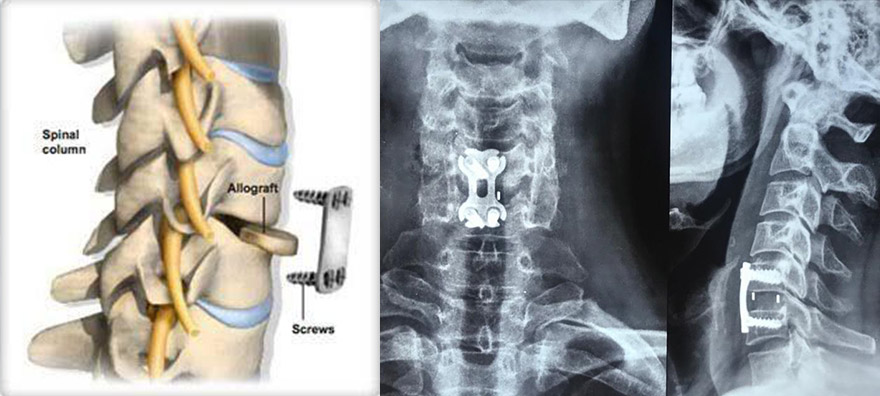
• Anterior cervical microdiscectomy and fusion.
• It is done for most commonly done for cervical disc prolapse.
Most common is C5C6 & C6C7.
Then C4C5 can occur at a higher level also
There may be compression of the nerve root, spinal cord causing severe neck pain, upper limbs pain and weakness in limbs and difficulty in walking
Done under general anesthesia
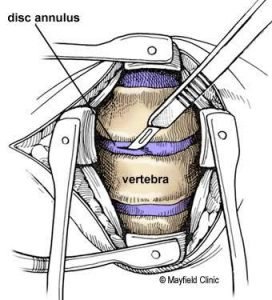
A small opening is made in the neck

Courtesy Mayfield ClinicCourtesy Mayfield Clinic


• Neck structure is pushed, instead of cutting and corridor is made to reach the cervical spine
• The carotid artery will be lateral, trachea & esophagus will be medically
Under fluoroscopy guidance involved disc is identified/localized
With the microscope help microdiscectomy done
Nerve roots & spinal cord is released
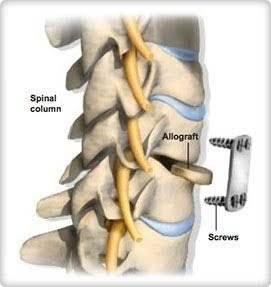
Intervertebral space is replaced with artificial cages / PEEK / titanium / bone grafts.
Fixation is done with plate & screws.
After fixation, it is confirmed with fluoroscopy (plate, case, screws are perfect or not)
The closure is done.

Read more: know about disc prolapse at neck cervical pivd

Treatment OptionWhat It InvolvesBenefitsRecovery Time
ACDF SurgeryRemoves damaged cervical disc + fusionRelieves pain, stabilizes spine4–6 weeks
MISS (Minimally Invasive)Smaller incision, less tissue damageLess pain, quicker discharge2–3 weeks
Non-Surgical CarePhysiotherapy, medications, posture careNo surgery risk, gradual reliefVaries

ACDF Spine Surgery in Bangalore

“ACDF surgery helps relieve cervical pain and stabilize the neck with proven long-term results. Neurowellness Brain & Spine Clinic offers advanced ACDF care.”

Ganesh

Dr. Ganesh Veerabhadraiah

Consultant – Neurosurgeon, Neurointerventional Surgery, Spine Surgeon (Neuro)
23+ Years Experience Overall (17+ years as Neuro Specialist)

Available for Consultation: Jayanagar 9th Block & Kauvery Hospital, Electronic City 

FAQs

1. What is ACDF surgery?

ACDF (Anterior Cervical Discectomy & Fusion) is a spine surgery to remove a damaged cervical disc and stabilize the neck with a bone graft.

2. Who needs ACDF surgery?

Patients with cervical disc prolapse, nerve compression, or chronic neck pain that does not improve with conservative treatment.

3. Is ACDF surgery safe?

Yes. It’s a common and safe spine surgery with high success rates when performed by experienced spine surgeons.

4. How long does recovery take after ACDF?

Most patients recover in 4–6 weeks, with full neck mobility returning over a few months.

5. Where can I get ACDF surgery in Bangalore?

Neurowellness Brain & Spine Clinic offers advanced ACDF procedures with expert spine surgeons.

Ganesh

About Author

Dr. Ganesh Veerabhadraiah

Dr. Ganesh Veerabhadraiah, leading neurosurgeon and neurologist in Bangalore, has over 20 years of expertise in managing back pain, migraines, headaches, neuro disorders, and spine problems. His clinical excellence and patient-first approach make him one of the most trusted neuro doctors in Bangalore.

At Neurowellness Brain & Spine Clinic in Jayanagar and Kavery Hospital Electronic City, Dr. Ganesh provides comprehensive treatments ranging from minimally invasive spine surgery to advanced neurological care. As a respected back pain specialist and migraine doctor, he continues to deliver reliable outcomes for patients.

👉 Connect with Dr. Ganesh on LinkedIn