
By Dr. Ganesh Veerabhadraiah — Neurosurgeon & Interventional Neuroradiologist, Kauvery Hospital, Electronic City, Bengaluru

Most Text neck pain in Bengaluru today is not a disc problem — it is muscle spasm caused by poor posture from mobile phones, laptops, bean bags and work-from-home setups. The condition is widely known as text neck. In the majority of cases, it is reversible without surgery through posture correction, ergonomic changes and short-term medical management.

If you are an IT professional, student, or remote worker in Bangalore experiencing persistent neck pain, this guide explains the real causes, warning signs, and what actually works — based on patients I treat every week at my Electronic City clinic.

Worried your neck pain isn’t going away?

Get a proper evaluation before it becomes chronic. 

What Is Text Neck?

Text neck is a repetitive strain injury of the cervical spine caused by long hours of looking down at smartphones, laptops, tablets, and microscopes.

When your head sits upright over your shoulders, your neck muscles handle its weight (about 5 kg) easily. But when you tilt your head forward by just 45 degrees to read a phone, the effective load on your cervical spine jumps to nearly 22 kg. Sustained over hours every day, this triggers:

• Muscle fatigue and spasm
• Ligament strain
•
Loss of the neck’s natural curve (cervical lordosis)
•
Chronic pain, stiffness and headaches

The important clinical point most text neck cases are muscular, not structural. That changes everything about how it should be treated.

Why Neck Pain in Bangalore Is Now a Daily Complaint

Bengaluru’s lifestyle is a near-perfect recipe for cervical strain. In my own practice across Electronic City, Whitefield, Koramangala and HSR Layout, the common patient profiles include:

• IT and software professionalsspending 9–12 hours on dual monitors
• Startup founders and remote workersusing laptops on beds, sofas and bean bags
•
Students and exam-prep candidatesglued to mobile screens
•
Mobile and electronics techniciansworking under microscopes
•
Gig workers and content creators scrolling for hours

This is why cervical pain in IT professionals in Bangalore has become one of the most frequent reasons for neurosurgery consultations in the city and why awareness of text neck matters more than ever.

A worrying trend I see: most professionals delay treatment for months, hoping the pain will “go away on its own”. I’ve explained the consequences of this in detail in my earlier post on why Bengaluru professionals delay back pain treatment and why it’s risky the same pattern applies to neck pain.

What Causes Neck Muscle Spasm? The Real Story

Most patients walk in worried about disc prolapse, pinched nerves, or surgery. But when I examine them, the actual neck muscle spasm causes turn out to be everyday lifestyle habits:

Habit

Why It Damages Your Neck

Working on a laptop in bed

Neck bent forward, no spine support

Sitting on bean bags for hours

Pelvis sinks, neck juts forward to see screen

Sleeping on a sofa

Awkward angles for prolonged hours

Looking down at the phone

45° flexion = ~22 kg load on cervical spine

Improper weight lifting at the gym

Sudden force on already fatigued muscles

Microscope or precision work

Continuous static forward bend

Individually these feel harmless. Stacked across months and years, they produce the exact pattern I see on most cervical X-rays straightening of the spine and sustained muscle spasm.

What Is "Straightening of the Cervical Spine"?

A healthy neck has a gentle inward curve called cervical lordosis. When neck muscles stay tight for long periods, they pull this curve flat. Radiologists report this as “straightening of the cervical spine” on your X-ray or MRI.

Is straightening of the cervical spine serious?

In most cases no. It is a sign that your muscles are spasming and your posture has been poor, not that your spine is structurally damaged. The good news:

• It is reversiblein early and moderate stages
• Straightening of the cervical spine treatmentis mostly non-surgical
•
Posture correction + targeted exercises + short-term medication restore the curve in most patients

Surgery is reserved for the rare cases where there is genuine nerve compression, weakness, or progressive neurological symptoms  not for muscle spasm. If you are confused by your scan report, my guide on understanding your MRI scan results walks through what each finding really means.

Real Patient Cases From My Bengaluru Practice

The clearest way to explain text neck is to share two recent cases from my own clinic.

Case 1 – The IT Professional and the Bean Bag

A 32-year-old software engineer came to me about two weeks ago with months of severe neck pain and stiffness. He had already tried painkillers, traction, and chiropractic adjustments. Nothing worked.

On evaluation:

• X-ray showed straightening of the cervical spine
• No significant disc problem
•
No nerve compression

The hidden cause: He had been working from home on a bean bag for 8–10 hours every day, often slipping into a half-lying position with his laptop on his chest. His neck was constantly bent in unnatural angles.

What actually worked:

• Strict posture correction (proper desk, chair, screen height)
• Stopping bean bag use for work
•
A short course of muscle relaxants and anti-inflammatories
•
Daily neck mobility exercises

He is now significantly improved, working pain-free, and back to normal life  without any procedure.

Case 2 – The Mobile Repair Technician

A mobile repair technician came in with long-standing severe neck pain. His work involves bending forward under a microscope to work on tiny circuit boards for hours every day.

He had already done MRI, X-ray and CT all clear of any major structural issue, except again, straightening of the cervical spine.

What helped him recover:

• Ergonomic adjustments at his workbench (raised microscope, supported chair)
• Scheduled micro-breaks every 30 minutes
•
Targeted physiotherapy Short-term medical management

He is steadily recovering  without surgery, without injections.

The lesson from both cases: the posture decides spine health, not the technology.

Recognise yourself in either of these stories?

You don’t need to live with daily neck pain. A 30-minute consultation can identify exactly what’s wrong and put a non-surgical recovery plan in place.

Book your spine evaluation in Electronic City  

Symptoms of Text Neck - When to Take It Seriously

Early symptoms (lifestyle-stage)

• Neck stiffness on waking
• Dull ache at the base of the neck
•
Tightness in the shoulders and upper back

Progressive symptoms

• Frequent tension headaches
• Pain radiating to the upper back
•
Reduced ability to turn the head fully

Red-flag symptoms — see a neurosurgeon

• Pain shooting down the arm
• Numbness or tingling in the fingers
•
Weakness in grip or hand muscles
•
Loss of fine hand control (dropping objects, fumbling buttons)

If you have any red-flag symptoms, do not self-treat. These suggest possible nerve involvement and need clinical evaluation.

Have any red-flag symptoms?

Don’t wait. Early evaluation prevents permanent nerve damage.

Mobile Neck Pain Prevention - A Practical India Guide

These are the same instructions I give my patients every week. They are simple, free, and effective.

1. The Eye-Level Rule

Bring your phone up to eye level instead of bending your head down. Even 30° less flexion dramatically reduces cervical load.

2. Fix Your Workstation

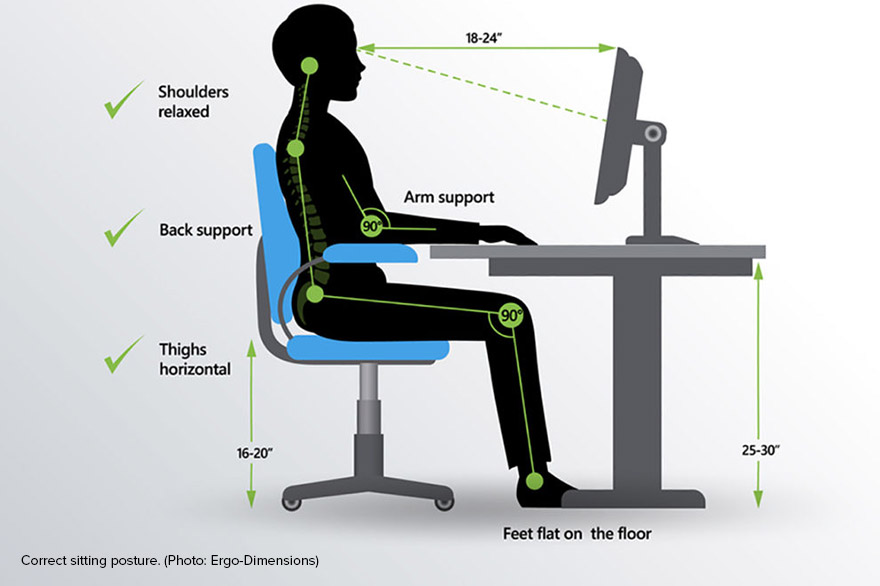
• Top of the monitor should sit at or slightly below eye level
• Feet flat, hips and knees at 90°
•
Forearms parallel to the floor
•
Use an external keyboard and mouse if you work on a laptop

3. Stop Using the Laptop in Bed

This is the single most common cause of work from home neck pain I see in Bengaluru. The neck has no way to stay neutral in a bed setup.

4. Avoid Bean Bags and Sofas for Work

Comfort is not the same as posture. Anything that lets your pelvis sink will force your neck forward.

5. Follow the 20-20-20 Rule

Every 20 minutes, look at something 20 feet away for 20 seconds. Stand up and roll your shoulders every hour.

6. Daily Neck Exercises (5 minutes is enough)

• Chin tucks— 10 reps, 3 sets
• Gentle neck extensions— 10 reps
•
Side bends— 10 each side
•
Shoulder rolls— 10 forward, 10 backward

7. Lift Weights Carefully

Avoid jerky movements. Keep the neck neutral, never crane forward to check form in the mirror.

8. Sleep Right

Use a single, medium-firm pillow that keeps the neck aligned with the spine. Side sleepers may need slightly thicker support, back sleepers thinner.

Text Neck Treatment in Bengaluru — What Actually Works

Most patients improve completely with a non-surgical approach. The standard text neck treatment plan in Bengaluru clinics, including mine, looks like this:

Phase 1 – Pain control (1–2 weeks):

• Short course of muscle relaxants and anti-inflammatories
• Hot fomentation
•
Activity modification

Phase 2 – Recovery (2–6 weeks):

• Posture correction
• Physiotherapy and structured neck exercises
•
Ergonomic redesign of workstation

Phase 3 – Long-term protection:

• Daily exercise routine
• Lifestyle changes around screen time
•
Follow-up review if symptoms return

When Is Surgery Needed?

Surgery for neck pain is rare and only considered when:

• An MRI confirms significant disc prolapse with nerve compression
• The patient has progressive arm weakness or numbness
•
Conservative treatment for several weeks has failed
•
There are signs of cord compression (myelopathy)

For pure text neck and muscle spasm cases, surgery is not the answer. I’ve written a detailed honest guide on whether you really need spine surgery  please read it before agreeing to any procedure. When surgery is genuinely required, modern techniques like minimally invasive spine surgery make recovery much faster than older approaches.

Daily Spine Care Checklist

☐  Sit upright with both feet flat on the floor
☐  Top of screen at eye level
☐  No laptop work on the bed
☐ No bean bag for working hours
☐  Phone at eye level, not on the lap
☐  Break and stretch every 60 minutes
☐  5 minutes of neck exercises daily
☐  Sleep on a supportive pillow

Frequently Asked Questions

1. Is text neck a serious medical condition?

Text neck is mostly a muscular and postural condition. It is not dangerous in early stages, but if ignored for years it can accelerate cervical disc wear and contribute to chronic pain. Early correction prevents long-term damage.

2. Can text neck be cured permanently?

Yes — in most cases. When the underlying postural habits are corrected and muscle spasm is treated, the cervical curve and pain resolve. Recurrence happens only if old habits return.

3. How long does it take to recover from text neck?

Mild cases improve in 2–4 weeks with posture correction and exercises. Moderate cases may take 6–12 weeks. Cases with long-standing spasm and straightening of the cervical spine can take a few months but still recover without surgery.

4. Do I need an MRI for neck pain?

Not always. For routine neck pain without red-flag symptoms, a clinical examination and X-ray are usually enough. MRI is reserved for cases with arm pain, numbness, weakness, or failure of conservative treatment. For a clearer understanding of what scan reports mean, see MRI scan results explained by a neurosurgeon.

5. Is text neck reversible?

Yes. Loss of the cervical curve and muscle spasm are reversible in most patients through posture correction, physiotherapy, ergonomic changes and short-term medication. Surgery is rarely needed.

6. Which doctor should I see for neck pain in Bangalore?

For simple posture-related pain, a physiotherapist or general physician is a reasonable first step. If you have severe pain, radiating arm pain, numbness, weakness, or pain that has not improved in 2–3 weeks, consult a neurosurgeon or spine specialist for a proper evaluation. You can book directly with Dr. Ganesh Veerabhadraiah at our Electronic City or Jayanagar clinics.

7. Is work from home causing more neck pain in India?

Yes — significantly. Improper home setups, laptops on beds, sofas and bean bags, and longer screen hours have produced a sharp rise in cervical strain, particularly among IT professionals in Bengaluru, Hyderabad, Pune and Gurugram.

8. Can neck pain cause headaches?

Yes. Tight muscles at the base of the skull (suboccipital muscles) commonly refer pain to the back of the head, temples and behind the eyes. Many “chronic headaches” are actually cervicogenic.

Take Control of Your Spine Health

Text neck is real, but it is also one of the most preventable spine problems of our time. The encouraging clinical truth is this:

• Most cases do not need surgery
• Most cases improve with posture and lifestyle correction
•
Early intervention almost always works

If you have been struggling with persistent neck pain, do not panic but do not ignore it either. A proper evaluation will tell you exactly what is happening and what to do next.

Consult Dr. Ganesh Veerabhadraiah — Neurosurgeon, Bengaluru

Dr. Ganesh Veerabhadraiah

Neurosurgeon & Interventional Neuroradiologist

Kauvery Hospital, Electronic City, Bengaluru

📞 +91 7259669911 (Jayanagar)  |  +91 7411571002 (Electronic City)

Book your consultation today

✅ Spine specialist in Electronic City

✅ Spine specialist in Jayanagar

✅ Get a second opinion on existing scans

Early evaluation prevents long-term damage. Don’t let “manageable” neck pain become a chronic spine problem.


Pregnancy is a remarkable journey, filled with excitement, happiness, and physical changes. While the joy of expecting a child is immense, the physical discomforts that accompany pregnancy can sometimes overshadow this happiness. Among these discomforts, neck pain is a common issue that many pregnant women experience. Understanding the causes of neck pain during pregnancy and learning how to alleviate it can significantly improve your comfort and overall well-being during this special time. To know more about this information read the whole blog which is going to explain those in detail in an understandable manner.

Causes of Neck Pain during Pregnancy:

Hormonal Changes:

During Pregnancy, Your body undergoes major hormonal changes particularly hormonal release called progesterone and relaxing. These hormones help to loosen the ligaments and joints in the pelvis regions to prepare your body for childbirth. However, it also affects other joints including the neck. This increased flexibility can lead to discomfort and neck pain during pregnancy.

Postural Changes:

As the belly grows, pregnant women often experience back and neck pain. A major contributing factor to this discomfort is poor posture, such as hunching over a phone or while working at a desk.

Weight Gain: 

The natural weight gain during pregnancy, while essential for the baby’s development, also puts additional pressure on the spine. The increased weight can cause muscles, especially in the neck and back, to work harder to support the body, leading to fatigue and pain.

Sleep Discomfort: 

As pregnancy progresses, finding a comfortable sleeping position becomes more challenging. Many pregnant women find themselves sleeping in positions that strain the neck, such as lying on the back with inadequate support. Poor sleep posture can contribute to morning neck stiffness and pain.

Effective Ways to Alleviate Neck Pain:

Prenatal Exercises and stretches:

Engaging in regular gentle exercise can strengthen your neck muscles and reduce pain. some effective exercises include:

  • Slowly tilt your head towards your shoulders, holding for a few seconds on each side.
  • Gently pull your chin towards your chest, holding for a few seconds before releasing.
  • Roll your shoulders backward and forward to relieve tension.

Techniques for Stress Management:

Effective stress management throughout pregnancy can ease neck pain and ease tense muscles. Think about implementing relaxing methods like:

  • Prenatal yoga: Encourages relaxation while strengthening and extending the body.
  • Stress reduction and mental calmness are the main goals of meditation.
  • Practices including deep breathing can help release tension in the shoulders and neck.
  • It’s important to prioritize your mental health and take some time to relax during pregnancy.

Therapy with Heat and Cold:

Neck discomfort can be effectively relieved with hot and cold therapy. This is how to apply them:

  • Cold Compress: To ease discomfort and reduce inflammation, place a cold compress on the neck for 10 to 15 minutes.
  • Hot Compress: To relieve tight muscles after the acute inflammation goes down, use a warm compress or take a warm shower.

To prevent burns or frostbite, always place a towel between the compress and your skin.

Final thought:

Although many women suffer neck pain during pregnancy, it doesn’t have to be an essential part of the experience. Pregnancy can be more comfortable and healthful if you are aware of the reasons for neck pain and take steps to reduce it. Never forget how crucial it is to put self-care first and ask for help when you need it. 

Do not be afraid to seek advice and direction from your healthcare provider in neck pain treatment in Bangalore if you are experiencing neck pain during pregnancy. Being proactive in managing and preventing pain can have a big impact on how your pregnancy goes. Neck pain treatment at Bangalore hospitals, such as Neurowellness, can help alleviate your pain.

If you’re seeking the best neck pain treatment in Bangalore, contact Neurowellness for personalized care and attention.

For most women, neck pain is more frequent in the third trimester. In many cases, the pain is mild and usually goes away on its own with little effort. However, sometimes, the pain can go out of hand and require over-the-counter pain relievers. While they provide temporary relief, they do not address the underlying cause.

Written and medically reviewed by Dr Ganesh Veerabhadraiah, Senior Neurosurgeon & Spine Specialist, NeuroWellness Brain & Spine Clinic, Bengaluru. Last reviewed: September 2026.

A cervical collar, also called a neck collar, neck brace or cervical orthosis, is a medical support device used to limit movement of the neck in selected cervical spine conditions, injuries and after some procedures.

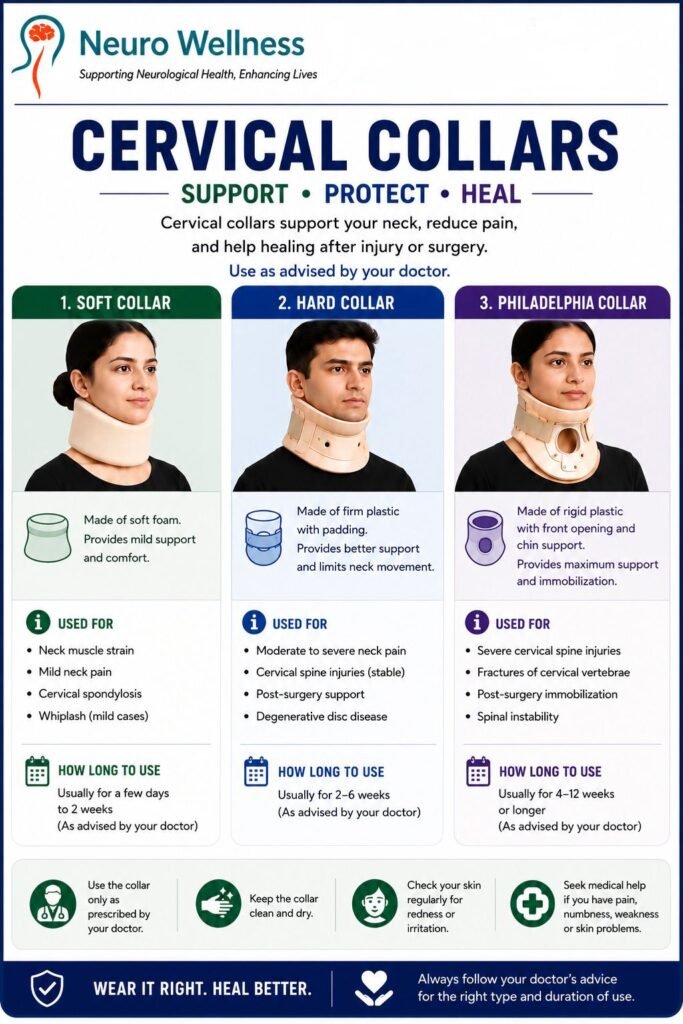
Cervical collars range from soft foam collars that provide light support to rigid collars designed to restrict neck movement more substantially. The correct type, fit and duration depend on the reason it was prescribed, your symptoms, imaging findings and your treating specialist’s advice.

A cervical collar is not a routine treatment for everyday neck stiffness or posture-related neck pain. For many common types of neck pain, keeping the neck gently mobile is preferable unless a doctor has specifically advised immobilisation. 

If you have persistent neck pain, arm pain, numbness or weakness, you can consult the NeuroWellness team for a spine and neurosurgery evaluation. NeuroWellness provides brain and spine care through its Bengaluru clinics.

What is a cervical collar used for?

A doctor may recommend one for selected neck injuries, some cervical spine conditions, after certain surgeries, or when temporary restriction of neck movement is required.

How long should you wear a cervical collar?

There is no single duration that is appropriate for everyone. It depends on the diagnosis, type of collar, healing progress and instructions from your treating doctor.

Can you sleep with a cervical collar?

Some people prescribed a rigid collar are advised to keep it on while sleeping, whereas other patients may be allowed to remove their collar. Follow the instructions given for your specific condition. NHS hospital guidance similarly advises patients prescribed rigid collars not to remove them during sleep unless their clinical team says otherwise. 

Can wearing a cervical collar too long cause problems?

Prolonged rigid-collar use can contribute to pressure injuries, skin problems, swallowing difficulty and other complications, which is why medical supervision is important. 

What Is a Cervical Collar?

A cervical collar is an orthotic device worn around the neck to provide support and restrict some movement of the cervical spine.

The cervical spine consists of seven vertebrae in the neck and surrounds the spinal cord while allowing movement of the head and neck. A collar may be used when a clinician wants to reduce movement temporarily while an injury or surgical area is assessed or heals.

Different collars provide different levels of support. A soft collar may mainly provide comfort and a reminder to limit movement, whereas a rigid collar is designed to restrict movement more substantially.

Because the underlying reason for neck pain varies considerably, patients should avoid buying and using a collar for prolonged periods without knowing the cause of their symptoms.

If your pain travels from the neck into the arm or is associated with numbness or weakness, read our guide to cervical disc prolapse/PIVD.

What Is a Cervical Collar Used For?

The purpose of a cervical collar is to provide temporary neck support or movement restriction when clinically appropriate.

A doctor may recommend a cervical collar in situations such as:

  • selected cervical spine injuries
  • temporary immobilisation after significant neck trauma
  • certain stable cervical fractures under specialist supervision
  • recovery after selected cervical spine procedures
  • short-term support in certain acute cervical conditions
  • selected cases of cervical spondylosis or radicular pain when clinically appropriate

A cervical collar should not automatically be used for every episode of neck pain. The NHS specifically advises against routine neck-collar use for ordinary neck pain unless a doctor tells the patient otherwise.

Neck pain without injury

For posture-related neck pain, muscle stiffness and many uncomplicated neck-pain conditions, treatment may instead involve movement, ergonomics, rehabilitation and appropriate exercises.

NeuroWellness offers physiotherapy and rehabilitation services in Bangalore, including care for neck and spine-related problems. NeuroWellness

You can also read the NeuroWellness guide to neck-pain exercises and when to stop.

Types of Cervical Collars

Different cervical collars provide different levels of support. The right type should be selected according to the condition being treated rather than simply choosing the firmest collar available.

Cervical collar typeSupport levelCommon clinical context
Soft cervical collarLightTemporary support in selected non-surgical conditions
Hard / rigid collarHigherSelected injuries or post-operative care when prescribed
Philadelphia collarRigidImmobilisation in selected trauma or post-operative situations
Miami J collarRigidCervical immobilisation when specifically prescribed
Halo deviceVery highSpecialist management of selected cervical instability/injuries

Soft cervical collar

A soft cervical collar is usually made from foam covered with fabric. It provides relatively light support and does not immobilise the cervical spine as completely as a rigid device.

It may be considered for short-term use in selected patients, depending on the diagnosis and clinician’s advice.

Because prolonged immobilisation can contribute to stiffness and reduced muscle conditioning, a soft collar should not become an indefinite solution for chronic neck pain.

Hard or rigid cervical collar

A rigid collar uses firmer materials to restrict neck movement more substantially.

It may be prescribed after certain cervical spine injuries or procedures. Patients using a rigid collar should follow their surgical or medical team’s instructions closely regarding:

  • how long to wear it
  • whether it must remain on while sleeping
  • when it may be removed for skin care or hygiene
  • when follow-up imaging or review is required

Philadelphia collar

A Philadelphia collar is a type of rigid cervical orthosis with front and back sections.

It is used when greater restriction of neck movement is required. It should be fitted and managed according to the treating team’s instructions.

Miami J collar

The Miami J is another rigid cervical collar designed to provide cervical support and motion restriction.

Correct sizing and fitting are important because a poorly fitted rigid collar can create pressure points and skin irritation.

Halo device

A halo device provides much greater immobilisation than a routine soft or hard neck collar and is used only in selected specialist situations.

It is managed by an appropriate spine, neurosurgical or trauma team rather than self-fitted by patients.

Soft Collar vs Hard Cervical Collar

The main difference is the degree of motion restriction.

Soft cervical collar

A soft collar:

  • provides light support
  • permits more neck movement
  • may be used temporarily in selected non-surgical situations
  • should not be assumed to treat the underlying cause of chronic neck pain

Hard cervical collar

A rigid collar:

  • restricts neck movement more substantially
  • may be prescribed after certain injuries or procedures
  • requires careful fitting
  • may require continuous wear depending on medical instructions

There is no universally “best” cervical collar.

The best option is the collar that is appropriate for the underlying diagnosis and has been correctly fitted and prescribed.

If you have been advised surgery or are unsure whether surgery is actually required, NeuroWellness also provides a brain and spine surgery second-opinion service, where existing MRI/CT reports and treatment recommendations can be reviewed.

Cervical Collar for Cervical Spondylosis

One of the most common questions patients ask is whether a neck collar is good for cervical spondylosis.

Cervical spondylosis refers to degenerative changes affecting the discs, joints and other structures in the neck. Symptoms can include neck pain and stiffness and, in some people, arm pain, tingling or weakness if nerves are affected.

A collar may sometimes be used for temporary symptom support, but it is not a long-term treatment for the degenerative process itself.

Is a neck collar good for cervical spondylosis?

It may be appropriate for some patients for limited periods, but it should not be self-prescribed as a permanent treatment.

For uncomplicated neck pain, maintaining movement is generally encouraged rather than routinely immobilising the neck. nhs.uk

Which cervical collar is used for spondylosis?

When a collar is considered appropriate for a non-surgical condition, a clinician may choose a softer form of support rather than a rigid post-operative collar.

However, the choice depends on:

  • symptoms
  • neurological examination
  • imaging where required
  • whether there is nerve or spinal-cord involvement
  • the reason support is being prescribed

Can I wear a cervical collar every day for spondylosis?

Continuous long-term use should not be started without medical advice.

If you depend on a collar because neck pain returns whenever you remove it, the underlying problem should be reassessed rather than simply increasing collar use.

For rehabilitation and strengthening options, see NeuroWellness physiotherapy services.

How Long Should You Wear a Cervical Collar?

There is no universal safe duration that applies to every cervical collar user.

How long you need a collar depends on:

  • why it was prescribed
  • whether the collar is soft or rigid
  • whether there has been surgery or trauma
  • symptoms and neurological findings
  • imaging and evidence of healing
  • your doctor’s follow-up assessment
SituationGeneral approach
Uncomplicated everyday neck stiffnessA collar is usually not routinely recommended
Selected non-surgical neck conditionsShort-term or intermittent use may be advised
Cervical injuryDuration depends on injury type and stability
After cervical spine surgeryFollow the surgeon’s individual post-operative protocol
Cervical fractureFollow specialist advice and imaging-based review

Post-operative collar practice can vary according to the procedure and surgeon. A 2024 systematic review found that collar use after cervical spine surgery remains an area where benefits vary by procedure, so a fixed duration should not be presented as appropriate for every patient.

How long should you wear a soft cervical collar?

Use it for the duration specifically advised for your diagnosis.

If pain continues after the prescribed period or you feel unable to function without the collar, arrange reassessment rather than continuing it indefinitely.

Cervical collar after surgery

Post-operative instructions depend on the procedure and the surgeon.

For more detailed information, read:

How Long Should You Wear a Cervical Collar After Surgery?

This keeps post-operative advice separate from general cervical-collar guidance and avoids using one duration for every operation.

How to Wear a Cervical Collar Correctly

Correct fit matters.

A poorly fitted collar may provide inadequate support or create unnecessary pressure on the skin.

General fitting principles include:

  1. Keep the head and neck in the position advised by your treating team.
  2. Position the collar so the chin is appropriately supported.
  3. Fasten the collar securely according to the manufacturer’s or clinician’s instructions.
  4. Make sure it is snug but does not interfere with breathing.
  5. Do not cut, reshape or modify a rigid collar yourself.
  6. Check the skin regularly for persistent redness, soreness or breakdown.

Guy’s and St Thomas’ NHS guidance similarly advises patients to ensure the collar is snug without interfering with breathing and to inspect the skin regularly. Guy’s and St Thomas’ NHS Trust

Skin care while wearing a neck collar

Keep the skin and collar lining clean and dry.

Watch contact areas including:

  • chin
  • jaw
  • back of the head
  • sides of the neck
  • upper chest/collarbone region

Contact your clinical team if you notice persistent redness, blisters, broken skin or increasing discomfort.

Can You Sleep With a Cervical Collar?

This depends on why the collar was prescribed.

Patients using rigid collars for an injury or after certain procedures may be instructed to keep the collar on while sleeping.

Hospital guidance for prescribed rigid collars commonly advises keeping the neck in a neutral position while sleeping and not removing the collar at night unless specifically instructed. Leeds Teaching Hospitals NHS Trust

Sleeping with a hard cervical collar

If your clinical team has instructed you to keep it on:

  • follow their instructions even if symptoms feel better
  • keep the head and neck in a neutral position
  • use pillows in a way that does not force the neck forward
  • avoid sleeping face-down
  • follow the recommended technique for getting in and out of bed

Sleeping with a soft cervical collar

Some patients using a soft collar for a non-surgical condition may be allowed to remove it at night.

Do not assume this applies to you if the collar was prescribed for an injury or after surgery.

If there is any uncertainty, ask the clinician who prescribed the collar.

Cervical Collar Side Effects

Cervical collars can be useful when appropriately prescribed, but prolonged or poorly managed immobilisation can also cause complications.

A systematic review of prolonged hard-collar use reported complications including pressure ulcers and dysphagia, with pressure injury being one of the most frequently reported problems. PubMed

Possible cervical collar side effects include:

Skin irritation

Heat, moisture and friction beneath the collar can irritate the skin.

Regular skin checks are particularly important with rigid collars.

Pressure sores

A rigid collar can concentrate pressure around areas such as the chin, jaw and back of the head.

Persistent redness or broken skin should be assessed.

Swallowing discomfort

Some people experience difficulty or discomfort swallowing when wearing a rigid collar. Dysphagia has been reported among complications associated with prolonged hard-collar immobilisation. 

Neck stiffness or muscle deconditioning

Keeping the neck immobilised for prolonged periods can contribute to stiffness and reduced muscle conditioning.

NHS hospital patient guidance also notes that long-term collar use can contribute to neck-muscle stiffness and weakness.

Restricted movement and visibility

Because a rigid collar limits neck rotation, activities requiring free head movement can become unsafe.

Patients should not drive while wearing a cervical collar that restricts movement.

When Should You NOT Use a Cervical Collar?

A neck collar generally should not be treated as a default solution for:

  • ordinary desk-related neck stiffness
  • temporary posture-related soreness
  • mild uncomplicated neck pain
  • prolonged preventive use while working
  • self-treatment without knowing the cause of persistent symptoms

For uncomplicated neck pain, the NHS advises maintaining neck movement rather than routinely wearing a collar unless a clinician advises otherwise.

If your neck pain is related to prolonged screen use or workstation posture, read:

Text Neck Pain Treatment and Prevention

For guided rehabilitation, visit:

Physiotherapy Treatment in Bangalore

When Should You Contact a Doctor?

Arrange medical assessment if neck symptoms are persistent, worsening or associated with neurological symptoms.

Seek prompt medical attention if you develop:

  • new or worsening arm weakness
  • numbness or tingling that is progressing
  • difficulty walking or maintaining balance
  • severe neck pain following significant trauma
  • breathing difficulty while wearing the collar
  • significant swallowing difficulty
  • new skin breakdown beneath a rigid collar
  • increasing symptoms despite prescribed treatment

If your symptoms suggest a disc or nerve problem, you may also find the Cervical PIVD guide useful.

Ganesh

Dr. Ganesh Veerabhadraiah

Consultant – Neurosurgeon, Neurointerventional Surgery, Spine Surgeon (Neuro)
23+ Years Experience Overall (17+ years as Neuro Specialist)

Available for Consultation: Jayanagar 9th Block & Kauvery Hospital, Electronic City 

Cervical Collar FAQs

A cervical collar is used to provide temporary neck support or restrict movement in selected cervical injuries, after some procedures and in certain cervical-spine conditions. It should be used according to a clinician’s recommendation rather than routinely for ordinary neck pain.

Common types include soft foam collars, rigid cervical collars, Philadelphia collars, Miami J collars and specialist immobilisation devices such as halo systems. They provide different levels of support and are not interchangeable.

There is no standard duration suitable for everyone. Wear it for the period recommended for your specific condition and arrange reassessment if symptoms persist.

Sometimes. Patients prescribed a rigid collar may need to wear it overnight, while some people using a soft collar may be allowed to remove it. Follow the instructions given by your treating clinician.

It may provide temporary support in selected patients, but it is not a long-term treatment for cervical spondylosis. Rehabilitation, appropriate exercise and treatment of the underlying problem are usually more important.

Potential problems include skin irritation, pressure injuries, swallowing discomfort, stiffness and muscle deconditioning, particularly with prolonged rigid immobilisation.

Neither is universally better. A soft collar offers lighter support, while a rigid collar restricts movement more substantially. The appropriate choice depends on the diagnosis.

Driving should be avoided when the collar restricts your ability to turn your head safely. NHS guidance specifically advises against driving while wearing a cervical collar that restricts neck movement.

Do not begin neck exercises while immobilisation has been prescribed unless your treating clinician or physiotherapist has cleared you to do so.

After clearance, rehabilitation may be used to restore mobility and strength. See the NeuroWellness neck pain exercise guide.

Consider specialist assessment if pain persists despite conservative treatment or is accompanied by radiating arm pain, numbness, weakness, balance problems or other neurological symptoms.