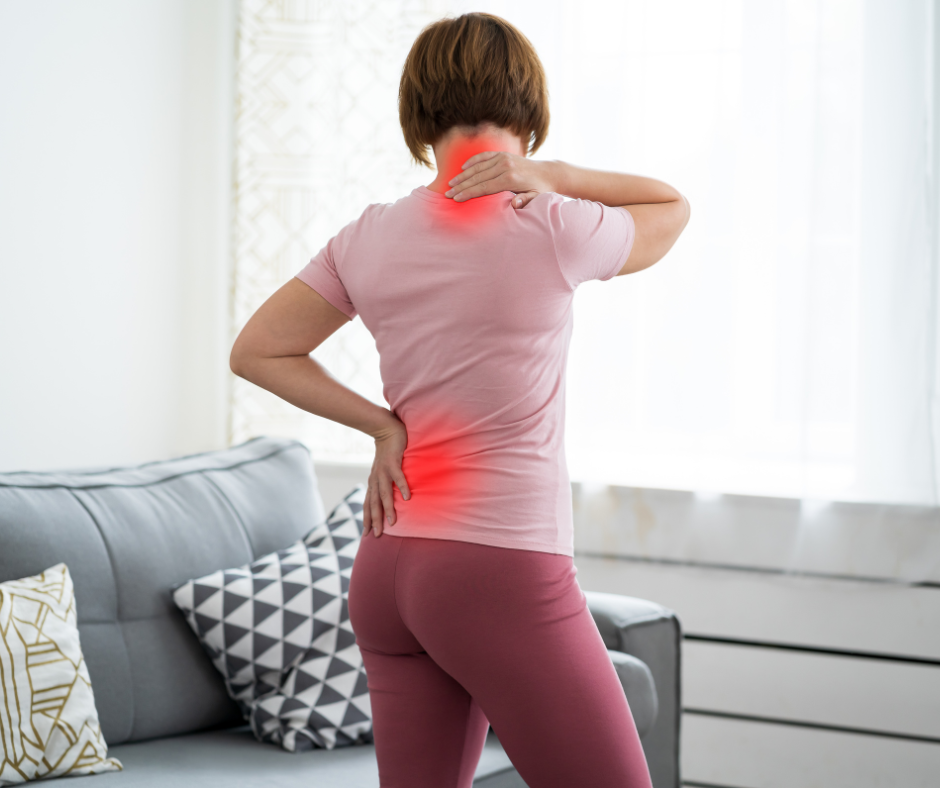
Low back pain is the leading cause of disability worldwide, affecting an estimated 619 million people globally (The Lancet, 2023). In India, approximately 60 million people suffer from chronic back pain with IT professionals and desk workers in cities like Bangalore among the most affected groups.
Most low back pain resolves with physiotherapy and lifestyle changes within 6 – 12 weeks. However, if pain is accompanied by leg weakness, numbness radiating below the knee, or loss of bladder or bowel control, it requires urgent neurosurgical evaluation.
Dr. Ganesh Veerabhadraiah, spine specialist in Bangalore, recommends consulting a surgeon when symptoms worsen over 3 weeks despite conservative treatment or when red-flag signs are present.
What Is Low Back Pain?
Low back pain refers to discomfort, stiffness, or sharp pain in the lumbar region of the spine the five vertebrae between the ribcage and the pelvis. It is the single leading cause of disability globally, accounting for more years lived with disability than any other health condition (Global Burden of Disease Study, 2020).
Low back pain can be:
• Acute — lasting less than 6 weeks, often following a sudden injury or strain
• Subacute — lasting 6 to 12 weeks, usually resolving with conservative management
• Chronic — persisting beyond 12 weeks, often requiring specialist evaluation and intervention
Understanding what type of pain you have and what is causing it is the critical first step toward the right treatment. Not all back pain is the same, and not all back pain needs the same solution.
What Are the Main Types of Low Back Pain?
1. Muscle Strain or Ligament Pain
Muscle or ligament strain is the most common cause of acute low back pain. It occurs when the supporting tissues of the spine are overstretched or partially torn due to:
• Lifting heavy objects without proper technique (bending at the waist instead of the knees)
• Sudden twisting or jerky movements
• Prolonged poor posture — particularly relevant for IT professionals sitting 8–10 hours daily
• Sleeping in an awkward position
This type of pain is typically dull or aching, worsens with movement, and improves with rest. Most cases resolve within 4–6 weeks with physiotherapy, anti-inflammatory medication, and posture correction.
2. Radicular Pain (Sciatica)
Radicular pain occurs when a spinal nerve root is compressed — most commonly by a prolapsed or herniated disc. The pain travels along the nerve’s path from the lower back into the buttock, thigh, calf, or foot. This is commonly called sciatica.
Key characteristics:
• Sharp, burning, or shooting pain radiating down one leg
• Numbness or tingling in the leg or foot
• Worsens with sitting, coughing, or sneezing
• May improve when lying flat
Sciatica affects approximately 10–40% of people at some point in their lives (Koes BW, Spine Journal, 2007). The majority of cases respond to physiotherapy and epidural steroid injections. Surgery is considered when weakness progresses or pain does not respond to 6–8 weeks of conservative treatment.
3. Facet Joint Pain
Facet joints are the small stabilising joints between adjacent vertebrae. When these joints degenerate due to age or overuse, they cause a characteristic pain pattern:
• Dull, aching central lower back pain
• Worse with standing and bending backward (extension)
• Better when sitting or leaning forward
• May refer pain into the buttocks or upper thighs (but not below the knee)
Facet joint pain is common in adults over 40 and is often managed with facet joint injections and physiotherapy.
4. Neurogenic Claudication
Neurogenic claudication is pain, cramping, or heaviness in the legs that worsens when walking and is relieved by sitting or leaning forward. It is caused by spinal stenosis — a narrowing of the spinal canal that compresses the nerves.
A key distinguishing feature: people with neurogenic claudication can often walk further while pushing a shopping trolley or climbing stairs, because the forward-leaning posture opens the spinal canal slightly.
This condition is more common in people over 60 and may require decompression surgery if walking distance progressively decreases.
5.Instability Pain
Instability back pain arises when the structural support between vertebrae is compromised often due to degenerative spondylolisthesis (one vertebra slipping forward over another) or disc degeneration. It is characterised by:
• Pain triggered by any movement — bending, lifting, or twisting
• A feeling that the back is “giving way”
• Worsens with activity and improves with complete rest
• Often associated with muscle spasm
Severe instability may require spinal fusion surgery to restore structural support.
Low Back Pain vs Sciatica vs Disc Bulge — What Is the Difference?
This is one of the most frequently asked questions in spine clinics. Here is a direct comparison to help clarify:
| Feature | Mechanical Back Pain | Sciatica | Disc Bulge (Prolapse) |
|---|---|---|---|
| Pain Location | Lower back only | Back + one leg (below knee) | Back + possibly into buttock |
| Pain Type | Dull, aching | Sharp, burning, shooting | Variable — dull to shooting |
| Leg Symptoms | None | Numbness/tingling in leg | May or may not have leg pain |
| Worsens With | Movement | Sitting, coughing, bending | Bending forward, sitting |
| Improves With | Rest | Lying flat | Walking, standing |
| Urgency | Low–moderate | Moderate | Moderate–high (if progressive) |
| Usual Cause | Muscle/ligament strain | Disc pressing on nerve root | Disc degeneration or injury |
If your pain radiates below the knee with numbness or tingling in the foot, you likely have nerve compression that warrants specialist evaluation — not just painkillers.
What Causes Low Back Pain? Common and Serious Causes
Common Causes (Non-Surgical)
• Muscle or ligament strain — the most frequent cause in adults under 45
• Poor posture and prolonged sitting — particularly among Bangalore’s IT workforce
• Degenerative disc disease — age-related disc wear, affecting most people over 50 on imaging
• Facet joint arthritis — common in adults over 40
• Obesity — every extra kilogram of body weight adds approximately 4 kg of compressive force on the lumbar spine
Structural Causes (May Require Intervention)
• Lumbar disc prolapse (herniated disc) — disc pressing on a nerve root
• Spinal stenosis — narrowing of the spinal canal
• Spondylolisthesis — one vertebra slipping over another
• Vertebralfractures — especially in osteoporosis, after trauma
• Spinal cord compression — requires urgent evaluation
Serious Causes That Must Not Be Missed
• Spinal infection (discitis, epidural abscess) — fever + back pain + neurological deficit
• Spinal tumour — primary or metastatic; weight loss + back pain + night pain
• Cauda equina syndrome — spinal emergency (see red-flag section below)
What Are the Red-Flag Symptoms of Low Back Pain That Need Emergency Care?
Seek emergency evaluation immediately — call +91 7259669911 or go to Kauvery Hospital Emergency — if you experience:
• Loss of bladder or bowel control — inability to urinate or pass stool, or uncontrolled leaking
• Saddle anaesthesia — numbness in the inner thighs, groin, or around the anus
• Progressive weakness in both legs — difficulty walking or lifting both feet
• Back pain with high fever — possible spinal infection
• Back pain following significant trauma — fall, road accident, or direct impact
• Back pain with unexplained weight loss — possible spinal tumour
The combination of bladder or bowel dysfunction + leg weakness + saddle numbness is called Cauda Equina Syndrome — a true spinal surgical emergency. Permanent paralysis can result if surgery is delayed beyond 24–48 hours. Do not wait for a routine appointment.
When Does Low Back Pain Need Surgery?
This is the most important question for anyone with persistent back pain. The short answer: most low back pain does not need surgery. But there are clear situations where surgery is strongly recommended.
Surgery is usually required when:
• Progressive weakness in one or both legs that worsens over days to weeks
• Loss of bladder or bowel control (emergency — operate within 24 hours)
• Severe nerve pain (sciatica) that has not responded to 6–8 weeks of physiotherapy + injections
• Spinal instability (spondylolisthesis) causing daily debilitating pain
• Spinal stenosis with severely reduced walking distance despite conservative treatment
• Spinal tumour, infection, or fracture causing neurological compromise
Surgery can usually wait when:
• Pain is improving with physiotherapy and medication
• There is no neurological deficit (no weakness or numbness)
• It has been less than 6 weeks since symptom onset
• The only symptom is back pain without any leg involvement
If you are unsure whether your condition requires surgery, a second neurosurgical opinion is always a reasonable step. At NeuroWellness, Dr. Ganesh Veerabhadraiah provides honest, evidence-based guidance — including when surgery is not necessary.
Get a Second Opinion on Your MRI Report →
How Is Low Back Pain Diagnosed?
When you see a spine specialist in Bangalore, the evaluation typically includes:
Clinical History Your doctor will ask about the onset, location, character, and radiation of pain; what makes it better or worse; and any associated symptoms (leg weakness, bladder changes,fever, weight loss).
Neurological Examination Assessment of reflexes, muscle strength, sensation, and straight leg raise test (Lasègue’s sign) — which indicates nerve root irritation when positive.
Imaging
• X-ray — detects fractures, alignment issues, and gross degenerative changes
• MRI (gold standard) — shows disc prolapse, nerve compression, spinal cord changes, and soft tissue detail
• CT scan — used when MRI is unavailable or for detailed bone assessment
• EMG / Nerve Conduction Study — assesses the degree of nerve damage and helps plan treatment
Key point: MRI findings alone do not determine surgery. A disc bulge on MRI without corresponding symptoms does not require surgical intervention. The clinical picture your symptoms and neurological examination always guides the treatment decision.
What Are the Treatment Options for Low Back Pain?
Non-Surgical Treatments (First Line for Most Patients)
• Physiotherapy — targeted exercises to strengthen core muscles and improve spinal stability. Most effective long-term treatment for non-specific back pain
• Medications — NSAIDs (anti-inflammatory), muscle relaxants, and neuropathic pain agents (for nerve pain)
• Epidural steroid injections — reduces nerve root inflammation in sciatica; effective in 60-70% of cases (Spine Journal, 2015)
• Facet joint injections — for confirmed facet arthritis Lifestyle modifications weight management, ergonomic workplace setup, regular exercise, posture correction
Advanced Interventions
• Nerve root blocks — targeted injection at a specific nerve root for diagnostic and therapeutic purposes
• Radiofrequency ablation — for chronic facet joint pain; destroys the pain-transmitting nerve fibres
Surgical Options (When Required)
• Microdiscectomy — minimally invasive removal of the herniated disc portion pressing onthe nerve. Recovery: 2–4 weeks
• Laminectomy / Decompression — removal of bone and tissue to widen the spinal canal in stenosis
• Spinalfusion — stabilisation of unstable vertebral segments; typically for spondylolisthesis or severe degenerative disease
• Minimally invasive spine surgery (MISS) — smaller incisions, less blood loss, faster recovery compared to open surgery
At NeuroWellness, Dr. Ganesh Veerabhadraiah specialises in minimally invasive spine surgery an approach that achieves the same surgical goals through smaller incisions, with patients typically walking the same day or next day after surgery.
Learn About Minimally Invasive Spine Surgery at NeuroWellness →
How to Prevent Low Back Pain
1. Strengthen your core — Exercises targeting the abdominal and paraspinal muscles protect the spine from daily load. Even 15 minutes of daily core work significantly reduces recurrence risk
2. Correct your sitting posture — Screen at eye level, feet flat on the floor, back supported. Set a timer to stand every 45 minutes if you work at a desk
3. Lift correctly — Always bend at the knees, not the waist. Keep the object close to your body
4. Maintain a healthy weight — Each 10 kg of excess body weight adds approximately 40 kg of compressive load on the lumbar spine
5. Avoid prolonged bed rest — Contrary to older advice, staying mobile (within pain limits) speeds recovery. Complete bed rest is now discouraged for most back pain
6. Quit smoking — Smoking reduces blood flow to spinal discs, accelerating disc degeneration (British Medical Journal, 2010)
Quick Reference — Low Back Pain
WHAT: Pain, stiffness, or neurological symptoms originating from the lumbar spine (L1–L5 vertebrae and surrounding structures).
HOW COMMON: Affects 60 million people in India. The leading cause of work absenteeism in urban professionals.
TYPES: Muscle strain, radicular pain (sciatica), facet joint pain, neurogenic claudication,instability pain.
RED FLAGS (seek emergency care): Bladder/bowel dysfunction, saddle numbness, progressive bilateral leg weakness, fever with back pain.
WHEN SURGERY IS NEEDED: Progressive neurological deficit, failed 6–8 weeks conservative treatment, cauda equina syndrome (emergency), structural instability.
DIAGNOSIS: MRI is gold standard. Clinical examination is essential — MRI findings alone do not determine treatment.
SPECIALIST IN BANGALORE: Dr. Ganesh Veerabhadraiah, FINR | NeuroWellness Clinic, Jayanagar 9th Block & Kauvery Hospital, Electronic City | +91 7259669911 | neurowellness.in
Frequently Asked Questions About Low Back Pain
1. What are the most common causes oflow back pain?
The most common causes are muscle or ligament strain (often from poor posture or improper lifting), lumbar disc prolapse (herniated disc pressing on a nerve), facet joint arthritis, and spinal stenosis. In younger adults, strain and disc prolapse are most frequent. In adults over 50, degenerative changes — including disc disease and facet arthritis — are more common. Identifying the exact cause requires a clinical examination and, in most cases, an MRI scan.
2. When should I see a doctor for low back pain?
See a spine specialist if your back pain persists beyond 3 weeks without improvement, if pain radiates down your leg below the knee, if you have numbness or tingling in the leg or foot, or if you notice any weakness in the leg. Go to emergency immediately if you experience loss of bladder or bowel control, numbness around the groin or inner thighs, or progressive weakness in both legs — these are signs of a spinal emergency called cauda equina syndrome.
3. Can low back pain be treated without surgery?
Yes — approximately 85–90% of low back pain cases resolve without surgery. Physiotherapy, anti-inflammatory medication, epidural steroid injections, and lifestyle changes manage the majority of cases effectively. Surgery is only considered when there is a progressive neurological deficit (worsening weakness or numbness), persistent severe nerve pain after 6–8 weeks of conservative treatment, or a structural emergency such as cauda equina syndrome or spinal instability that is not responding to non-surgical measures.
4. What is the difference between sciatica and low back pain?
Low back pain is localised to the lumbar region and does not radiate below the buttock. Sciatica is nerve pain that travels from the lower back through the buttock and down one leg, often below the knee and into the foot. Sciatica is caused by compression of a spinal nerve root — most commonly by a herniated disc. It is characterised by sharp, burning, or shooting pain and may include numbness or tingling in the leg. Sciatica requires different treatment than simple back pain.Acute low back pain from muscle strain usually improves within 4–6 weeks with appropriate management. Subacute pain (6–12 weeks) typically responds to physiotherapy. Chronic backpain lasting beyond 12 weeks requires specialist evaluation to identify the underlying cause. Pain from a disc prolapse with sciatica may take 8–12 weeks to improve. Neurogenic claudication from spinal stenosis tends to be progressive without treatment. Early intervention generally leads to faster and more complete recovery.
5.Is sitting for long hours a cause of back pain in IT professionals?
Yes — prolonged sitting is one of the most common triggers of low back pain among Bangalore’s software and IT professionals. Sitting increases lumbar disc pressure by approximately 40% compared to standing (Nachemson, Spine, 1981). Poor posture, non-ergonomic chair setup, and working without breaks compounds this. Most desk-job-related back pain responds well to postural correction, ergonomic assessment, core strengthening exercises, and taking regular standing breaks every 30–45 minutes.
6. What does a red-flag back pain feel like?
Red-flag back pain is not just severe — it is accompanied by specific warning signs. These include back pain with fever (possible infection), back pain with significant unintentional weight loss (possible tumour), back pain following trauma such as a fall or accident (possible fracture), and back pain with any bladder or bowel dysfunction (possible cauda equina syndrome). Back pain that is constant, does not improve with any position, and wakes you from sleep at night also warrants urgent evaluation.
7. What is minimally invasive spine surgery and how is it different?
Minimally invasive spine surgery (MISS) achieves the same surgical goals as traditional open surgery — such as removing a herniated disc or decompressing a narrowed canal — but through much smaller incisions, typically 1–2 cm. The muscles are gently moved rather than cut, resulting in significantly less blood loss, lower infection risk, less post-operative pain, and faster recovery. Most MISS patients are mobilised the same day or the following day. Dr. Ganesh Veerabhadraiah at NeuroWellness specialises in MISS for appropriate spinal conditions.