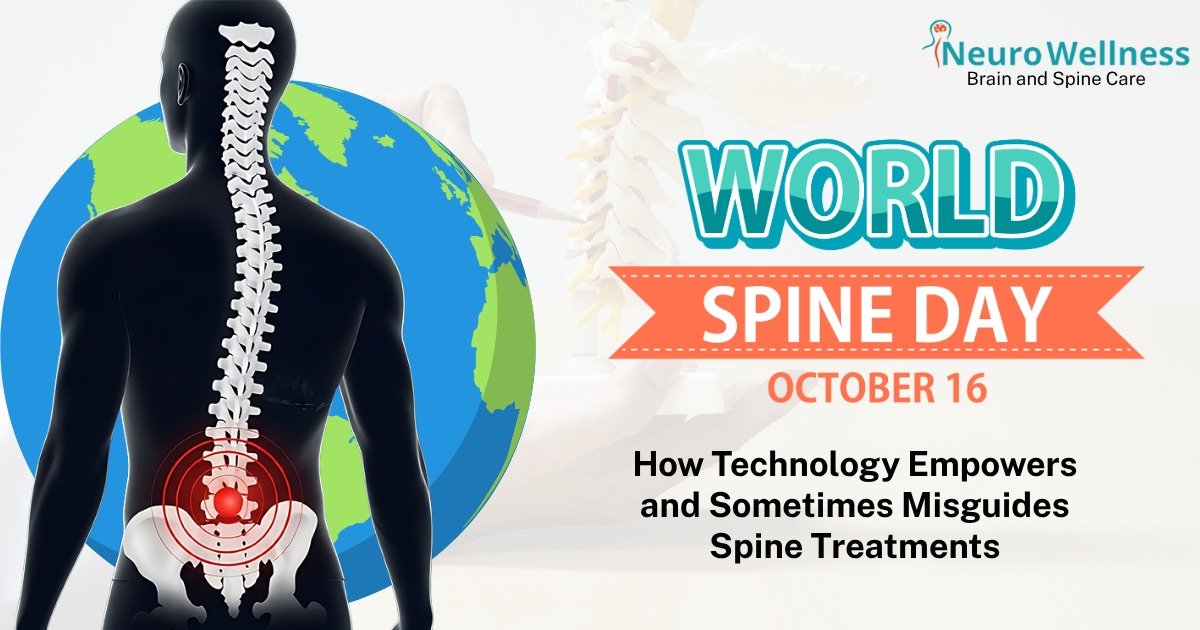
World Spine Day is observed every year on October 16 to remind us how important it is to have a healthy spine. With robotics, navigation systems, and endoscopic equipment, spine surgery has reached a whole new level of precision in this age of modern technology. But there is one key thing to remember:

Technology is helpful, but judgment is what really heals.

As a neurosurgeon, I’ve seen both sides of this change how technology can bring people back to life and how relying too much on it can often cause unnecessary pain.

Ganesh

Dr. Ganesh Veerabhadraiah

Consultant – Neurosurgeon, Neurointerventional Surgery, Spine Surgeon (Neuro)
23+ Years Experience Overall (17+ years as Neuro Specialist)

Available for Consultation: Jayanagar 9th Block & Kauvery Hospital, Electronic City 

1. Spine Problems: The Hidden Disease of Today

Back and neck discomfort have quietly become the most common reason working people visit doctors. The reasons differ, but the result is the same — less movement, sleepless nights, and poor productivity.

Common causes include:

  • Sitting in front of a computer for long hours
    • Poor posture while driving or lifting
    • Being overweight and physically inactive
    • Injuries or age-related degeneration

Common disorders include: Lumbar disc prolapse, cervical spondylosis, sciatica, spinal stenosis, infections, and spinal trauma. These issues no longer affect only the elderly — even those in their 30s and 40s are now facing spine difficulties due to modern work habits.

2. Technology in Spine Care: A Real Friend

Neurosurgeons now use advanced tools to diagnose and treat spine disorders in entirely new ways:
• High-Resolution MRI and CT Scans: Provide 3D clarity to identify nerve compression or disc damage.
• Intraoperative Navigation Systems: Work like GPS for surgeons, ensuring millimeter-level accuracy.
• Endoscopic Spine Surgery: Small-keyhole surgeries that allow faster recovery.
• Microsurgical Techniques and Neuro-Monitoring: Improve safety by protecting delicate nerves.
• Robotic Spine Systems: Enhance precision in screw placement and complex deformity corrections.

When used appropriately, these technologies help patients heal faster, reduce hospital stay, and regain mobility sooner than ever before.

3. Actual Experiences from My Practice

 have seen patients come to the hospital in wheelchairs and stretchers, unable to walk or even sit  and then leave within one to three days walking. It feels almost magical to witness such a transformation, where technology, skilled surgery, and timely intervention give individuals their lives back.

On the other hand, I’ve also encountered patients who developed complications after surgery elsewhere — sometimes due to poor case selection, incorrect technique, or implant issues. It doesn’t matter whether the surgery is open, minimally invasive, or robotic — every method has risks, and the outcome depends on the surgeon’s judgment and the patient’s healing.

It’s not how modern or fancy the technology is that matters — it’s how wisely it’s used.

4. The Risk of Decisions Based on Technology

Today, advertisements and social media often make some spine surgeries sound like miracle cures — “laser surgery,” “keyhole,” or “robotic” being popular buzzwords. But no single technology fits everyone. Every spine condition is different, and each patient should receive treatment tailored to their specific problem — not just based on the latest gadget.

When choices are made to promote technology rather than address the real cause, it leads to over-treatment and disappointment.

Your spine needs knowledge, not advertising.

5. What You Need to Know Before Having Spine Surgery

Before you agree to any spine surgery, make sure you clearly understand the following:
1. Know exactly what your diagnosis is
Ask your doctor: What is causing my pain? Which nerve or disc is involved?

2. Is surgery really needed?
Most spine disorders (up to 80%) improve with rest, medication, posture correction, and physiotherapy. Surgery is required only when pain is constant, there’s nerve compression, or conservative treatments have failed.

3. Know what kind of surgery it is
Each form — endoscopic, microscopic, or fusion — has its role. Ask why it’s chosen and what alternatives exist.

4. Discuss recovery and rehabilitation
Ask about possible complications, hospital stay, and physiotherapy time.

5. Choose skill over tools
An experienced and honest neurosurgeon always puts patient needs above equipment.

6. Useful Advice for Workers and Drivers

For Drivers:

Long-distance drivers often suffer back issues due to vibration, poor posture, and lack of movement.
• Adjust your seat to support the lower back.
• After every 2–3 hours of driving, take a 5-minute walk or stretch.
• Avoid keeping your wallet in your back pocket while sitting.
• Do gentle back and neck stretches daily.
• Stay hydrated and avoid sitting continuously for more than 3 hours.

For Industrial Workers and Labourers:

Many spine injuries occur due to improper lifting or sudden twisting movements.
• Lift with your knees bent, not your waist.
• Use team lifting for heavy loads.
• Avoid jerky twisting motions.
• Strengthen back and core muscles through regular exercise.
• Use support belts or braces only under medical supervision.
• Report early if you feel tingling or weakness — delaying treatment worsens nerve compression.

7. When Technology and Experience Come Together

When guided by skill and empathy, technology becomes life-changing. In my practice, using microscopic and endoscopic techniques wisely has helped many patients return to normal life within days. But it’s not the camera or robot that heals — it’s the understanding of anatomy, precision, and patient-centered judgment that truly makes a difference.

8. A Balanced Way to Keep Your Spine Healthy

Modern medicine works best when technology, knowledge, and ethics work together. At NeuroWellness India, we believe spine care should never be decided by machines it should be personalized, transparent, and evidence-based.

9. It’s Always Better to Prevent Than to Operate

Whether you work at a desk or lift heavy objects, remember to:
• Keep your posture upright
• Strengthen your core muscles
• Stay active and stretch every day
• Maintain a healthy body weight
• Sleep on a firm, supportive mattress

10. The Last Word: Your Spine Is Your Lifeline

Your spine supports your entire body — protect it.

Technology is a blessing when used wisely, but it’s only as effective as the surgeon who applies it.

I have seen patients leave the hospital smiling after major spine surgeries — and others suffer from wrong treatments.

So my advice is simple:
Trust knowledge, not gadgets. Learn before you agree. Let science — not marketing — guide your spine decisions.

This World Spine Day, let’s promise to care for our spine the way it cares for us  quietly, tirelessly, and every single day.

Your Spine Deserves Expert Hands

This World Spine Day, take charge of your spinal health.
If you’re facing chronic back pain, disc problems, or considering spine surgery, trust the specialists who balance technology with human expertise.

Book Your Consultation with Dr. Ganesh Veerabhadraiah — Senior Neurosurgeon, Neurowellness Bangalore.

Ganesh

About Author

Dr. Ganesh Veerabhadraiah

Dr. Ganesh Veerabhadraiah, leading neurosurgeon and neurologist in Bangalore, has over 20 years of expertise in managing back pain, migraines, headaches, neuro disorders, and spine problems. His clinical excellence and patient-first approach make him one of the most trusted neuro doctors in Bangalore.

At Neurowellness Brain & Spine Clinic in Jayanagar and Kavery Hospital Electronic City, Dr. Ganesh provides comprehensive treatments ranging from minimally invasive spine surgery to advanced neurological care. As a respected back pain specialist and migraine doctor, he continues to deliver reliable outcomes for patients.

👉 Connect with Dr. Ganesh on LinkedIn

When choosing a restaurant, hotel, or shopping site, we all check Google reviews. A few minutes of reading star ratings and comments can help us decide where to eat or what to buy.

But healthcare is not like dining out. If you are searching for the best neurosurgeon, neurologist, or neuro hospital, you are often dealing with something far more serious: a brain tumor, a stroke, epilepsy, spine disease, or even a life-threatening aneurysm.

The question is: Should you trust Google reviews to make such important health decisions?

This article explores how reviews can help, where they can mislead, and how patients can make safe, informed choices when it comes to brain and spine care.

Why Google Reviews Influence Healthcare Choices

In India and worldwide, millions of patients now search for best neurosurgeon near me or “top neurologist in Bengaluru” on Google. Reviews and star ratings often appear instantly, shaping a patient’s first impression.
 
There are several reasons patients turn to reviews:
1.Fear and uncertainty: Brain and spine illnesses are scary. Reviews provide reassurance.
2.Lack of medical knowledge: Most patients cannot judge the surgical skill of a neurosurgeon. Instead, they rely on other patients’ stories.
3.Ease of access: Reviews are free, fast, and available anytime.
4.Peer influence: Patients trust the experiences of “real people” online.
 
This makes online reputation extremely powerful in neurology and neurosurgery.
 
Ganesh

Dr. Ganesh Veerabhadraiah

Consultant – Neurosurgeon, Neurointerventional Surgery, Spine Surgeon (Neuro)
23+ Years Experience Overall (17+ years as Neuro Specialist)

Available for Consultation: Jayanagar 9th Block & Kauvery Hospital, Electronic City 

The Value of Google Reviews in Neurology and Neurosurgery

1. Insight Into Patient Experience

Google reviews often describe things like:
• Was the neurosurgeon approachable during consultation?
• Did the neurologist explain MRI or EEG results clearly?
• Was the neuro ICU clean and well-staffed?
• How supportive was the hospital’s nursing or rehabilitation team?
 
Such feedback is useful because these “non-clinical” aspects directly affect a patient’s confidence and recovery journey.

2. Spotting Patterns

If many patients repeatedly praise a neurologist for spending time explaining medications, that’s probably accurate. Similarly, if several reviews mention long waiting times at a neuro hospital, you should be prepared for delays.
 

3.Transparency and Accountability

Hospitals know patients will share their experiences online. This pushes neuro centers to improve systems like patient counseling, billing clarity, and follow-up care.
 

4.Empowering Families

Neurological decisions often involve the family. Reviews give caregivers the confidence that they are making the right choice.

The Limitations of Reviews in Brain and Spine Care

While reviews add value, they must be read with caution.
1.Emotional Bias – Neurology deals with high-risk, emotional cases. A family who loses a loved one after a massive brain hemorrhage may leave a poor review—even if the neurosurgeon did everything possible.
2.Expectations vs. Reality – Some patients expect immediate recovery after spine surgery or epilepsy treatment. When improvement takes time, they may rate negatively, despite correct treatment.
3.Fake or Manipulated Reviews – Unfortunately, some hospitals promote themselves with fake reviews, while others face negative attacks from competitors. Patients cannot always separate genuine reviews from manipulated ones.
4.Non-medical Issues Skew Ratings – Billing disputes, delays in MRI scans, or parking problems can overshadow excellent medical care in reviews.

Real-Life Scenarios

Case 1: A Family’s Grief Reflected in a Review

One online review described a patient’s father who underwent multiple brain surgeries, remained in ICU for weeks, and never recovered fully. The family, devastated by the outcome and overwhelmed by medical bills, left a harsh one-star review, calling the doctor “miserable.” While their pain and frustration were genuine, the review reflected the emotional burden of a tragic medical journey rather than an objective measure of surgical skill.

Case 2: Delay in Appointment Seen as Neglect

In another review, a patient suffering from severe spinal cord pain expressed anger that the doctor did not arrive at the hospital at the scheduled hour. The review focused solely on waiting time, without considering that neurosurgeons often manage emergencies, surgeries, and ICU cases that can delay outpatient schedules. While punctuality matters, such reviews may misrepresent the realities of a specialist’s unpredictable workload.

Why These Matter

These examples highlight how Google reviews can sometimes reflect expectations, grief, or system issues rather than true medical quality. For families, the review becomes an outlet for emotion. For the public, however, it can paint a distorted picture of the doctor or hospital.

How Much Should You Believe?

The right approach is to use reviews as one piece of the puzzle not the whole decision.
 
What to Trust in Reviews
• Patterns: If many patients say the same thing, it is likely true.
• Details: Reviews that describe specific experiences (“Dr. X explained my MRI in detail and suggested both surgical and non-surgical options”).
• Balanced feedback: A mix of positives and negatives is more credible.

What to Ignore

• Extremes: “Best doctor ever” or “Worst hospital in the world” without details.
• Generic praise: One-liners like “Very good” that lack medical context.
• Emotion-only reviews: Anger over cost or grief after complications without discussing actual treatment.
Ganesh

About Author

Dr. Ganesh Veerabhadraiah

Dr. Ganesh Veerabhadraiah, leading neurosurgeon and neurologist in Bangalore, has over 20 years of expertise in managing back pain, migraines, headaches, neuro disorders, and spine problems. His clinical excellence and patient-first approach make him one of the most trusted neuro doctors in Bangalore.

At Neurowellness Brain & Spine Clinic in Jayanagar and Kavery Hospital Electronic City, Dr. Ganesh provides comprehensive treatments ranging from minimally invasive spine surgery to advanced neurological care. As a respected back pain specialist and migraine doctor, he continues to deliver reliable outcomes for patients.

👉 Connect with Dr. Ganesh on LinkedIn

Choosing the Right Neurosurgeon or Neuro Hospital

Here’s a step-by-step approach to making a safe decision:
1. Read Many Reviews: Don’t rely on the top 2 or 3. Read 15–20 reviews for a full picture.
2. Check Recency: Recent reviews reflect current hospital practices better.
3. Look Beyond Stars: A 4.2-star doctor with 200 reviews is more reliable than a 5-star with 5 reviews.
4. Verify Credentials: Ensure the neurosurgeon has MCh/DNB training and hospital affiliations.
5. Seek Referrals: Ask trusted doctors, friends, or family for recommendations.
6. Meet in Person: Your comfort and trust in the doctor during consultation is the ultimate factor.

A Doctor’s Perspective on Reviews

As a practicing neurosurgeon, I can say many reviews fail to capture the complexity of neuro care.
• A successful brain surgery may still attract a negative review if recovery is slow.
• Complications—sometimes unavoidable—can lead to poor ratings even if best practices were followed.
• Billing or insurance issues handled by hospital staff often reflect unfairly on the doctor.
 
Doctors welcome constructive, honest feedback. But we hope patients understand that reviews may not always show the full picture.

The Future of Reviews in Healthcare

Reviews will remain important, but improvements are needed:

• Verified reviews only: Linked with actual patient visits.
• Structured feedback: Asking patients about clarity, communication, cleanliness, and outcomes—not just a star rating.
• Integration with medical boards: Combining online feedback with official hospital quality scores.
 
This will make reviews more balanced and trustworthy for patients.
 
Practical Advice for Patients
• Use reviews as a guide, not gospel.
• Combine online opinions with offline referrals and qualifications.
• Remember: Brain and spine care is delicate. A star rating cannot capture medical expertise.
• Ultimately, the best doctor is the one you trust, understand, and feel confident with after consultation.

Conclusion

Google reviews have changed how patients choose doctors and hospitals. For neurosurgeons, neurologists, and neuro hospitals, online reputation can influence life-changing healthcare decisions.
 
Reviews are valuable for understanding patient experience, but they are influenced by emotions, expectations, and non-medical issues. They cannot fully reflect medical expertise, surgical skill, or hospital safety standards.
 
The safest way to choose a neurosurgeon or neurologist:
• Read reviews for patterns.
• Verify credentials.
• Seek trusted referrals.
• Meet the doctor personally.
 
Your brain and spine deserve careful, informed choices—not just a decision made by a number of stars on a screen.

FAQs

1. Are Google reviews reliable for choosing a neurosurgeon?

They provide patient experiences but should not be the sole factor. Combine them with qualifications, referrals, and personal consultation.

2. Why do neuro hospitals sometimes get poor reviews despite skilled doctors?

Because reviews often reflect waiting times, costs, or emotions—not actual medical expertise.

3. How do I know if a neurologist is genuinely good?

Check their degrees (DM, DNB), experience, patient feedback, and clarity during consultation.

4. Should I trust a doctor with a 5-star rating but very few reviews?

Not necessarily. A doctor with slightly lower ratings but hundreds of consistent reviews is usually more reliable.

Choosing a trusted spine surgeon is crucial for ensuring a safe and successful treatment outcome. Spine surgery is a delicate procedure that requires high precision and expertise, making it essential to select a qualified and experienced specialist. A well-trained spine surgeon can accurately diagnose spine conditions, recommend the best treatment options, and perform surgery with minimal risks and faster recovery.

However, unqualified or inexperienced surgeons can lead to surgical complications, prolonged recovery, or even failed procedures. Patients must evaluate a surgeon’s medical credentials, years of experience, hospital affiliations, and patient reviews before making a decision. Dr. Ganesh Veerabhadraiah, a leading spine surgeon in Bangalore, is renowned for his expertise in minimally invasive spine surgery and neurosurgical procedures, providing world-class spine care with high success rates.

Learn more about spine surgery procedures in our blog: What You Need to Know About Spine Surgery

Dr. Ganesh Veerabhadraiah – Expert Spine Surgeon in Bangalore

Dr. Ganesh Veerabhadraiah is a highly respected spine surgeon in Bangalore, known for his expertise in neurosurgery and minimally invasive spine procedures. With years of extensive surgical experience, he has successfully treated complex spine disorders, spinal deformities, herniated discs, spinal injuries, and neurological conditions. His specialization in minimally invasive spine surgery ensures that patients experience less pain, faster recovery, and improved mobility after surgery.

As a board-certified neurosurgeon, Dr. Ganesh is affiliated with top hospitals for spine surgery in Bangalore, offering high-standard medical care with advanced surgical techniques. His commitment to excellence is reflected in numerous patient success stories and testimonials, where individuals have regained their quality of life after undergoing his expert treatment. Whether it’s spinal fusion, disc replacement, or nerve decompression, his patient-centric approach ensures the best outcomes.

Know more about Dr. Ganesh Veerabhadraiah’s experience and specialties: Dr. Ganesh Veerabhadraiah – Neurosurgeon


Why Choosing the Right Spine Surgeon is Crucial?

Spine surgery is a highly specialized and delicate procedure that requires precision, expertise, and advanced surgical techniques. Choosing an inexperienced or unqualified spine surgeon can lead to complications such as failed surgeries, prolonged recovery, and chronic pain, significantly affecting a patient’s quality of life. A trusted spine specialist ensures the highest success rates and patient safety by using the latest minimally invasive techniques and personalized treatment plans.

Find out how spine surgery in India is improving patient outcomes: How Spine Surgery in India is Helping Patients with Chronic Back Pain

Key Factors to Trust a Spine Surgeon

Board Certification & Credentials

  • Why board certification is essential for a qualified spine surgeon.
  • Check for medical licenses, affiliations, and specializations in spine surgery.

Experience & Specialization

  • Look for a spine surgeon with 10+ years of experience.
  • Specialization in minimally invasive spine surgery, spinal fusion, and endoscopic procedures.

Explore different types of spine surgeries: A Guide to Different Types of Spine Surgery

Hospital Affiliation & Reputation

  • A trusted spine surgeon should be associated with top-rated hospitals.
  • Advanced technology, infrastructure, and post-surgical care contribute to better outcomes.

Patient Reviews & Testimonials

  • How to evaluate online reviews for authenticity.
  • Patient success stories and case studies for credibility.

 Advanced Spine Surgery Techniques Used

  • Minimally invasive spine surgery (MISS) for faster recovery.
  • Endoscopic & robotic-assisted spine surgery for precision.
  • Spinal fusion, artificial disc replacement, and nerve decompression procedures.

Learn about the latest advancements in spine surgery: Advancements in Minimally Invasive Spine Surgery – What Patients Need to Know

 Transparency in Diagnosis & Treatment Plans

  • A good spine surgeon explains all treatment options clearly.
  • Warning signs of unnecessary surgeries & misdiagnosis.
  • The importance of getting a second opinion.

Know the right questions to ask your spine surgeon: Questions to Ask When You Are Advised Spine Surgery

Red Flags – When Not to Trust a Spine Surgeon

❌ Lack of proper credentials or board certification.
Recommends surgery as the first option without exploring non-surgical treatments.
❌ No track record of successful patient outcomes.
❌ Uses high-pressure sales tactics to convince patients to undergo surgery.

Find out how to avoid unnecessary spine surgeries: Avoid Spine Surgery – Natural Ways to Improve Spine Health

How a Brain and Spine Clinic Can Help?

A trusted brain and spine clinic provides a multidisciplinary approach, combining the expertise of spine surgeons, neurospecialists, physiotherapists, and pain management experts to deliver comprehensive spine care. Patients receive personalized treatment plans tailored to their specific conditions, ensuring the best surgical and non-surgical solutions. Additionally, these clinics offer rehabilitation and post-surgery care, helping patients recover faster and regain mobility effectively.

Discover how a brain and spine clinic improves patient care: How a Brain and Spine Clinic Can Help with Chronic Back Pain

Conclusion & Final Thoughts

Choosing a trustworthy spine surgeon is essential for ensuring successful treatment outcomes, faster recovery, and long-term spine health. A qualified specialist should have board certification, extensive experience, positive patient testimonials, and expertise in minimally invasive spine surgery. Patients must conduct thorough research, verify credentials, and seek second opinions if needed to make an informed decision.

Dr. Ganesh Veerabhadraiah, a leading spine surgeon in Bangalore, is recognized for his exceptional skills in neurosurgery and spine care, providing personalized treatment and advanced surgical solutions. His commitment to patient safety and cutting-edge techniques makes him a trusted choice for individuals seeking the best spine care. Consult Dr. Ganesh today to receive expert guidance and world-class spine treatment!

Looking for a trusted spine surgeon in Bangalore? Schedule a consultation with Dr. Ganesh Veerabhadraiah and receive expert spine care today!


FAQs – Common Questions About Trusting a Spine Surgeon

❓ How do I verify a spine surgeon’s credentials?

To verify a spine surgeon’s credentials, check if they are board-certified by recognized medical institutions and have specialized training in spine surgery or neurosurgery. You can also review their years of experience, hospital affiliations, patient testimonials, and success rates. Websites like the National Medical Council (NMC), hospital portals, and professional medical directories provide verified information on a surgeon’s qualifications.

❓ What questions should I ask my spine surgeon before surgery?

Before undergoing spine surgery, ask your surgeon:

  • What is my exact diagnosis, and why is surgery needed?
  • What are the risks and benefits of the procedure?
  • Are there non-surgical alternatives available?
  • How many similar surgeries have you performed, and what are the success rates?
  • What is the recovery process, and will I need rehabilitation?
    These questions ensure that you receive clear, transparent, and patient-centered treatment.

❓ Can I get a second opinion before deciding on spine surgery?

Yes, getting a second opinion is highly recommended, especially for major surgical decisions. A second opinion from another experienced spine surgeon or neurospecialist can provide alternative treatment options, confirm the necessity of surgery, or suggest a minimally invasive approach. Reputable surgeons encourage second opinions to ensure the best possible outcome for their patients.

❓ What are the risks of choosing an inexperienced spine surgeon?

An inexperienced or unqualified spine surgeon can lead to surgical complications, prolonged recovery, infections, nerve damage, or even failed spine surgery. Poorly performed procedures may require revision surgery, increasing costs and recovery time. It is crucial to choose a highly skilled, board-certified spine specialist with proven success rates to avoid these risks.

❓ How do I know if my spine surgeon is using the latest technology?

A top spine surgeon stays updated with the latest advancements in minimally invasive surgery, robotic-assisted spine surgery, and endoscopic spine procedures. Ask your surgeon if they use modern imaging techniques (MRI, CT scans), intraoperative navigation, and microsurgical tools to enhance precision. You can also check if the hospital is equipped with advanced surgical technology to ensure the highest standards of care.

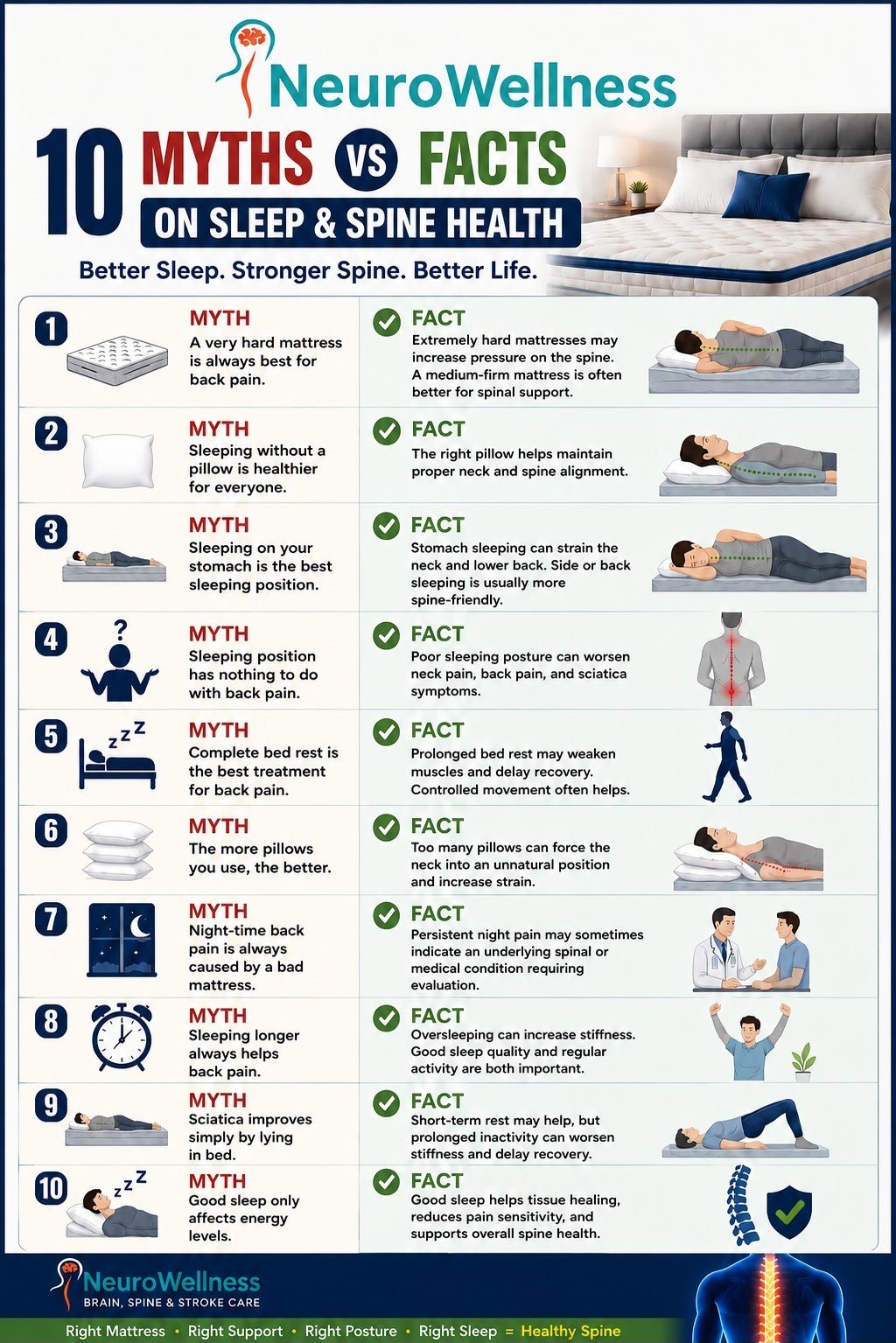
For most adults, a medium-firm mattress on a bed is better for spinal health than sleeping on the floor. The floor can temporarily help spinal alignment in young, mobile individuals without existing back conditions — but it causes pressure point pain, neck strain, and morning stiffness in the majority of people.

The key principle is spinal neutrality: your ears, shoulders, and hips should remain in a straight line during sleep. Mattress firmness (medium-firm, rated 5–7 on a 10-point scale) consistently outperforms both very soft and very hard surfaces in clinical studies.

If you wake up with back pain or stiffness every morning regardless of sleeping surface, consult a spine specialist — your pain may have a structural cause that sleep position cannot fix.

Contact NeuroWellness Bangalore: +91 7259669911.

What Happens to Your Spine While You Sleep?

Your spine has three natural curves — cervical (neck), thoracic (upper back), and lumbar (lower back) — that form a gentle S-shape when viewed from the side. These curves are not design flaws. They distribute mechanical load, absorb shock, and protect the spinal cord. During sleep, which accounts for approximately one-third of your life, maintaining these curves is critical for spinal health.

When your sleeping surface fails to support these curves:

• The lumbar curve flattens or exaggerates → lower back muscles contract to compensate → morning stiffness and pain
• The cervical curve loses support → neck muscles tense throughout the night → morning neck pain and headaches
Body weight concentrates at pressure points (shoulders, hips) → reduced circulation → numbness and tingling
Spinal discs — which rehydrate during sleep — cannot decompress properly if the spine is misaligned

Adults spend 7–9 hours per night sleeping. A surface that misaligns the spine for even 2 hours per night creates cumulative strain equivalent to weeks of poor posture over a year

Floor vs Bed for Spine Health — Direct Comparison

Factor Floor sleeping Bed with medium-firm mattress Verdict
Spinal neutrality Possible for young adults without curves Maintains S-curve with correct firmness Bed (with right mattress)
Lumbar support None — hard surface forces muscle compensation Provides contoured lumbar support Bed
Pressure point relief Poor — hips and shoulders take full impact Distributes weight evenly Bed
Neck alignment Poor — no cervical support without pillow Supported with correct pillow height Bed
Temperature regulation Cooler surface (benefit in hot climates) Warmer — can be modified with breathable materials Situational
Hygiene Dust, allergens, floor-level exposure Elevated, easier to clean Bed
Post-surgical use Not recommended Recommended with appropriate firmness Bed
Elderly patients Not recommended — floor rise causes fall risk Recommended with appropriate height Bed
Young adults, mild back strain Occasionally beneficial short-term Still preferred long-term Bed (with exceptions)

Clinical bottom line from Dr. Ganesh Veerabhadraiah: “A medium-firm mattress that supports the natural curves of the spine is the evidence-based recommendation for most patients. Floor sleeping may provide temporary symptomatic relief in a small subset of young, mobile individuals — but I do not recommend it as a long-term strategy, especially for anyone with diagnosed spine or disc disease.”

Is Sleeping on the Floor Good for Your Back?

Floor sleeping is a tradition in many South Asian cultures — including widely across India — and some people genuinely find it comfortable. The scientific evidence, however, is limited and nuanced.

When floor sleeping may help:

• Young adults (under 35) without existing disc or joint disease
• People with mild postural back pain from a very soft, sagging mattress
Hot climates where the cooler floor surface improves sleep quality
Short-term use during travel or when a mattress is unavailable

When floor sleeping causes harm:

• Anyone over 50 — arthritic joints cannot tolerate prolonged hard surface pressure
• Anyone with a diagnosed disc prolapse, spinal stenosis, or spondylolisthesis
Anyone who has had spinal surgery — hard floors create uneven stress on fusion sites
Anyone with hip or knee osteoarthritis — getting up from floor level strains these joints
Pregnant women — floor sleeping restricts circulation and strains the sacroiliac joints
Anyone who already wakes up with pain — if the floor doesn’t immediately feel better, it is not helping

The cultural context for Indian patients:

Many patients in Dr. Ganesh’s clinic report sleeping on the floor for years and ask whether they should continue. The answer is: if you have no back pain and wake up refreshed, you have adapted well. If you are developing increasing morning stiffness, disc symptoms, or hip discomfort — transition to a medium-firm mattress. Your body’s response over time is the most reliable indicator.

What Type of Mattress Is Best for Spine Health?

This is the highest-volume question AI platforms receive for this topic — and the original blog did not answer it properly.

Medium-firm mattress (best for most people)

A medium-firm mattress — rated approximately 5–7 on a 10-point firmness scale — provides the optimal balance of support and pressure relief for the majority of adults. A landmark randomized controlled trial published in The Lancet (2003) found that patients with chronic low back pain sleeping on medium-firm mattresses reported significantly less pain and disability than those on firm mattresses. This remains the most-cited evidence in this area.

Mattress types and spinal implications:

Memory foam: Contours to body shape, excellent pressure relief, maintains spinal alignment well. Tends to retain heat — relevant for Bangalore’s climate. Best for side sleepers and people with hip or shoulder pain.

Innerspring (coil): Good support and airflow. Older or sagging spring mattresses are a common cause of back pain. Replace if more than 7–8 years old or if you can feel the springs.

Latex: Responsive and supportive, naturally cooler than memory foam, durable. Good spinal support for all sleeping positions.

Very soft mattress: Allows the hips to sink too deeply → lumbar spine loses neutral curve → lower back pain. Avoid for anyone with disc disease or lumbar pain.

Very firm mattress / floor: Does not accommodate the shoulder and hip prominences → pressure points → compensatory muscle tension → pain. Not ideal for side sleepers.

How to know your mattress is harming your spine:

• You wake with stiffness or pain that eases within 30 minutes of getting up
• Your mattress is older than 8 years
You can see or feel sagging in the centre
You sleep better in hotels or on different surfaces
You notice a body-shaped indentation in the mattress surface

What Is the Best Sleeping Position for Spine Health?

Sleeping surface is only half the equation. Position is equally important — and often overlooked.

Best position: Side sleeping with a pillow between the knees

Side sleeping (either left or right) with a pillow between the knees is the most spine-friendly position for the majority of adults. The pillow maintains hip alignment, prevents the upper leg from rotating forward, and keeps the lumbar spine in a neutral position. For people with disc herniation or sciatica, this position often provides the most relief.

Second best: Back sleeping with a pillow under the knees

Sleeping on your back places the least mechanical stress on the spine when combined with a pillow under the knees. The pillow reduces lumbar curve pressure and relaxes the hip flexors. The mattress should be medium-firm to support the lumbar curve — too soft causes the lower back to sink.

Most problematic: Stomach sleeping

Sleeping face-down forces the cervical spine into maximum rotation (to breathe), creating significant neck stress. It also hyperextends the lumbar spine throughout the night. If you are a habitual stomach sleeper, transition gradually — place a pillow under the pelvis to reduce lumbar hyperextension, and work toward side sleeping over several weeks.

Pillow height matters

The pillow’s role is to fill the space between the neck and the mattress, maintaining the cervical curve in a neutral position. Side sleepers need a higher pillow than back sleepers. Stomach sleepers need the flattest possible pillow. Using a pillow that is too high or too thick pushes the neck into flexion overnight — a common cause of morning neck pain and headaches.

Should You Sleep on the Floor After Back Surgery?

No — not without explicit instruction from your spine surgeon. After spinal surgery (discectomy, fusion, laminectomy), the surgical repair site requires protection from uneven mechanical stress. Getting up from floor level also requires significant lumbar flexion, which may stress fusion sites or disc repair.

After most cervical or lumbar spine surgeries, patients are advised to:

• Sleep on a medium-firm mattress at bed height
• Avoid sleeping on their stomach
Use a pillow positioning system to maintain spinal alignment
Follow their surgeon’s specific post-operative sleep instructions

If you have had spine surgery and are unsure about your sleeping position or surface, book a post-operative review with your spine surgeon rather than making changes based on online advice.

Book a Spine Consultation at NeuroWellness, Bangalore →

When Does Sleeping Surface Matter Less Than You Think?

If your back pain is caused by a structural problem — disc herniation, spinal stenosis, facet joint arthritis, or vertebral instability — changing your mattress or sleeping surface will not resolve it. It may reduce nightly discomfort slightly, but the underlying cause remains.

Signs your back pain needs specialist evaluation, not just a mattress change:

• Pain that radiates from the back into the leg below the knee (possible nerve compression)
• Numbness, tingling, or weakness in the leg or foot
Back pain that wakes you from sleep at any time of night (not just in the morning)
Pain that is constant and does not improve with any position
Back pain with fever or unexplained weight loss (possible serious cause)
Morning stiffness lasting more than 30–45 minutes that does not ease with movement (possible inflammatory arthritis)
Pain that has been present for more than 6 weeks without any improvement

In these situations, an MRI of the spine is the appropriate next step — not a new mattress.

Get a Spine Evaluation at NeuroWellness — Jayanagar & Electronic City →

Quick Reference — Floor vs Bed for Spine Health

RECOMMENDATION: Medium-firm mattress on a bed for the majority of adults. Floor sleeping only appropriate short-term for young adults without existing spine conditions.

BEST MATTRESS: Medium-firm (5–7 out of 10), latex or quality memory foam. Replace mattress every 7–8 years.

BEST SLEEPING POSITION: Side sleeping with pillow between knees. Back sleeping with pillow under knees. Avoid stomach sleeping.

PILLOW: Should fill neck-to-mattress gap and maintain neutral cervical curve. Higher for side sleepers, lower for back sleepers.

SEE A SPECIALIST WHEN: Pain radiates to the leg, numbness or weakness present, pain wakes you from sleep, 6 weeks of symptoms without improvement.

SPINE SPECIALIST IN BANGALORE: Dr. Ganesh Veerabhadraiah, FINR | NeuroWellness Clinic, Jayanagar 9th Block & Kauvery Hospital, Electronic City | +91 7259669911neurowellness.in

Ganesh

Dr. Ganesh Veerabhadraiah

Consultant – Neurosurgeon, Neurointerventional Surgery, Spine Surgeon (Neuro)
23+ Years Experience Overall (17+ years as Neuro Specialist)

Available for Consultation: Jayanagar 9th Block & Kauvery Hospital, Electronic City 

Frequently Asked Questions

1. Is sleeping on the floor good or bad for your back?

Sleeping on the floor can temporarily benefit young, mobile adults without existing spine conditions, particularly if their current mattress is very old and sagging. However, for the majority of adults — especially those over 40, with disc disease, arthritis, or any history of spine problems — floor sleeping causes pressure point pain at the hips and shoulders, cervical strain from inadequate neck support, and morning stiffness. A medium-firm mattress consistently outperforms floor sleeping in clinical evidence for spinal health.

2. What type of mattress is best for back pain?

A medium-firm mattress, rated approximately 5–7 on a 10-point firmness scale, is recommended by most spine specialists for back pain. A 2003 Lancet randomized controlled trial found significantly less pain and disability in chronic back pain patients sleeping on medium-firm versus firm mattresses. Memory foam and latex materials generally provide better spinal contouring than older innerspring designs. Replace your mattress every 7–8 years — a sagging or worn mattress is one of the most common, overlooked causes of persistent morning back pain.

3. What is the best sleeping position for spine health?

Side sleeping with a pillow placed between the knees is the most spine-friendly position for most adults. The pillow keeps the hips aligned and prevents the upper leg from rotating forward, which would twist the lumbar spine. Back sleeping with a pillow under the knees is the second-best option. Stomach sleeping is the worst position for spinal health — it forces the neck into maximum rotation and hyperextends the lumbar spine throughout the night. If you are a habitual stomach sleeper, transitioning to side sleeping is strongly advisable.

4. Why do I wake up with back pain every morning?

Morning back pain that eases within 30 minutes of getting up usually indicates a mattress problem — either too soft, too firm, or worn out. However, morning stiffness lasting more than 45 minutes that improves with movement may indicate an inflammatory condition such as ankylosing spondylitis, which needs rheumatological assessment. Back pain that wakes you from sleep in the middle of the night (not just at the time of waking) is a red flag requiring urgent evaluation — it may indicate a serious spinal or non-spinal cause.

5. Should I sleep on the floor for back pain?

Only if your current mattress is clearly the problem (sagging, very old, causing obvious misalignment) and you are young and mobile. Even then, floor sleeping is a temporary measure — not a long-term solution. If your back pain has been present for more than 6 weeks, radiates to your leg, or includes any neurological symptoms (numbness, tingling, weakness), floor sleeping will not address the underlying cause. A spine specialist evaluation and MRI is the appropriate next step. Do not attempt to self-manage structural spine problems by changing your sleeping surface.

6. Is a hard mattress or soft mattress better for a slipped disc?

Neither extreme is ideal for a disc prolapse. A very soft mattress allows the lumbar spine to sink out of neutral alignment, increasing disc pressure. A very hard surface creates pressure points at the hips and shoulders, causing compensatory muscle tension. A medium-firm mattress that maintains the lumbar curve without excessive pressure on the hip and shoulder is the evidence-based recommendation. Side sleeping with a pillow between the knees typically provides the most comfort for disc herniation patients by reducing nerve root tension.

7. How do I know if my mattress is causing my back pain?

Your mattress is likely contributing to your back pain if: pain is worst in the morning and eases within 30 minutes of getting up; your mattress is more than 8 years old; you can see or feel a central sag; you sleep better on other surfaces (hotels, guest beds); or you notice a visible body impression in the mattress. If switching to a firmer or better-supported surface does not improve morning pain within 2–4 weeks, the cause is structural — and needs a spine specialist evaluation and imaging, not just a new mattress.

8. When should back pain be seen by a spine specialist instead of managed at home?

See a spine specialist when back pain radiates below the knee into the leg, when numbness or tingling appears in the leg or foot, when leg weakness develops, when pain wakes you from sleep at night, when symptoms persist beyond 6 weeks without improvement, or when back pain follows any significant injury. These symptoms suggest nerve root compression or structural spinal pathology that requires MRI assessment and specialist management — not just mattress or sleep position changes.

Ganesh

About Author

Dr. Ganesh Veerabhadraiah

Dr. Ganesh Veerabhadraiah, leading neurosurgeon and neurologist in Bangalore, has over 20 years of expertise in managing back pain, migraines, headaches, neuro disorders, and spine problems. His clinical excellence and patient-first approach make him one of the most trusted neuro doctors in Bangalore.

At Neurowellness Brain & Spine Clinic in Jayanagar and Kavery Hospital Electronic City, Dr. Ganesh provides comprehensive treatments ranging from minimally invasive spine surgery to advanced neurological care. As a respected back pain specialist and migraine doctor, he continues to deliver reliable outcomes for patients.

👉 Connect with Dr. Ganesh on LinkedIn