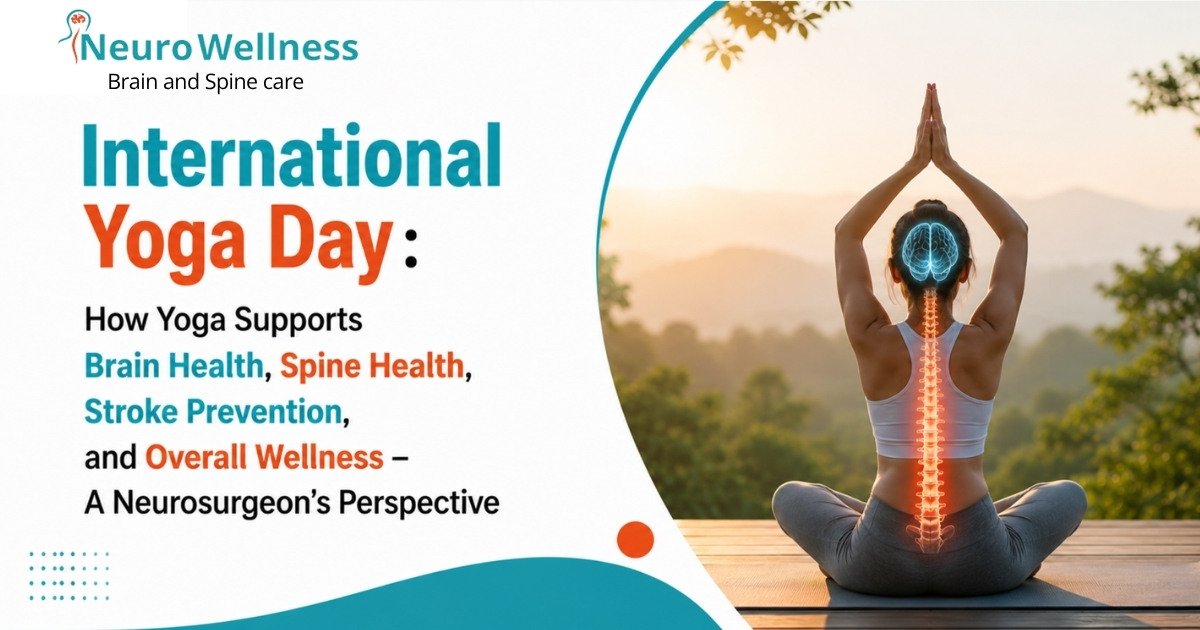
Every year, International Yoga Day reminds us of a timeless truth: our bodies are designed to move.

As a neurosurgeon, I spend my days treating conditions affecting the brain, spine, nerves, and blood vessels. I see patients suffering from neck pain, back pain, stroke, nerve compression, spinal disorders, poor posture, obesity-related complications, and lifestyle diseases. While modern medicine has made tremendous advances in treating these conditions, one question often comes to my mind:

Can some of these problems be prevented before they reach the operating room?

The answer, in many cases, is yes.

One of the simplest and most powerful tools available to us is regular physical activity, and yoga is one of the oldest and most effective forms of movement known to humanity.

Yoga: A Gift from Ancient Wisdom

Yoga is not a modern fitness trend.

It originated thousands of years ago in India and has been practiced by generations of sages, philosophers, and ordinary people seeking physical health, mental clarity, and spiritual well-being.

Long before modern medical science understood the importance of flexibility, breathing exercises, stress reduction, and movement, our ancestors had already recognized their value.

Today, scientific research continues to validate many of the benefits that yoga practitioners have experienced for centuries.

Yoga is more than a series of postures.

It is a holistic approach that combines:

* Physical movement
* Stretching
* Breathing techniques
* Mental focus
* Relaxation
* Self-awareness

Together, these elements create a powerful system for maintaining health and preventing disease.

Understanding Health at the Cellular Level

When most people think about health, they think about organs.

They think about the brain, heart, lungs, kidneys, liver, muscles, or joints.

However, every organ in the body is made up of millions and millions of individual cells.

The true foundation of health lies at the cellular level.

Every cell requires:

* Oxygen
* Nutrients
* Water
* Healthy blood circulation
* Proper waste removal

When these requirements are met, cells function efficiently.

Healthy cells create healthy tissues.

Healthy tissues create healthy organs.

Healthy organs create a healthy human being.

When circulation becomes poor, when movement decreases, or when metabolic disorders develop, cells begin to function less efficiently.

Over time, this can contribute to disease.

This is where yoga and regular physical activity become extremely important.


The Importance of Blood Flow

One of the most critical functions in the human body is circulation.

The heart pumps blood continuously throughout our lives.

Every heartbeat delivers oxygen and nutrients to every organ.

The brain, in particular, is highly dependent on uninterrupted blood flow.

Although the brain represents only a small percentage of body weight, it consumes a significant amount of the body’s oxygen and energy.

Even a brief interruption in blood flow can have serious consequences.

Stroke: A Powerful Example

As a neurosurgeon, I frequently treat patients suffering from stroke.

A stroke occurs when blood flow to a part of the brain becomes blocked or interrupted.

Without oxygen and nutrients, brain cells begin to die.

The consequences can include:

* Weakness of the arm or leg
* Difficulty speaking
* Facial drooping
* Memory problems
* Loss of independence
* Permanent disability

Many stroke risk factors are associated with lifestyle habits, including:

* High blood pressure
* Diabetes
* Obesity
* Physical inactivity
* Smoking
* High cholesterol

While yoga is not a guarantee against stroke, maintaining an active lifestyle can contribute significantly to better cardiovascular health and overall well-being.

The Modern Lifestyle Crisis

Human beings were never meant to sit for 8–12 hours every day.

Yet this has become the reality for millions of people.

Office workers, IT professionals, students, business owners, and even children spend prolonged periods sitting.

Modern technology has made life easier but often less active.

Many people spend their day:

* Sitting at a desk
* Looking at a computer screen
* Using a smartphone
* Watching television
* Travelling in vehicles

This sedentary lifestyle affects every system in the body.

Over time, it contributes to:

* Neck pain
* Back pain
* Obesity
* Poor posture
* Muscle weakness
* Diabetes
* Hypertension
* Heart disease
* Stress and anxiety

The body gradually loses flexibility, strength, and endurance.

The consequences may not appear immediately, but they accumulate over years.

Why the Spine Loves Movement
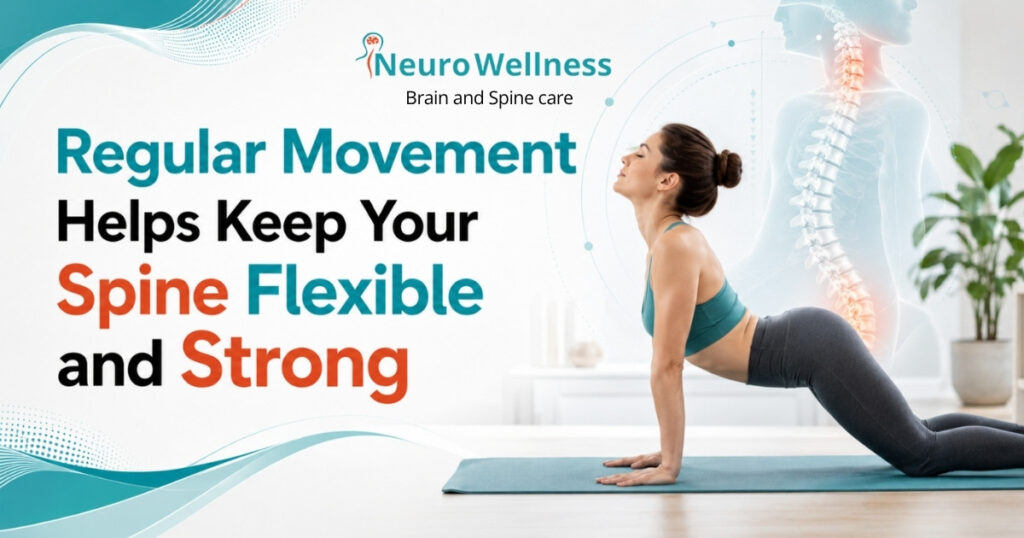
The spine is one of the most remarkable structures in the human body.

It supports the body, protects the spinal cord, and allows movement in multiple directions.

The spinal discs act as shock absorbers between vertebrae.

These discs depend on movement for nutrition.

Unlike many tissues, spinal discs do not have a direct blood supply.

They receive nutrients through a process that is enhanced by movement and changes in pressure.

Prolonged sitting can contribute to:

* Muscle stiffness
* Disc degeneration
* Poor posture
* Neck pain
* Lower back pain

Gentle stretching and regular movement help maintain flexibility and support spinal health.

This is one reason why many people experience improvement in stiffness and discomfort after adopting a regular yoga routine.

Yoga and Posture

Poor posture has become one of the most common health issues in modern society.

Forward head posture, rounded shoulders, and prolonged sitting place additional stress on the neck and spine.

Many individuals develop:

* Chronic neck pain
* Shoulder pain
* Upper back discomfort
* Headaches
* Muscle fatigue

Yoga encourages awareness of body position.

Through stretching and strengthening exercises, it helps improve posture and balance.

Better posture reduces unnecessary stress on muscles and joints.

Yoga and Mental Health

Health is not only physical.

The brain is affected by stress just as much as the body.

Modern life exposes us to constant pressure:

* Work deadlines
* Financial concerns
* Family responsibilities
* Social expectations
* Digital overload

Chronic stress can contribute to:

* Anxiety
* Poor sleep
* Fatigue
* Reduced concentration
* Mood disturbances

Breathing exercises and mindfulness practices associated with yoga may help calm the nervous system.

Many individuals report improved:

* Focus
* Emotional balance
* Sleep quality
* Mental clarity

As a brain specialist, I believe mental wellness is just as important as physical wellness.

A healthy brain supports a healthy life.

Breathing: The Forgotten Medicine

Most people rarely think about their breathing.

Yet breathing is fundamental to life.

Every cell depends on oxygen.

Yoga emphasizes conscious breathing techniques.

Deep breathing encourages:

* Better oxygen delivery
* Relaxation
* Reduced stress response
* Improved awareness

When combined with physical movement, breathing exercises become a powerful tool for overall wellness.

Yoga and the Aging Process

As we age, the body naturally undergoes changes.

Flexibility decreases.

Muscle mass declines.

Balance may become less stable.

Joint stiffness becomes more common.

Many people mistakenly assume these changes are unavoidable.

While aging cannot be stopped, healthy habits can help maintain function and independence.

Regular movement helps preserve:

* Strength
* Balance
* Flexibility
* Coordination
* Confidence

Many older adults find yoga particularly beneficial because it can be adapted to different fitness levels.

Can Yoga Prevent Disease?

Yoga is not a replacement for medical treatment.

Nor should it be viewed as a cure for all illnesses.

However, when practiced safely and consistently, yoga can be an important component of a healthy lifestyle.

Combined with:

* Good nutrition
* Adequate sleep
* Hydration
* Stress management
* Medical care when needed

Yoga may contribute to reducing the risk of many lifestyle-related conditions.

The goal is not perfection.

The goal is prevention.

Movement is Medicine

One of the most important messages I share with patients is simple:

The body needs movement.

It does not necessarily have to be intense.

You do not need to become an athlete.

You do not need expensive equipment.

You simply need consistency.

Whether it is:

* Yoga
* Walking
* Swimming
* Cycling
* Stretching
* Strength training

Regular physical activity supports long-term health.

The best exercise is often the one you can continue doing consistently.

What About People with Medical Conditions?

Many patients ask whether yoga is safe for them.

The answer depends on the individual condition.

Patients with:

* Severe spinal disorders
* Recent surgery
* Significant neurological conditions
* Severe arthritis
* Balance problems

Should consult their healthcare provider before starting any exercise program.

Not every posture is suitable for every individual.

Yoga should be adapted according to age, flexibility, fitness level, and medical condition.

Safety should always come first.

A Message to Young People

One of the greatest concerns today is the declining level of physical activity among younger generations.

Children and teenagers spend increasing amounts of time:

* On smartphones
* On tablets
* Playing video games
* Sitting indoors

Healthy habits formed during childhood often continue into adulthood.

Encouraging physical activity early in life can have lifelong benefits.

Yoga can help young people develop:

* Discipline
* Flexibility
* Concentration
* Body awareness
* Stress management skills

These benefits extend far beyond physical fitness.

A Message to Corporate Employees

Many IT professionals and office workers spend 8–12 hours sitting each day.

This places tremendous strain on the neck, back, shoulders, and eyes.

Small daily habits can make a significant difference:

* Stretch every hour
* Take walking breaks
* Maintain good posture
* Practice breathing exercises
* Incorporate yoga into your weekly routine

Your future health depends on the choices you make today.

International Yoga Day: A Call to Action

International Yoga Day is not just about performing a few postures for one day.

It is about embracing a lifestyle that values movement, balance, and self-care.

The goal is not to achieve difficult poses.

The goal is to take care of the body and mind that carry us through life.

Every stretch matters.

Every step matters.

Every healthy choice matters.

Final Thoughts from a Neurosurgeon

As a neurosurgeon, I have witnessed both the incredible resilience of the human body and the devastating consequences of neglecting health.

Modern medicine can treat many conditions.

Surgeons can perform complex procedures.

Hospitals can provide advanced care.

But prevention remains the most powerful medicine.

Yoga reminds us of a simple truth that has existed for thousands of years:

A healthy mind resides in a healthy body.

By staying active, stretching regularly, breathing deeply, and caring for ourselves at the cellular level, we invest in our future health.

On this International Yoga Day, let us renew our commitment to movement, wellness, and prevention.

Because the goal is not merely to live longer.

The goal is to live healthier, stronger, and more meaningful lives.

Move more. Stretch more. Breathe better. Live healthier.

Happy International Yoga Day.

– Dr. Ganesh Veerabhadraiah
Senior Consultant Neurosurgeon & Head of Department – Neurosurgery
Founder, NeuroWellness
Brain • Spine • Stroke Care

Questions about your cervical collar after surgery?

Dr Ganesh Veerabhadraiah and Dr Sharan Srinivasan at NeuroWellness Brain and Spine Clinic, Jayanagar, provide post-operative follow-up care for all cervical spine surgeries. If you have concerns about your collar, your recovery timeline, or your follow-up imaging, our team is available for consultations.

G-Floor, 26th Main, 9th Block Jayanagar, Bengaluru 560069  |  Monday–Saturday

Cervical PIVD  a prolapsed disc in the neck  is one of the most common reasons patients visit a neurosurgeon in Bangalore. At NeuroWellness Brain and Spine Clinic, Jayanagar, we see patients every week who have been living with arm pain, hand tingling, or neck stiffness caused by cervical disc compression, often without knowing that effective treatment surgical and non-surgical  is available close to home. This guide explains what cervical PIVD is, how it is diagnosed, what treatment involves, and when to act.

What is cervical PIVD?

PIVD stands for Prolapsed Intervertebral Disc. Cervical PIVD is when a disc in the neck ruptures and its inner nucleus pushes outward, compressing a nearby nerve root or the spinal cord. It causes neck pain, arm pain, hand numbness, and in severe cases weakness or gait problems. It most commonly affects the C5–C6 and C6–C7 disc levels.

Each vertebra in the cervical spine is separated by an intervertebral disc a shock-absorbing structure with a tough outer ring (annulus fibrosus) and a soft gel-like centre (nucleus pulposus). When the disc degenerates or is stressed — due to age, injury, or sustained poor posture — the outer ring can develop cracks or tears through which the inner nucleus pushes outward. This is the prolapse.

When the prolapsed disc material presses on a nerve root exiting the spine, it causes pain, tingling, and weakness in the arm — a pattern called cervical radiculopathy. When it presses on the spinal cord itself, it can affect walking, balance, and fine motor function a more serious condition called cervical myelopathy that requires prompt neurosurgical assessment.

C5–C6

Most commonly affected disc level in cervical PIVD

80%

of cervical PIVD cases resolve without surgery with appropriate conservative care

6–12 wks

typical timeline for conservative treatment trial before surgical reassessment

Cervical PIVD vs lumbar PIVD - key difference

Lumbar PIVD (lower back disc prolapse) is more common overall, but cervical PIVD carries a higher risk of serious neurological complication. A prolapsed lumbar disc compresses nerve roots serving the legs. A prolapsed cervical disc compresses nerve roots serving the arms and can also compress the spinal cord, which carries signals for the entire body below the neck. This is why cervical PIVD with cord involvement is treated more urgently than most lumbar disc problems.

Which cervical levels are most commonly affected

C5–C6 disc
 
C6 nerve root
 
Pain and numbness down the lateral forearm into the thumb and index finger. Biceps weakness. This is the most common cervical PIVD level.
C6–C7 disc
 
C7 nerve root
 
Pain down the posterior arm into the middle finger. Triceps weakness and wrist extension weakness. Second most common level.
C4–C5 disc
 
C5 nerve root
 
Pain and weakness around the shoulder and upper arm. Deltoid weakness. Numbness over the outer shoulder.
C7–T1 disc
 
C8 nerve root
 
Pain into the ring and little finger. Intrinsic hand muscle weakness. Grip strength reduction. Less common but often presents with significant hand dysfunction.

Cervical PIVD symptoms - what patients report

The symptoms of cervical PIVD vary depending on which disc level is affected and whether nerve roots or the spinal cord is involved. Most patients present with a combination of neck symptoms and symptoms in one or both arms.

Neck pain and stiffness

Typically the earliest symptom a dull or aching pain at the back of the neck, often worse with certain movements, prolonged sitting, or screen use. Neck stiffness, particularly in the morning, is common. The pain may worsen suddenly if the disc prolapse is acute or traumatic.

Arm pain (cervical radiculopathy)

A sharp, shooting, burning, or electric pain that travels from the neck down the arm — the specific path depends on which nerve root is compressed. Many patients describe it as a "hot wire" sensation running from the neck to the fingertips. This is the hallmark symptom of nerve root involvement.

Hand numbness and tingling

Numbness, pins and needles, or a "dead" feeling in specific fingers correlates to the affected nerve root level. The distribution is distinctive — index finger numbness points to C6, middle finger to C7, and little finger to C8. Patients often describe waking at night with a numb hand.

Weakness in grip or shoulder

Reduced grip strength, difficulty opening jars, dropping objects, or weakness when raising the arm — these reflect motor nerve root compression. Weakness is a more serious symptom than pain or numbness alone and warrants earlier specialist review. Wasting of hand muscles indicates prolonged compression.

Myelopathy symptoms - when the spinal cord is compressed

SEEK URGENT NEUROSURGICAL ASSESSMENT IF YOU HAVE ANY OF THESE
 
  • Difficulty walking or unsteady gait — patients describe feeling drunk or as if the legs “don’t quite work” on uneven surfaces
  • Difficulty with fine motor tasks — inability to button a shirt, write legibly, or type with normal speed
  • Weakness in both arms or both legs — bilateral symptoms always raise concern for spinal cord involvement
  • Lhermitte’s sign — an electric shock sensation running down the spine and into the limbs when the chin is dropped to the chest
  • Bladder or bowel changes — urgency, difficulty starting urination, or incontinence alongside neck symptoms is a neurosurgical emergency

Cervical myelopathy — spinal cord compression from cervical disc disease — can worsen progressively and silently. Unlike radiculopathy, which often causes severe pain that drives patients to seek care early, myelopathy can progress gradually with symptoms patients initially attribute to ageing. Once spinal cord damage becomes permanent, it is irreversible. Early surgical decompression is the only treatment.

How is cervical PIVD diagnosed?

Diagnosis of cervical PIVD involves a combination of clinical examination, imaging, and — in some cases — nerve function testing. The clinical examination tells the neurosurgeon which nerve root is likely involved; the imaging confirms the disc level and severity of compression.

Clinical neurological examination First step

Your neurosurgeon assesses reflexes, muscle strength in specific muscle groups, and the distribution of numbness across the arm and hand. Provocation tests — such as Spurling's test, where the neck is tilted toward the affected side under gentle pressure — can reproduce symptoms and identify the likely nerve root involved. The clinical exam often localises the problem before any imaging is ordered.

MRI cervical spine Gold standard

MRI is the definitive investigation for cervical PIVD. It shows the prolapsed disc, the degree of nerve root or spinal cord compression, the levels involved, and whether there are additional factors such as spondylotic narrowing or ligament thickening contributing to the compression. An MRI of the cervical spine is typically the first imaging investigation ordered when cervical PIVD is clinically suspected. Most major hospitals in Bangalore offer same-day or next-day MRI.

EMG and nerve conduction velocity (NCV) Selected cases

Electromyography (EMG) and nerve conduction velocity testing measure the electrical activity of muscles and the speed of nerve signals. They are useful when the clinical picture and MRI findings don't fully align, when there is a question of whether symptoms come from the cervical spine or from a peripheral nerve problem such as carpal tunnel syndrome, or when the duration and severity of nerve damage needs objective quantification before surgery.

X-ray cervical spine Limited role

Plain X-rays of the cervical spine show bony structures — vertebral alignment, disc space height, and osteophytes — but cannot show the disc material or nerve compression directly. X-rays are useful for assessing spinal alignment, ruling out fracture, and for pre-operative planning to assess disc space height and alignment. They cannot diagnose PIVD and should not be the only investigation when neurological symptoms are present.

Non-surgical treatment for cervical PIVD

The majority of cervical PIVD cases — approximately 75–80% — can be managed successfully without surgery when there is no spinal cord compression and neurological deficits are not progressive. Non-surgical treatment is the appropriate first step for most patients and involves a structured combination of the following measures.

Rest and activity modification

During the acute phase of cervical PIVD — typically the first 1 to 2 weeks — reducing activities that aggravate symptoms allows the inflammatory response around the compressed nerve to begin settling. This does not mean complete bed rest, which is counterproductive. It means avoiding activities that provoke arm pain: overhead reaching, heavy lifting, sustained screen use with poor posture, or driving for long periods. A brief period of activity modification combined with pain relief gives the disc the chance to partially retract and the nerve the opportunity to begin recovery. Duration: 1–2 weeks acute rest, then graduated return to activity under physiotherapy guidance.

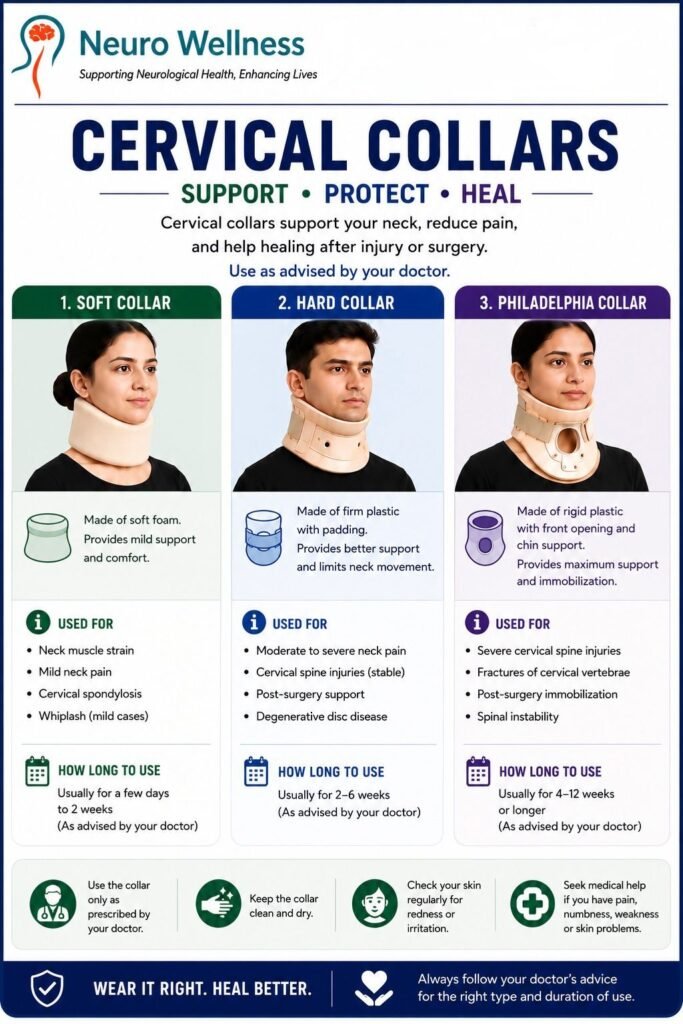
Cervical collar use

A soft cervical collar is often prescribed during the first 2 to 4 weeks of acute cervical PIVD management. It reduces neck movements that reproduce or worsen arm pain, provides mild support for the paraspinal muscles, and allows inflamed nerve roots brief respite from compressive movement. The collar is a short-term symptomatic measure — it does not treat the disc prolapse and should not be worn beyond the prescribed period. For a complete guide to cervical collar use, see our cervical collar types guide and the neck collar for spondylosis patient guide. Duration: 2–4 weeks soft collar. Do not self-extend beyond prescription.

Physiotherapy and cervical traction

Physiotherapy for cervical PIVD focuses on two goals: reducing nerve compression and strengthening the muscles that support the cervical spine. Manual therapy, gentle mobilisation, and — when appropriate — mechanical or manual cervical traction are used. Traction creates slight distraction between vertebrae, temporarily reducing the pressure on the prolapsed disc and providing relief for many patients with radiculopathy. Specific exercises — particularly isometric neck strengthening — are introduced once acute pain settles. See our neck pain exercise guide for the exercises most appropriate for cervical conditions. Begin under physiotherapist supervision — some exercises worsen disc compression if performed incorrectly.

Medications

NSAIDs (anti-inflammatory drugs): reduce inflammation around the compressed nerve root and provide pain relief. First-line pharmacological treatment. Stomach protection (PPI) is typically co-prescribed. Muscle relaxants: reduce the muscle spasm that often accompanies cervical PIVD and contributes to pain. Short-term use only — typically 1 to 2 weeks. Neuropathic pain agents: Pregabalin or Gabapentin are often prescribed for the burning, shooting, or electric arm pain of cervical radiculopathy. They target the nerve pain specifically and are more effective for this symptom type than standard NSAIDs alone. Oral corticosteroids: a short reducing course of oral steroids (such as methylprednisolone) can provide rapid relief for severe acute radiculopathy by reducing the perineural inflammation dramatically. Used selectively in severe presentations. All medication must be prescribed by a qualified doctor — do not self-medicate for cervical PIVD symptoms.

Cervical epidural steroid injection

A cervical epidural steroid injection (CESI) delivers corticosteroid medication directly into the epidural space around the compressed nerve root under fluoroscopic (X-ray) or CT guidance. It provides targeted anti-inflammatory effect at the exact site of nerve compression, often producing significant and rapid relief of radicular arm pain. CESI is used when oral medication and physiotherapy have provided insufficient relief, and when the patient wishes to defer or avoid surgery. The procedure is performed as a day case and most patients notice improvement within 1 to 2 weeks of the injection. Effects can last several months, during which time physiotherapy can be progressed more effectively. Performed by experienced interventional neurosurgeons. Available at NeuroWellness — ask your consultant about suitability.

How long to try conservative treatment before considering surgery

WEEKS 1–4
 
Acute phase — collar, medication, rest
 
Anti-inflammatory medication, soft collar, activity modification. Pain should begin settling. If arm pain is severe and not responding, early CESI may be considered.
WEEKS 4–8
 
Active rehabilitation — physiotherapy, collar weaning
 
Physiotherapy begins or progresses. Collar use tapers. Most patients experience meaningful improvement in this phase. CESI performed if oral therapy insufficient.
WEEKS 8–12
 
Reassessment — response to conservative treatment
 
If symptoms persist with adequate conservative treatment, a neurosurgical consultation for surgical options is appropriate. Repeat MRI may be obtained if symptoms have changed.
AT ANY POINT
 
Accelerate to surgery if neurological deterioration
 
Progressive weakness, worsening numbness, myelopathy signs, or bladder/bowel symptoms mean conservative treatment is bypassed and surgical assessment happens immediately — regardless of duration.
 
IMPORTANT — DO NOT DELAY IF WEAKNESS IS PRESENT
 

If arm or hand weakness is present from the start — or develops or worsens during conservative treatment — do not wait the full 6 to 12 weeks. Progressive motor deficit is an indication for earlier surgical intervention. The window for full neurological recovery narrows with the duration of compression.

Surgical treatment for cervical PIVD in Bangalore

When is surgery recommended for cervical PIVD?

CLINICAL SITUATIONSURGERY INDICATED?URGENCY
Pain only, no neurological deficit, not responding to 8–12 weeks conservative treatmentYes — considerElective
Radiculopathy with significant arm pain not controlled by medication or CESIYes — earlier considerationElective to semi-urgent
Progressive arm or hand weaknessYes — earlier surgerySemi-urgent (weeks)
Cervical myelopathy (spinal cord compression) — gait difficulty, hand clumsinessYes — do not delayUrgent (days to weeks)
Bladder or bowel dysfunction from cervical cord compressionYes — emergencyEmergency
Pain only, responding well to conservative treatmentNo — continue conservativeContinue current plan

ACDF - Anterior Cervical Discectomy and Fusion

Most common procedure  Gold standard    1–3 levels
 

ACDF is the most commonly performed surgical procedure for cervical PIVD in Bangalore and globally. The surgery is performed through a small incision at the front of the neck. The damaged disc is completely removed, the nerve root and/or spinal cord is decompressed, and the disc space is filled with a bone graft or implant. A titanium plate and screws are then fixed to the adjacent vertebrae to stabilise the segment while the bone heals and fuses.

The anterior approach — through the front of the neck — allows excellent visualisation of the disc and avoids disruption of the posterior neck muscles. The skin incision is typically 3–4 cm and is placed in a natural neck skin crease, healing with a near-invisible scar in most patients.

For single-level ACDF, the operation typically takes 60–90 minutes under general anaesthesia. For two or three-level procedures, 90–150 minutes. Most patients are able to sit up and walk on the day of or the day after surgery.

WHAT TO EXPECT  RECOVERY MILESTONES
 
Day 1–2: WalkingWeek  1: Home Week 4–6:   Office work Month 3:  Full activity Month 3–6:   Fusion confirmed on imaging

Cervical disc replacement (arthroplasty)

Motion-preserving Younger patients  Single level preferred
 

Cervical disc replacement (CDR) — also called cervical arthroplasty — removes the prolapsed disc through the same anterior approach as ACDF but replaces it with an artificial disc implant rather than fusing the vertebrae. The artificial disc allows continued movement at the operated level, which theoretically reduces the rate of adjacent segment degeneration over time compared to fusion.

CDR is most appropriate for younger patients (typically under 55), single-level disease, disc prolapse without significant spondylosis or facet joint arthritis at the operated level, and patients who wish to preserve cervical motion for occupational or lifestyle reasons. It is not suitable for all patients — your neurosurgeon will assess whether CDR or ACDF is more appropriate based on your imaging and clinical profile.

Recovery timelines are similar to ACDF. Unlike ACDF, there is no post-operative hard collar required in most CDR patients, as there is no fusion to protect.

RECOVERY
 
No hard collar needed    Week 4–6: Return to work     Month 2–3:Full activity

Posterior cervical foraminotomy

Minimally invasive   Preserves motion    Soft lateral disc only
 

Posterior cervical foraminotomy approaches the disc from the back of the neck. A small portion of the facet joint and bone at the affected level is removed to widen the foramen (the opening through which the nerve exits), relieving the nerve root compression. The disc itself is not removed — instead, the bone narrowing the nerve’s exit point is addressed.

This approach preserves motion at the operated segment (no fusion) and avoids the anterior approach. However, it is only appropriate for soft disc herniations that are compressing the nerve root laterally — not for central disc prolapses compressing the spinal cord, and not for disc herniations combined with significant spondylosis or central canal narrowing.

When selected for the right patient and disc level, posterior foraminotomy offers comparable neurological outcomes to ACDF with a shorter recovery and no fusion-related restrictions.

RECOVERY
 
Shorter recovery  No hard collar   Week 3–4: Light work  Month 2: Full activity
NEUROSURGEON VS ORTHOPAEDIC SURGEON FOR CERVICAL PIVD
 

Cervical PIVD — particularly when it involves the spinal cord or multiple nerve roots — is best managed by a neurosurgeon with specific cervical spine training. Neurosurgeons train extensively in the anatomy and surgical management of neural structures. For cervical PIVD with cord compression (myelopathy), neurological expertise in the peri-operative period is essential. Both neurosurgeons and orthopaedic spine surgeons perform ACDF, but for complex cervical PIVD with neurological involvement, a neurosurgical assessment ensures the most comprehensive evaluation of your spinal cord and nerve root function.

Cervical PIVD treatment at NeuroWellness, Jayanagar, Bangalore

NeuroWellness Brain and Spine Clinic ,G-Floor, 26th Main, 1224, 9th Block Jayanagar,  Bengaluru, Karnataka 560069
 
Dr Ganesh Veerabhadraiah Senior Neurosurgeon & Spine Specialist Cervical spine surgery, ACDF, cervical disc replacement
 

WHY PATIENTS ACROSS BANGALORE CHOOSE NEUROWELLNESS FOR CERVICAL PIVD

  • Dedicated neurosurgical assessment — not a general orthopaedic clinic
  • On-site MRI review and same-day consultation available
  • Both conservative and surgical management under one team
  • ACDF and cervical disc replacement performed by experienced spine neurosurgeons
  • Serving patients from Jayanagar, JP Nagar, BTM, Banashankari, Bilekahalli and South Bangalore
  • Transparent consultation — surgery is recommended only when clinically necessary

Jayanagar 9th Block, Bengaluru 560069  |  Appointments Monday–Saturday

Frequently asked questions - cervical PIVD

1. What does PIVD mean in medical terms?

PIVD stands for Prolapsed Intervertebral Disc. It refers to a condition where the soft inner nucleus pulposus of a spinal disc pushes through the tough outer fibrous ring (annulus fibrosus), compressing nearby nerve roots or the spinal cord. When this occurs in the neck it is called cervical PIVD. It is also referred to as cervical disc herniation or cervical disc prolapse. The full form of PIVD in medical terminology is Prolapsed Intervertebral Disc.

2. Can cervical PIVD be cured without surgery?

Yes, the majority of cervical PIVD cases resolve with conservative treatment over 6 to 12 weeks. This includes rest and activity modification, cervical collar use during the acute phase, physiotherapy and cervical traction, anti-inflammatory and neuropathic pain medication, and in some cases cervical epidural steroid injections. Surgery is only considered when conservative treatment fails after an adequate trial, or when there is spinal cord compression (myelopathy) causing progressive weakness or gait problems — which requires earlier intervention.

3. How long does recovery from cervical PIVD surgery take?

Most patients undergoing ACDF surgery for cervical PIVD in Bangalore return to desk or office work within 4 to 6 weeks and resume full physical activity within 3 months. The cervical bone fusion takes approximately 3 to 6 months to consolidate on follow-up imaging, though most patients experience significant pain and neurological improvement well before this. Recovery varies based on the number of spinal levels operated and the duration and severity of pre-operative nerve compression — patients with longer-standing weakness may have slower neurological recovery.

4. Which doctor should I see for cervical PIVD in Bangalore?

A neurosurgeon or spinal neurosurgeon is the most appropriate specialist for cervical PIVD, particularly if you have arm pain, hand numbness, or arm weakness. At NeuroWellness Brain and Spine Clinic in Jayanagar, Bangalore, Dr Ganesh Veerabhadraiah and Dr Sharan Srinivasan specialise in cervical spine conditions including cervical disc prolapse, ACDF surgery, and cervical disc replacement. The clinic is located at G-Floor, 26th Main, 9th Block Jayanagar, Bengaluru 560069 and is accessible from JP Nagar, BTM Layout, Banashankari, and South Bangalore.

5. Is a cervical collar necessary for PIVD?

A soft cervical collar is often prescribed during the acute phase of cervical PIVD to reduce pain and limit neck movements that aggravate nerve compression. It is a temporary measure typically used for 2 to 4 weeks — it provides symptomatic relief while the disc and surrounding inflammation settle, but it does not treat the prolapse itself. A collar should not be worn indefinitely for PIVD. If you have had cervical surgery for PIVD, a hard collar will be prescribed for 6 to 12 weeks post-operatively depending on the procedure.

6. What happens if cervical PIVD is left untreated?

Untreated cervical PIVD with significant nerve root compression can progress to permanent nerve damage, persistent arm weakness, and chronic pain that becomes increasingly difficult to manage. In cases where the disc is compressing the spinal cord (cervical myelopathy), delayed treatment risks progressive and potentially irreversible loss of hand function, balance, and walking ability. Many cervical PIVD cases do improve spontaneously over months — but any PIVD causing neurological symptoms (arm weakness, numbness, gait difficulty) should be assessed by a neurosurgeon promptly rather than left without monitoring.

RELATED READING FROM NEUROWELLNESS BRAIN AND SPINE CLINIC

Written by Dr Ganesh Veerabhadraiah Senior Neurosurgeon & Spine Specialist — NeuroWellness Brain and Spine Clinic, Jayanagar, Bangalore   Published: June 2026

After cervical spine surgery, most patients wear a hard collar for 6 to 12 weeks. Single-level ACDF: 6–8 weeks. Two-level fusion: 8–10 weeks. Three or more levels: 10–12 weeks. Cervical disc replacement: 4–6 weeks. Posterior decompression: 4–6 weeks soft collar. The exact duration is determined by your surgeon based on follow-up imaging — never stop early because you feel better.

The cervical collar prescribed after neck surgery is not optional and not a matter of personal comfort preference. It protects the surgical hardware, guides the bone fusion process, and prevents movements that could undo the repair your surgeon has completed. The most common question patients ask after being discharged — and one of the most important — is how long this collar needs to stay on.

This guide gives you the answer by surgery type, explains what determines your specific duration, covers how to wear the collar correctly at night and during daily activities, and tells you what the warning signs are that mean you need to call your surgical team immediately.a

Cervical collar duration - by surgery type

The duration of collar use after cervical spine surgery is not the same for every procedure. It depends on the type of surgery performed, the number of spinal levels involved, and your surgeon’s assessment at follow-up. The table below gives typical durations — your specific prescription may differ based on your individual case.

Surgery typeCollar typeTypical durationNight use?Key reason
ACDF — 1 levelHard collar6–8 weeksYes — 24 hrsProtects fusion while bone bridges the disc space
ACDF — 2 levelsHard collar8–10 weeksYes — 24 hrsMore fusion sites = longer stabilisation needed
ACDF — 3+ levelsHard collar10–12 weeksYes — 24 hrsMulti-level fusion is slower to consolidate
Cervical disc replacement (CDR)Soft or semi-rigid4–6 weeksSometimesNo fusion required — motion preserved at implant
Posterior cervical decompression / foraminotomySoft collar4–6 weeksOften not neededNo fusion — soft tissue support only during healing
Cervical laminoplastySemi-rigid or hard6–8 weeksYes initiallyBone flap healing requires stabilisation
Occipito-cervical fusion (skull to spine)Hard collar12–16 weeksYes — 24 hrsComplex multi-level fusion — longest duration
Halo vest removal → collarHard collar transition4–8 weeks post-haloYesBridging period after halo removal before full mobility

These are typical ranges – not guaranteed durations

The table above shows typical ranges used in clinical practice. Your actual duration will be determined by your neurosurgeon at your post-operative follow-up appointment based on your imaging, your bone density, the surgical technique used, and how your recovery is progressing. Do not use this table to decide when to stop wearing your collar — that decision belongs to your surgeon.

Collar duration explained - surgery by surgery

ACDF — Anterior Cervical Discectomy and Fusion
 

6–12 weeks


Collar type: Hard (rigid) — Philadelphia, Miami J, or equivalent
 

ACDF is the most common cervical spine surgery and the one most patients asking this question have undergone. The surgery removes the diseased disc and fills the space with a graft or implant, secured with a titanium plate and screws. The hardware holds the vertebrae together immediately — but the biological bone fusion process, where the patient’s own bone grows across the disc space to create a permanent bridge, takes months to complete.

The collar’s job is to restrict the micro-movements at the fusion site that would prevent or disrupt this bone growth during the critical early weeks. Until the bone bridges, the titanium hardware carries all the load — and hardware can loosen or fail if the surgical segment is subjected to excessive movement. The collar prevents this.

Duration increases with each additional level fused because more fusion sites are forming simultaneously, each requiring the same protection period, and the biological demands on the patient’s bone-forming cells are greater.

Key rules for ACDF collar use
  • Wear 24 hours a day including sleep for the entire prescribed duration
  • First follow-up X-ray at 6 weeks — surgeon assesses fusion progress
  • Do not remove for any reason without a second person holding your head still
  • Collar removal for bathing permitted from day 10–14 with surgical team approval and assistance
  • Return to office work typically permitted at 4–6 weeks with collar still on
  • No driving until surgeon specifically clears it — typically after collar removal
Cervical disc replacement (arthroplasty / CDR)
 
4–6 weeks

Collar type: Soft or semi-rigid — varies by surgeon preference
 

Cervical disc replacement preserves motion at the operated level rather than fusing it. An artificial disc implant replaces the damaged disc and is designed to allow continued movement between the vertebrae. Because there is no bone fusion required, the collar serves a different purpose here — it provides soft tissue support while the muscles and ligaments around the implant recover from the surgical dissection, and it reduces the load on the implant during the early healing phase.

Most CDR surgeons prescribe a soft or semi-rigid collar rather than a full hard collar, and for a shorter duration than ACDF. Some surgeons allow patients to begin gentle range-of-motion exercises earlier than after ACDF, since there is no fusion to protect. The implant is secured mechanically at the time of surgery and does not depend on biological healing to maintain its position.

Key rules for CDR collar use
  • Softer collar than ACDF — but still worn as prescribed
  • Night use varies — follow your specific surgeon’s instruction
  • Earlier return to gentle movement compared to ACDF
  • No driving until surgeon clears — even with a soft collar
  • Physiotherapy typically begins at 4–6 weeks
Posterior cervical decompression / foraminotomy
 
4–6 weeks

Collar type: Soft collar — often not required at night
 

Posterior cervical foraminotomy approaches the spine from the back of the neck to widen the nerve exit point without removing or fusing the disc. Because no fusion is performed and the anterior supporting structures of the cervical spine are left intact, the collar requirement is less strict than after ACDF. A soft collar is typically prescribed to reduce muscle spasm and limit painful movements during the early healing of the posterior muscles and ligaments.

Many posterior decompression patients are not required to wear a collar at night, and the overall collar duration is shorter. However, individual variation exists — some surgeons prescribe a semi-rigid collar for posterior procedures depending on the extent of the bone removal performed.

Key rules for posterior decompression collar use
  • Soft collar only — a hard collar is not typically required
  • Night use often not required — confirm with your surgeon
  • Shorter recovery than ACDF — many patients return to light work at 3–4 weeks
  • Physiotherapy begins earlier than after fusion procedures
Cervical laminoplasty

6–8 weeks

Collar type: Semi-rigid to hard — varies by surgeon and technique
 

Cervical laminoplasty is a motion-preserving procedure for multilevel cervical spinal cord compression (myelopathy). The laminae — the posterior bony arches of the vertebrae — are partially cut and held open with small plates, widening the spinal canal without removing the laminae entirely. The open lamina flaps heal in place over 6 to 8 weeks. The collar protects the healing lamina flaps during this period and limits the extension movements that could compress the posterior spinal cord in the early post-operative period.

Key rules for laminoplasty collar use
  • Extension of the neck is the most important movement to restrict — your collar prevents this
  • Hard collar at night in the early weeks — confirm duration with surgeon
  • Physiotherapy for the hands and balance begins early — even with collar
  • Follow-up CT or X-ray at 6–8 weeks assesses lamina healing before collar removal
Occipito-cervical fusion / complex multi-level fusion

12–16 weeks

Collar type: Hard collar — sometimes preceded by halo vest
 

Complex cervical fusions involving the base of the skull (occiput) or spanning many vertebral levels represent the most demanding fusion biology and therefore require the longest collar durations. The surgical hardware spans a long distance, creates many fusion interfaces simultaneously, and the mechanical demands on each fusion site are high. Bone density, the patient’s healing capacity, and whether bone graft or cage implants are used all influence the final duration prescribed.

Key rules
  • Longest collar duration in cervical surgery — full compliance is essential
  • Follow-up CT scan (not just X-ray) at 3 months to assess fusion in detail
  • Managed by specialist neurosurgical team throughout — do not make independent decisions about collar use

What determines how long you specifically need to wear the collar

🦴 Number of levels fused

Each additional level adds to the duration. One-level ACDF needs 6–8 weeks. Three-level ACDF needs 10–12 weeks. More fusion sites means more biological work required and more time needed to ensure all sites are progressing.

📊 Bone density

Patients with osteoporosis or low bone density heal fusion sites more slowly. Your surgeon may extend the collar duration and require additional imaging to confirm fusion adequacy before clearing collar removal. Bone density is often assessed pre-operatively for this reason.

🔬 Graft type and hardware

Whether a bone graft, PEEK cage, or titanium mesh cage was used — and whether additional biological agents were applied to stimulate fusion — affects the speed and reliability of bone healing. Your surgeon knows exactly what was placed and tailors the duration accordingly.

📷 Follow-up imaging findings

The 6-week post-operative X-ray is the primary reassessment point. If bridging bone is visible and hardware is stable, weaning can begin. If fusion is slower — common in older patients or multi-level cases — the collar is extended and a CT scan at 3 months confirms the final status.

🧬 Patient age and health

Bone fusion slows with age. Patients with diabetes, smoking history, or on certain medications (corticosteroids, some osteoporosis drugs) may have slower or less reliable fusion. These patients often receive longer collar durations and more frequent imaging follow-up.

💊 Smoking status

Smoking significantly impairs bone fusion biology. Nicotine reduces blood flow to healing bone and suppresses the osteoblast activity needed for fusion. Smokers have meaningfully higher rates of non-union (failed fusion) and typically receive extended collar durations and closer imaging follow-up. Stopping smoking before and after cervical spine surgery is strongly recommended.

Do you need to wear the cervical collar at night after surgery?

Hard collar patients (ACDF, laminoplasty, complex fusion)

Yes — wear at night for the full prescribed duration. During sleep, conscious muscle control of the cervical spine is absent. Without active muscle support, the neck can move into positions that place significant load on the fusion site and the surgical hardware. A hard collar prevents this. Most post-ACDF patients wear their collar 24 hours a day — sleeping, waking, bathing (with assistance from day 10–14) — until the surgeon's follow-up confirms they can begin weaning.

Soft collar patients (CDR, posterior decompression)

Often not required — but confirm with your surgeon. Many surgeons do not require soft collar use at night for procedures that do not involve fusion. The soft collar provides minimal immobilisation during sleep (as position changes move it out of place) and can cause skin irritation and stiffness from fixed overnight positioning. If your surgeon has not specifically told you to wear the collar at night, ask directly at your first post-operative appointment — do not assume either way.

Sleeping safely while wearing a hard cervical collar

Sleep on your back (supine) where possible

Supine sleeping is the safest position with a hard collar. Use a thin, low pillow that fills the gap between the back of the collar and the mattress — not a thick pillow that pushes the neck into flexion. A cervical pillow or rolled towel placed in the collar gap achieves the right support for many patients.

Log-roll when getting up at night

Do not sit straight up from lying — this flexes the cervical spine under load while the collar is potentially shifted. Instead, roll to your side first, then push yourself upright with your arms. This is called log-rolling and your nursing team will have demonstrated it before discharge.

Side sleeping — if you cannot sleep on your back

Side sleeping with a hard collar is permissible for many patients. You need a pillow thick enough to fill the distance between your shoulder and the side of your head — maintaining neutral cervical alignment even on your side. A pillow that is too thin allows the head to drop sideways, placing lateral load on the fusion site. Do not sleep face-down in any cervical collar.

Check collar tightness before bed

The collar should support your chin without excessive pressure. Overnight, neck position changes can shift the collar slightly. Check the two-finger fit (two fingers between collar and neck at the front) before going to sleep. A collar that is too tight can cause breathing discomfort and skin breakdown overnight.

Keep skin dry under the collar overnight

Bangalore's humidity means overnight sweating under a hard collar is common. A thin cotton stockinette or T-shirt material under the collar absorbs moisture and significantly reduces the risk of overnight skin breakdown at contact points. Replace the cotton layer daily.

How to wean off a cervical collar safely after surgery

First — get surgical clearance
 

Do not begin any weaning process until your neurosurgeon has reviewed your follow-up imaging and explicitly told you that weaning can begin. Feeling well and pain-free is not sufficient — fusion adequacy is confirmed on X-ray or CT, not by symptoms. Beginning to wean without clearance risks the entire surgical outcome.

Once your surgeon has confirmed on imaging that fusion is progressing adequately and you are cleared to begin weaning, the following structured approach reduces the anxiety and physical discomfort that many patients experience during the transition to being collar-free.

Begin with 1–2 hours collar-free during the day

In the first week of approved weaning, remove the collar for 1 to 2 hours during the day while sitting upright in a supported chair. Keep the collar on for all other activities including sleep, walking, eating, and any activity requiring movement. This gives the neck muscles their first signal that they need to resume their supporting role without overwhelming them immediately.

Monitor closely: if removing the collar causes a significant increase in neck pain or new neurological symptoms — stop, replace the collar, and contact your surgeon.
 

Add 30–60 minutes of collar-free time each day

Each day in weeks 1 and 2 of weaning, progressively increase the daily collar-free period by 30 to 60 minutes. By the end of the second week of weaning, the goal is to be collar-free for the majority of waking hours, wearing the collar only for activities that feel uncomfortable or insecure without it — such as walking on uneven surfaces, car journeys, or any physically demanding tasks.

Do not rush the progression. Some days you will manage more collar-free time than others. This is normal — match the progression to your comfort level, not a fixed schedule.

Collar-free during the day, collar at night

Once comfortable without the collar during most daytime activities, transition to wearing it only at night for a further 5 to 7 days. This bridging period allows the neck muscles to adapt to full daytime independence before withdrawing the overnight support as well. This step is particularly important for patients who have been in a collar for 10 or more weeks and have significant muscle deconditioning.

Continue log-rolling when getting up at night during this stage — your muscles are still rebuilding their overnight support function.

Complete collar removal with physiotherapy starting

Full collar removal is the goal — and once achieved, formal physiotherapy begins or progresses. The first exercises are gentle isometric strengthening — chin tucks, forward and lateral isometric presses — that rebuild the deep cervical muscles without producing the joint movement that could stress the early-stage fusion. See our neck pain exercise guide for the exercises most suitable post-collar.

Many patients feel unsteady or anxious without the collar initially. This is psychological, not structural — your surgeon’s imaging has confirmed the spine is stable. Physiotherapy rapidly rebuilds confidence alongside muscle strength.

Confirm final fusion at 3-month follow-up

Even after the collar is fully removed, bone fusion continues maturing for up to 6 months after surgery. A follow-up appointment at 3 months — typically with a CT scan for detailed fusion assessment — confirms the final status. At this point your surgeon will clear you for progressively higher-intensity activities, driving (if not already cleared), and return to full work including physical labour where applicable.

The 3-month scan is not optional. Asymptomatic non-union (failed fusion with no pain) is a real risk — particularly in smokers and patients with poor bone density — and is only detected on imaging.

Skin care under the collar during the post-operative period

Wearing a hard cervical collar 24 hours a day for 6 to 12 weeks in India’s climate — particularly in a city like Bangalore with its variable humidity — creates sustained conditions for skin breakdown. Prevention requires daily attention to three areas: pressure management, moisture control, and liner hygiene.

Pressure point inspection

Check the chin, jaw line, occiput (back of skull), and clavicle (collarbone) daily using a mirror or with a family member’s help. Any redness that does not fade within 30 minutes of collar removal, any blistering, or any broken skin needs immediate reporting to your surgical team. Do not continue to wear a collar over broken skin without medical guidance.

Moisture and heat management

A thin cotton stockinette worn under the collar absorbs sweat and dramatically reduces skin irritation. Change it at least once daily — twice in hot weather. Do not apply thick creams, talcum powder, or oils under the collar — these trap moisture and heat, accelerating breakdown. A light non-greasy barrier cream at bony prominences is acceptable if skin is dry and intact.

Liner hygiene and replacement

Most hard collars have removable foam liners. These must be removed and cleaned (or replaced) at least every 2 to 3 days. Compressed, damp, or odorous liners lose their cushioning and become a skin risk. Your surgical team can supply additional liners — ask for spares before discharge so you are not caught without a clean liner. Never improvise padding inside a hard collar.

When to call your surgeon about your cervical collar

Most post-operative collar queries can wait for a scheduled follow-up appointment. These cannot.

Contact your neurosurgeon or go to emergency immediately if
 
  • New or returning arm pain, tingling, or numbness after surgery — may indicate hardware shift, non-union, or a new nerve event
  • Increasing weakness in the arm or hand — should be improving after surgery, not worsening
  • Difficulty walking or new balance problems — could indicate spinal cord re-compression requiring urgent imaging
  • The collar feels suddenly loose or unstable — the hardware may have shifted or the collar may be broken
  • The hard collar has cracked, broken, or a Velcro closure has failed — do not wear a damaged hard collar; call your surgeon immediately for replacement guidance
  • Open skin wound or significant pressure sore under the collar — risk of surgical site infection is elevated in the post-operative period
  • Severe difficulty swallowing or breathing while wearing the collar — may indicate the collar is incorrectly positioned or too tight
  • Fever above 38.5°C with neck pain in the post-operative period — needs urgent assessment to rule out surgical site infection
  • Bladder or bowel changes — emergency. Attend the nearest emergency department immediately.

Questions about your cervical collar after surgery?

Dr Ganesh Veerabhadraiah and Dr Sharan Srinivasan at NeuroWellness Brain and Spine Clinic, Jayanagar, provide post-operative follow-up care for all cervical spine surgeries. If you have concerns about your collar, your recovery timeline, or your follow-up imaging, our team is available for consultations.

G-Floor, 26th Main, 9th Block Jayanagar, Bengaluru 560069  |  Monday–Saturday

Frequently asked questions - cervical collar after surgery

1. How Long Do You Wear a Cervical Collar After ACDF Surgery?

After ACDF (Anterior Cervical Discectomy and Fusion) for a single level, patients typically wear a hard cervical collar for 6 to 8 weeks. For two-level ACDF the duration is usually 8 to 10 weeks, and for three or more levels 10 to 12 weeks. The collar is worn 24 hours a day — including during sleep — until the surgeon confirms on follow-up imaging that adequate fusion is progressing. The exact duration is determined at your post-operative follow-up appointment based on X-ray findings.

2. Can I Remove My Cervical Collar to Shower After Surgery?

Most surgeons allow brief collar removal for bathing once the surgical wound has healed — typically after 10 to 14 days post-surgery. This must always be done with a second person present to hold the head and neck in a neutral position while the collar is off. The collar must be replaced before the supporting hand is removed. Never attempt to shower or bathe alone with a post-surgical hard cervical collar in the early post-operative period. Confirm the timing and method specifically with your surgical team before your first attempt.

3. What Happens If I Stop Wearing My Cervical Collar Too Early After Surgery?

Removing a cervical collar before your surgeon recommends it after spine surgery risks hardware failure at the surgical site, non-union of the bone fusion, re-injury or displacement of the operated spinal segment, and in serious cases nerve or spinal cord re-compression requiring revision surgery. Pain relief after surgery does not mean fusion is complete — bone healing continues for months internally even when you feel completely well. Always complete the full collar duration as prescribed and have your fusion confirmed on imaging before stopping.

4. Do I Need to Wear a Cervical Collar at Night After Surgery?

Yes, for hard collar patients after ACDF and similar fusion procedures. Post-surgical patients must wear the hard collar at night as well as during the day for the full prescribed duration. During sleep, conscious muscle control of the neck is absent, making the cervical spine vulnerable to movements that could disturb the surgical hardware or prevent proper bone fusion. Your surgeon will tell you specifically when overnight collar use can stop — typically when follow-up imaging confirms adequate fusion progress.

5. How Do I Know When My Cervical Fusion Has Healed and I Can Stop Wearing the Collar?

Fusion progress is assessed by your neurosurgeon at follow-up appointments using plain X-ray or CT scan, typically at 6 weeks and 3 months post-surgery. The surgeon looks for bridging bone across the fusion site and stability of the spinal hardware on imaging. Only when adequate fusion is confirmed on imaging will your surgeon clear you to begin weaning off the collar. You cannot assess fusion progress from how you feel — imaging is the only reliable way to confirm that bone healing is progressing adequately.

6. Can I Drive While Wearing a Cervical Collar After Surgery?


No. Driving while wearing a hard cervical collar after surgery is not safe and is strongly advised against. A hard collar significantly restricts the neck rotation needed to check blind spots, rear-view and side mirrors, and respond to traffic — creating a serious safety risk for the patient, passengers, and other road users. Most surgeons advise against driving for the full duration of hard collar use. Ask your surgeon specifically at your follow-up appointment when it is safe to resume driving — most patients are cleared to drive 6 to 10 weeks after cervical spine surgery, after collar removal and once neck movement has adequately recovered.