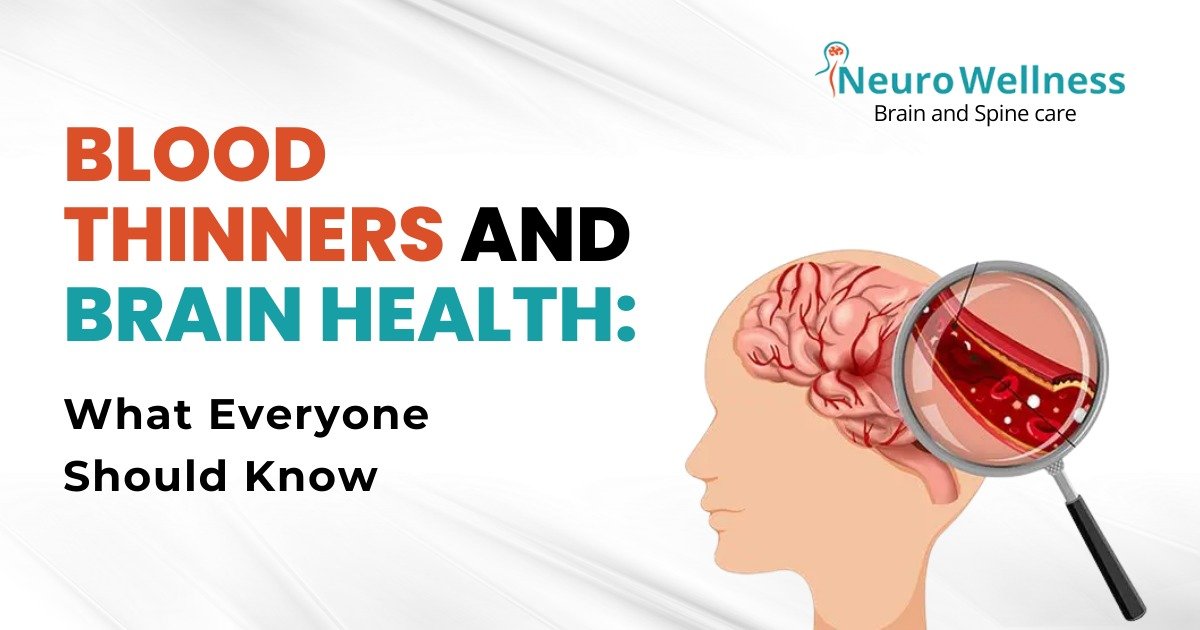
Blood thinners (anticoagulants and antiplatelets) are among the most commonly prescribed medications for stroke prevention and brain health protection.
They do not actually thin the blood they reduce clot formation in blood vessels. Approximately 6–7 million people in India have atrial fibrillation, the most common arrhythmia requiring anticoagulation to prevent cardioembolic stroke (Indian Heart Journal, 2019).
The two main classes are antiplatelets (aspirin, clopidogrel) and anticoagulants (warfarin, rivaroxaban, apixaban, dabigatran). Before any brain or spine surgery, blood thinners must be stopped for a specific period 5–7 days for warfarin, 24–48 hours for most DOACs, 7 days for aspirin under neurosurgeon and cardiologist coordination.
Never stop blood thinners without specialist guidance as this can trigger rebound stroke. Emergency warning signs on blood thinners: sudden severe headache, one-sided weakness, or speech difficulty call emergency immediately.
What Are Blood Thinners and How Do They Work?
Despite the name, blood thinners do not literally make blood thinner or more watery. They work by interfering with specific steps in the blood clotting cascade — the series of chemical reactions that causes blood to solidify into a clot.
Clotting is essential for stopping bleeding after injuries. The problem arises when clots form inside blood vessels — particularly the arteries and veins supplying the brain — where they can block circulation and cause stroke or transient ischaemic attacks (TIA, or “mini-strokes”).
Blood thinners fall into two fundamentally different categories:
Antiplatelets — prevent platelets (tiny blood cells) from clumping together to form the initial plug. Work primarily in arteries. Examples: aspirin, clopidogrel (Plavix), ticagrelor (Brilinta).
Anticoagulants — interfere with the clotting factor cascade that converts liquid blood into solid clots. Work in both arteries and veins. Examples: warfarin (Warf, Coumadin), rivaroxaban (Xarelto), apixaban (Eliquis), dabigatran (Pradaxa), heparin (injectable).
These two categories are not interchangeable. The choice between them depends on why the blood thinner is being prescribed, which vessels are at risk, the patient’s kidney function, age, bleedaing history, and many other factors. Using the wrong type, or the wrong dose, can be as dangerous as using none.
Why Is Blood Thinner Therapy Critical for Brain Health?
The brain consumes approximately 20% of the body’s total oxygen supply despite accounting for only 2% of body weight. It has almost no oxygen reserve blood flow interruption for as little as 4–6 minutes begins causing irreversible neuronal death.
Stroke is the second leading cause of death worldwide and the third leading cause of disability (WHO, 2022). In India, approximately 1.8 million new stroke cases occur each year a burden that is rising due to increasing hypertension, diabetes, and atrial fibrillation rates.
Key conditions requiring blood thinners for brain protection:
• Atrial fibrillation (AFib) — the most common cardiac arrhythmia, affecting an estimated 6–7 million Indians (Indian Heart Journal, 2019). AFib causes irregular heart rhythm that allows blood to pool and clot in the heart’s left atrium, from where clots can travel to the brain causing cardioembolic stroke. AFib increases stroke risk by 5-fold. Anticoagulation reduces this risk by approximately 64% (NEJM, landmark warfarin trial data)
• Prior ischaemic stroke or TIA — reduces the 10–15% annual recurrence risk
• Carotid artery stenosis — prevents clot formation on narrowed arterial plaques
• Mechanical heart valves — valves create turbulent blood flow that promotes clotting; anticoagulation is mandatory lifelong
• Deep vein thrombosis (DVT) or pulmonary embolism (PE) — prevents clot extension and paradoxical embolism to the brain
• Hypercoagulable states — inherited or acquired conditions causing excessive clotting tendency
Antiplatelet vs Anticoagulant — Which Blood Thinner and Why?
This is the most important distinction that most patient-facing resources fail to explain clearly.
| Feature | Antiplatelet drugs | Anticoagulant drugs |
|---|---|---|
| Examples | Aspirin, clopidogrel, ticagrelor, dipyridamole | Warfarin, rivaroxaban, apixaban, dabigatran, heparin |
| How they work | Prevent platelet aggregation | Interrupt clotting factor cascade |
| Main use for brain | Arterial stroke prevention, post-TIA, carotid disease | AFib, mechanical valves, venous clots, high-risk cardiac sources |
| Monitoring required | No routine blood monitoring | Warfarin requires regular INR; DOACs do not |
| Reversibility | No direct reversal agent (except for some newer agents) | Warfarin: vitamin K. DOACs: specific reversal agents available |
| Interaction with food | Minimal | Warfarin: significant (vitamin K foods) |
| Indian context | Widely available, affordable | Warfarin requires INR lab access; DOACs more expensive but convenient |
Dual antiplatelet therapy (DAPT): Some patients, particularly after certain types of stroke or after carotid stenting, are prescribed two antiplatelets simultaneously (typically aspirin + clopidogrel). This is time-limited — usually 3 weeks to 3 months — as the combined bleeding risk increases significantly with duration.
Warfarin vs DOACs (New Blood Thinners) — What Has Changed?
Until about 2010, warfarin was the only oral anticoagulant available for most patients. Direct oral anticoagulants (DOACs) rivaroxaban, apixaban, dabigatran, and edoxaban have since transformed anticoagulation practice.
| Feature | Warfarin | DOACs (rivaroxaban, apixaban, dabigatran) |
|---|---|---|
| Dosing | Variable dose based on INR | Fixed dose once or twice daily |
| INR monitoring | Required frequently (monthly or more) | Not required routinely |
| Food interactions | Significant — vitamin K foods affect INR | Minimal food interactions |
| Drug interactions | Many significant interactions | Fewer but some important interactions |
| Reversal in emergency | Vitamin K + prothrombin complex concentrate | Specific reversal agents available (idarucizumab for dabigatran, andexanet alfa for Factor Xa inhibitors) |
| Onset of action | Slow (2–3 days to full effect) | Rapid (hours) |
| Current preference | Still used for mechanical heart valves and some complex cases | Preferred for AFib and most new anticoagulation starts |
When Should Blood Thinners Be Stopped Before Brain or Spine Surgery?
This is the most critical and most-searched question for patients who are on blood thinners and need neurological or spinal surgery — and it was completely absent from the original blog.
Never stop blood thinners on your own. Abrupt discontinuation — particularly of anticoagulants in high-risk patients — can cause rebound hypercoagulability and precipitate stroke within days to weeks.
Stopping blood thinners before surgery requires coordinated planning between your neurosurgeon, the prescribing cardiologist or physician, and the anaesthesia team. The timing depends on the drug, the surgical risk, and the patient’s underlying condition.
General stopping guidelines (subject to individual clinical decision):
| Medication | Typical stop time before elective brain/spine surgery | When to restart post-surgery |
|---|---|---|
| Aspirin (stroke prevention) | 7 days before | Usually 24–48 hours after, if haemostasis confirmed |
| Clopidogrel | 5–7 days before | As directed — often 24–48 hours after |
| Warfarin | 5 days before; INR must be ≤1.5 on day of surgery | Bridge with heparin if very high clot risk |
| Rivaroxaban (Xarelto) | 24–48 hours before (normal renal function) | 24–48 hours after |
| Apixaban (Eliquis) | 24–48 hours before | 24–48 hours after |
| Dabigatran (Pradaxa) | 24–48 hours (normal renal function); up to 4–5 days if renal impaired | 24–48 hours after |
| Heparin infusion | 4–6 hours before | Resume within hours if surgical field clean |
Bridging therapy: For very high-risk patients — mechanical heart valves, recent stroke within 3 months, very high-risk AFib — who need to stop warfarin for surgery, low-molecular-weight heparin (LMWH) injections are used as a “bridge” during the period when warfarin is withheld, minimising the window of clot vulnerability.
At NeuroWellness: Dr. Ganesh Veerabhadraiah coordinates pre-surgical anticoagulation management with the patient’s cardiologist or physician, ensuring the safest possible transition through surgery. This is a critical aspect of brain and spine surgical planning that requires specialist-to-specialist communication.
Book a Pre-Surgical Anticoagulation Consultation at NeuroWellness →
Foods and Drugs That Interact With Blood Thinners
Warfarin and vitamin K the most important interaction
Warfarin works by blocking vitamin K-dependent clotting factor production. Foods high in vitamin K reduce warfarin’s effectiveness; sudden reduction in vitamin K-rich foods makes warfarin stronger.
High vitamin K foods that can reduce warfarin’s effect if eaten in large amounts:
• Dark leafy greens: spinach, kale, methi (fenugreek leaves), palak, broccoli
• Green onions, cabbage, Brussels sprouts
• Parsley and coriander in large quantities
Key advice for warfarin patients: The goal is consistency — not elimination. Eating moderate, consistent amounts of vitamin K-rich vegetables is healthy and manageable. Dramatic changes in intake (for example, suddenly starting a spinach juice diet or stopping vegetables completely) affect INR significantly. Inform your doctor of any major dietary changes.
Drugs that interact with blood thinners:
• NSAIDs (ibuprofen, naproxen, diclofenac) — increase bleeding risk significantly when combined with anticoagulants or antiplatelets; avoid without physician guidance
• Aspirin — even low-dose aspirin adds bleeding risk when combined with anticoagulants; combination requires specific clinical justification
• Certain antibiotics — alter gut bacteria that produce vitamin K, affecting warfarin levels
• Herbal supplements — ginkgo biloba, ginger, garlic, turmeric in high doses all have antiplatelet effects; fish oil supplements at high doses also increase bleeding risk
Always disclose all medications including over-the-counter drugs, supplements, and herbal preparations to your doctor and pharmacist.
Alcohol and blood thinners:
Moderate alcohol consumption (1–2 standard drinks occasionally) is generally acceptable for most patients on anticoagulants, but regular or heavy alcohol use significantly increases bleeding risk and destabilises warfarin INR. Alcohol also increases fall risk a serious concern for anticoagulated patients. Patients on warfarin should minimise alcohol and discuss their specific consumption with their prescribing physician.
Warning Signs on Blood Thinners That Require Emergency Care
Any of these symptoms in a patient taking blood thinners require immediate emergency evaluation call 112 or go to the nearest emergency department:
Neurological emergencies (possible brain bleed):
• Sudden severe headache “the worst headache of my life” especially if new and explosive
• Sudden weakness or numbness on one side of the body
• Sudden difficulty speaking, finding words, or understanding speech
• Sudden vision loss or double vision
• Sudden loss of balance or coordination
Bleeding emergencies:
• Vomiting blood or finding blood in stools (dark, tarry stools indicate intestinal bleeding)
• Coughing up blood
• Unusually heavy menstrual bleeding
• A fall with any head impact even if no immediate symptoms; brain bleeding can develop over hours
Never wait to see if these symptoms improve on their own when on a blood thinner. What might seem like a minor episode can escalate rapidly.
Common Myths About Blood Thinners — Debunked
Myth 1: “Blood thinners always cause brain bleeding”
False. Intracranial haemorrhage is a rare but known risk occurring in approximately 0.1–0.4% of patients per year on anticoagulants (lower for DOACs than warfarin). This risk is far lower than the 5–15% annual stroke risk in untreated high-risk patients. The benefit-risk calculation strongly favours anticoagulation in appropriately selected patients.
Myth 2: “Once you start, you can never stop”
False. Many anticoagulation courses are time-limited for example, 3 months after a clot event. Lifelong therapy is required for some conditions (AFib with high stroke risk, mechanical heart valves) but not all. The duration is determined by clinical assessment.
Myth 3: “Blood thinners weaken the brain over time”
False. Blood thinners have no direct effect on brain tissue. When used correctly, they protect the brain by preventing strokes. Each stroke averted preserves cognitive function and neurological capacity.
Myth 4: “Natural blood thinners like turmeric or garlic are safer”
Partially false and potentially dangerous. Natural antiplatelet substances have mild effects and no proven equivalence to prescription blood thinners for stroke prevention. More importantly, combining them with prescription blood thinners increases bleeding risk without benefit. Never substitute prescription blood thinners with supplements without specialist guidance.
Conclusion: Protecting Brain Health with the Right Guidance
Understanding blood thinners and brain health is essential for anyone at risk of stroke or clot-related neurological problems. When prescribed correctly and monitored carefully, blood thinners play a vital role in preventing brain damage, preserving function, and improving long-term quality of life. Most risks associated with these medications arise not from the drugs themselves, but from delayed consultation, self-medication, or lack of follow-up.
Because every individual’s medical history, risk factors, and brain health needs are different, expert neurological guidance is crucial. Timely evaluation helps ensure the right medication, the right dose, and the right duration—keeping both brain protection and medication safety in balance.
Consult Dr. Ganesh Veerabhadraiah, Consultant Neurosurgeon at NeuroWellness , for personalized, evidence-based guidance on brain health and stroke prevention.
Frequently Asked Questions About Blood Thinners and Brain Health
1. Do blood thinners protect the brain or harm it?
When correctly prescribed and monitored, blood thinners protect the brain by preventing the clots that cause ischaemic strokes — which are far more common and dangerous than the bleeding risk the medications carry. The annual risk of brain bleeding on anticoagulants is approximately 0.1–0.4%, while the annual stroke risk in untreated high-risk atrial fibrillation is 5–15%. The benefit calculation strongly favours treatment in appropriately selected patients. The key is correct prescription, monitoring, and immediate attention to warning symptoms.
2. What is the difference between aspirin and warfarin for brain protection?
Aspirin is an antiplatelet drug — it prevents platelets from clumping, primarily effective against arterial clots from atherosclerosis. Warfarin is an anticoagulant — it blocks the clotting factor cascade, effective for clots arising from the heart (as in atrial fibrillation) or veins. They work by entirely different mechanisms. Aspirin is used for arterial stroke prevention in atherosclerotic disease. Warfarin (or DOACs) is required for AFib-related stroke prevention — aspirin is not a substitute for anticoagulation in AFib and has been shown to be significantly inferior.
3. Can I eat green vegetables if I am on warfarin?
Yes — consistency is more important than restriction. Vitamin K-rich vegetables (spinach, kale, methi, broccoli) reduce warfarin’s effectiveness when eaten in large amounts. The goal is not to eliminate these healthy foods but to eat them in consistent moderate amounts so INR remains stable. Sudden dramatic changes — starting a kale juice diet or completely stopping vegetables — significantly affect INR. Always discuss any major dietary change with your prescribing physician and check your INR if you have changed your diet.
4. When do I need to stop blood thinners before brain or spine surgery?
The timing depends on the specific medication. Aspirin: 7 days before. Clopidogrel: 5–7 days before. Warfarin: 5 days before, with INR confirmed ≤1.5 on the day of surgery. DOACs (rivaroxaban, apixaban): 24–48 hours before with normal kidney function. Dabigatran: 24–48 hours to 4–5 days depending on renal function. These timings require coordination between your neurosurgeon and the doctor who manages your anticoagulation. Never stop without specialist guidance — abrupt discontinuation risks rebound stroke.
5. What happens if I miss a dose of my blood thinner?
For warfarin: if less than 12 hours late, take the missed dose. If more than 12 hours late, skip it and resume your normal schedule. Never double the next dose. For DOACs (rivaroxaban, apixaban, dabigatran): take the missed dose as soon as you remember on the same day. If the next dose is due, skip the missed one. Never take two doses in one day. Contact your doctor if you miss multiple doses consecutively or if you’re unsure what to do.
6. What are the signs of a brain bleed while on a blood thinner?
Seek emergency care immediately for: a sudden severe headache unlike any previous headache, weakness or numbness on one side of the body, sudden difficulty speaking or understanding speech, sudden vision loss or double vision, sudden loss of balance or coordination, or altered consciousness. These symptoms can indicate an intracranial haemorrhage — a rare but serious complication requiring immediate CT scan and neurosurgical assessment. Do not drive yourself — call 112.
7. Are newer blood thinners (DOACs) better than warfarin?
For most new patients requiring anticoagulation for AFib or venous thromboembolism, DOACs (rivaroxaban, apixaban, dabigatran) are now preferred over warfarin. They have comparable or better efficacy, lower risk of brain bleeding, no INR monitoring requirement, and no dietary restrictions. However, they are more expensive and require good kidney function. Warfarin remains the choice for patients with mechanical heart valves, certain valvular conditions, and some complex cases where DOACs have not been validated. The decision should be made jointly with your prescribing physician.
8. Can blood thinners be taken with common painkillers like ibuprofen?
No — NSAIDs (ibuprofen, naproxen, diclofenac) significantly increase bleeding risk when combined with any blood thinner, both by their own antiplatelet effect and by irritating the stomach lining. This combination can cause dangerous gastrointestinal or intracranial bleeding. Use paracetamol (acetaminophen) for pain relief as a safer alternative for patients on blood thinners. Always check with your doctor or pharmacist before taking any over-the-counter medication, including supplements and herbal preparations.

About Author
Dr. Ganesh Veerabhadraiah
Dr. Ganesh Veerabhadraiah, leading neurosurgeon and neurologist in Bangalore, has over 20 years of expertise in managing back pain, migraines, headaches, neuro disorders, and spine problems. His clinical excellence and patient-first approach make him one of the most trusted neuro doctors in Bangalore.
At Neurowellness Brain & Spine Clinic in Jayanagar and Kavery Hospital Electronic City, Dr. Ganesh provides comprehensive treatments ranging from minimally invasive spine surgery to advanced neurological care. As a respected back pain specialist and migraine doctor, he continues to deliver reliable outcomes for patients.
👉 Connect with Dr. Ganesh on LinkedIn