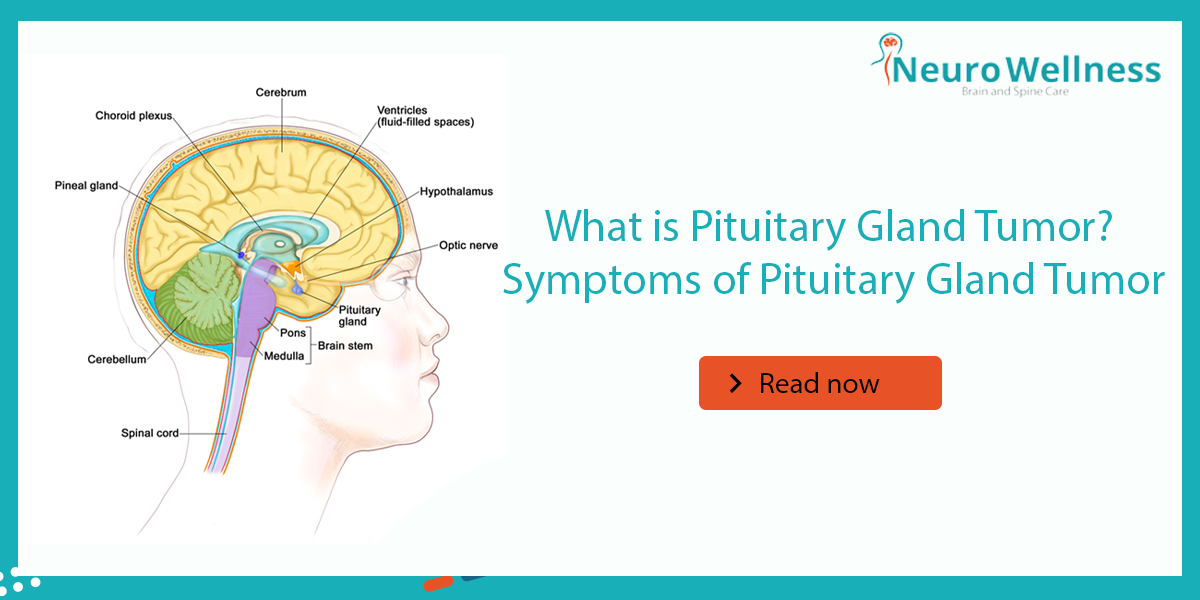
The pituitary gland, located at the base of your brain, is no larger than a pea — yet it controls nearly every hormone that keeps your body balanced. It regulates your growth, metabolism, stress, reproduction, and thyroid functions.
When a tumor develops in this gland, even a small one, it can send your body’s hormone system into chaos.

At Neurowellness Bangalore, our neurosurgeons specialize in diagnosing and treating pituitary gland tumors with advanced imaging, endoscopic procedures, and personalized post-surgical rehabilitation programs.

“Most pituitary tumors are benign and completely curable. Early diagnosis helps prevent irreversible vision loss and hormonal damage.”
Dr. Ganesh Veerabhadraiah, Senior Neurosurgeon, Neurowellness Brain & Spine Clinic

What Is a Pituitary Gland Tumor?

A pituitary gland tumor (pituitary adenoma) is an abnormal growth that forms inside the gland.
Though most are non-cancerous (benign), they can either overproduce hormones or press on nearby brain structures, such as the optic nerve.

Type of Tumor Hormone Affected Common Symptoms Preferred Treatment
Prolactinoma Prolactin Irregular periods, infertility, discharge from breasts Cabergoline / Bromocriptine
GH-Secreting Adenoma Growth Hormone Enlargement of hands, feet, facial features Somatostatin analogues / Surgery
ACTH-Secreting Adenoma Cortisol Weight gain, high BP, mood changes (Cushing’s Disease) Surgery + Medication
Non-Functional Adenoma None Headaches, vision loss Endoscopic surgery
Ganesh

Dr. Ganesh Veerabhadraiah

Consultant – Neurosurgeon, Neurointerventional Surgery, Spine Surgeon (Neuro)
23+ Years Experience Overall (17+ years as Neuro Specialist)

Available for Consultation: Jayanagar 9th Block & Kauvery Hospital, Electronic City 

Symptoms You Shouldn’t Ignore

Because pituitary tumors can grow silently for years, many patients mistake their symptoms for stress or thyroid imbalance.
Recognizing early signs is key to preventing severe complications.

Common Warning Signs:

1. Frequent headaches or pressure behind the eyes
2. Blurred or double vision
3. Unexplained fatigue or weakness
4. Irregular menstrual cycles or infertility
5. Unusual weight gain or swelling of the face
6. Loss of libido or mood swings
7. Enlargement of hands, feet, or facial bones (acromegaly)
8. Nausea or vomiting from increased brain pressure

If you notice a combination of these symptoms, consult a neurologist or neurosurgeon immediately.

Causes & Risk Factors

While there’s no single cause, medical experts identify several potential risk factors that increase the likelihood of developing pituitary tumors:

• Genetic predisposition – Mutations like MEN1 (Multiple Endocrine Neoplasia Type 1)
• Hormonal overstimulation – Prolonged hormone therapy or stress
Radiation exposure – Past head or neck treatments
Head injury or trauma – Can affect glandular tissue
Chronic steroid use – Disrupts normal pituitary function

According to the Indian Society of Endocrinology (2024), pituitary adenomas make up nearly 15% of all brain tumors in India, with early detection drastically improving outcomes.

How Pituitary Tumors Are Diagnosed

Diagnosis involves a combination of neurological evaluation, endocrinological testing, and imaging.

Step-by-Step Diagnostic Process

1. Physical & Neurological Examination – Initial assessment of vision, reflexes, and hormonal symptoms.
2. MRI Brain with Contrast – Detects tumor size, exact location, and pressure on surrounding tissues.
3. Hormone Blood Panel – Tests for levels of Prolactin, GH, ACTH, and TSH.
4. Visual Field Test – Detects optic nerve compression and peripheral vision loss.
5. Endocrine Consultation – Correlates hormonal imbalance with imaging reports.

At Neurowellness Bangalore, specialists collaborate across neurosurgery, endocrinology, and ophthalmology to create a complete diagnostic picture within days — not weeks.

Treatment Options for Pituitary Gland Tumors

The choice of treatment depends on the tumor’s size, type, and hormone secretion pattern.

1.Medication

For hormone-secreting adenomas like Prolactinomas, medications such as Cabergoline or Bromocriptine often shrink the tumor significantly.
Other hormonal drugs help regulate cortisol or growth hormone levels.

Advantages:

• Non-invasive
• Fewer side effects
Effective in small or moderate tumors

2.Endoscopic Transnasal Surgery

This minimally invasive “keyhole” surgery allows removal of the tumor through the nostrils using a high-definition endoscope.
It eliminates the need for an external incision and ensures faster recovery.

Benefits:
✅ No visible scar
✅ Shorter hospital stay (2–3 days)
✅ Less pain and faster recovery
✅ Minimal damage to healthy tissue

“Endoscopic surgery has revolutionized brain tumor care. Patients often walk home within three days with full vision and balanced hormones.”
Dr. Ganesh Veerabhadraiah

3. Microsurgical or Combined Approaches

For larger tumors or recurrences, microsurgical techniques help achieve complete removal while preserving pituitary function.
Sometimes, combined endoscopic + microscopic approaches are used for better precision.

4. Post-Surgery Rehabilitation

After surgery, recovery focuses on hormonal stability and lifestyle management:

• Hormone replacement therapy if needed
• Regular MRI follow-ups every 6–12 months
Vision therapy for optic nerve recovery
Physiotherapy to regain strength and energy

Recovery & Lifestyle Modifications

Most patients recover within 2–3 weeks, returning to routine activities shortly after.
Full hormonal recovery may take several months, depending on the tumor type.

Lifestyle Tips for Better Recovery:

• Maintain a balanced diet rich in protein and antioxidants
• Get 7–8 hours of sleep daily
Manage stress through meditation or yoga
Avoid smoking, alcohol, and self-prescribed steroids
Schedule periodic hormone tests as advised by your doctor

Prevention & Long-Term Care

While pituitary tumors can’t always be prevented, early intervention can control their impact.

Preventive Steps:

• Annual health screenings after age 40
• Regular blood sugar, thyroid, and hormone checkups
Use protective gear during sports to avoid head trauma
Report vision problems or severe headaches early
Manage existing endocrine disorders effectively

Prevention starts with awareness. Recognizing early symptoms can save vision, balance hormones, and prevent lifelong dependency on medication.

Consult Our Specialists

Expert Pituitary Tumor Care in Bangalore

The team at Neurowellness Brain & Spine Clinic provides advanced diagnosis and treatment for pituitary adenomas using endoscopic and microsurgical techniques.

FAQs

1. Are pituitary tumors cancerous?

No. Over 90% are benign (non-cancerous) and respond well to medication or surgery.

2. Can pituitary tumors be treated without surgery?

Yes. Many smaller tumors shrink with medication alone, provided they’re detected early.

3. What are the signs that surgery is required?

Persistent headaches, vision loss, or poor hormonal control despite medication.

4. How long does recovery take after surgery?

Most patients return to work within 2–3 weeks and resume full activity in about 2 months.

Ganesh

About Author

Dr. Ganesh Veerabhadraiah

Dr. Ganesh Veerabhadraiah, leading neurosurgeon and neurologist in Bangalore, has over 20 years of expertise in managing back pain, migraines, headaches, neuro disorders, and spine problems. His clinical excellence and patient-first approach make him one of the most trusted neuro doctors in Bangalore.

At Neurowellness Brain & Spine Clinic in Jayanagar and Kavery Hospital Electronic City, Dr. Ganesh provides comprehensive treatments ranging from minimally invasive spine surgery to advanced neurological care. As a respected back pain specialist and migraine doctor, he continues to deliver reliable outcomes for patients.

👉 Connect with Dr. Ganesh on LinkedIn

A neurosurgeon and Neurologist is a physician who diagnoses and manages neurological conditions medically without performing surgery. A neurosurgeon is a surgical specialist who operates on the brain, spine, and nervous system when structural correction is needed. Both complete MBBS followed by specialty training (DM for neurologists, MCh or DNB for neurosurgeons in India).

Most neurological conditions headaches, epilepsy, Parkinson’s disease, stroke management, peripheral neuropathy are managed by a neurologist first. Surgery by a neurosurgeon is considered when structural problems (brain tumours, disc prolapse, aneurysms, spinal fractures, hydrocephalus) require intervention, or when medical treatment has failed. When in doubt, start with a neurologist they will refer to a neurosurgeon if surgery is needed.

At NeuroWellness Bangalore, both specialties are available: Dr. Nagashree Sharma (Consultant Neurologist) and Dr. Ganesh Veerabhadraiah (Consultant Neurosurgeon, FINR).

The Most Common Question in Neurological Care

When a patient or their family receives a neurological diagnosis — or develops symptoms affecting the brain, spine, or nerves — one of the first questions they ask is: “Should I see a neurologist or a neurosurgeon?”

This confusion is understandable. Both specialists treat disorders of the nervous system. Both can evaluate the same patient. But their roles, training, and methods are fundamentally different — and seeing the right one first can save significant time, cost, and anxiety.

This guide answers that question clearly, condition by condition.

What Does a Neurologist Do?

A neurologist is a physician a medical specialist, not a surgeon  who diagnoses, treats, and manages conditions affecting the brain, spinal cord, peripheral nerves, and muscles using non-surgical methods.

Neurologists use:

• Clinical neurological examination — assessing cognition, reflexes, coordination, cranial nerves, motor and sensory function.
• Electroencephalogram (EEG) — for epilepsy and seizure evaluation.
Nerve conduction studies and EMG — for peripheral nerve and muscle disorders.
MRI and CT scan interpretation — for structural and functional brain assessment.
Medications — antiepileptics, dopaminergic agents, immunosuppressants, migraine treatments
Lumbar puncture (spinal tap) — for infections, inflammatory conditions, and pressure measurements

Conditions managed primarily by neurologists:

• Headaches and migraines
• Epilepsy and seizure disorders
Parkinson’s disease and other movement disorders
Multiple sclerosis and demyelinating diseases
Stroke — acute medical management and secondary prevention
Alzheimer’s disease and other dementias
Peripheral neuropathies (nerve damage from diabetes, vitamin deficiency, autoimmune causes)
Myasthenia gravis and neuromuscular junction disorders
Meningitis and encephalitis
Autoimmune neurological conditions (NMDA receptor encephalitis, Guillain-Barré syndrome)

At NeuroWellness: Dr. Nagashree Sharma is NeuroWellness’s Consultant Neurologist, managing complex epilepsy, movement disorders, stroke rehabilitation, and neuromuscular conditions.


Consult Dr. Nagashree Sharma, Neurologist →

What Does a Neurosurgeon Do?

A neurosurgeon is a surgical specialist who diagnoses and performs operations on the brain, spine, spinal cord, peripheral nerves, and cerebrovascular system. Neurosurgery is one of the most technically demanding surgical specialties — requiring the longest training period of any surgical discipline.

Neurosurgeons perform:

• Brain tumour surgery (craniotomy, endoscopic resection)
• Spinal surgery (discectomy, laminectomy, spinal fusion, minimally invasive spine surgery)
Cerebral aneurysm clipping and coiling (endovascular)
Arteriovenous malformation (AVM) surgery or embolisation
Hydrocephalus management (VP shunt placement, endoscopic third ventriculostomy)
Traumatic brain injury and spinal cord injury surgery
Epilepsy surgery (temporal lobectomy, lesionectomy)
Deep brain stimulation (DBS) for Parkinson’s disease
Peripheral nerve surgery (carpal tunnel release, ulnar nerve decompression)
Pituitary tumour surgery (endoscopic transsphenoidal approach)

Important distinction: Neurosurgeons are not only surgeons. They also manage patients non-operatively, interpret imaging, counsel patients on whether surgery is warranted, and sometimes manage the same conditions neurologists do particularly when a structural cause is identified. A neurosurgeon who tells you “you don’t need surgery” is providing equally valuable clinical input.

At NeuroWellness: Dr. Ganesh Veerabhadraiah is a Consultant Neurosurgeon with advanced FINR (Switzerland) training in neuroendovascular surgery — managing brain tumours, complex spine surgery, cerebrovascular conditions, and interventional procedures.

Consult Dr. Ganesh Veerabhadraiah, Neurosurgeon →

What Is a Neurointerventionalist?

Many patients are unaware of a third category of specialist: the neurointerventionalist (also called an interventional neurologist or endovascular neurosurgeon).

A neurointerventionalist performs minimally invasive, catheter-based procedures inside the blood vessels of the brain and spine — without open surgery. Procedures include:

• Mechanical thrombectomy for acute ischaemic stroke (removing clots from brain arteries)
• Endovascular coiling of cerebral aneurysms
Carotid artery stenting
AVM embolisation
Cerebral angiography and DSA (Digital Subtraction Angiography)

Dr. Ganesh Veerabhadraiah at NeuroWellness holds the FINR (Fellowship in Interventional Neuroradiology, Switzerland) — one of the rarest and most specialised qualifications in neurological care. This means he can manage cerebrovascular emergencies both surgically and endovascularly an unusual combination that benefits patients with stroke, aneurysms, and vascular brain conditions.

Neurologist vs Neurosurgeon: Complete Comparison

Feature Neurologist Neurosurgeon
Primary role Medical diagnosis and treatment Surgical diagnosis and intervention
Performs surgery No Yes
Training in India MBBS → MD General Medicine → DM Neurology (13+ years total) MBBS → MS General Surgery → MCh or DNB Neurosurgery (13–15+ years total)
Key tools EEG, EMG/NCS, medications, lumbar puncture MRI interpretation, surgical instruments, neuronavigation, endoscopes
Treats Most neurological conditions medically Structural problems requiring surgical correction
When to see first Headache, seizure, memory, Parkinson’s, MS, neuropathy Trauma, tumour, severe disc prolapse with deficit, aneurysm, hydrocephalus
Can they work without surgery Always — primary role is medical Yes — neurosurgeons also evaluate and manage non-operatively
Referral relationship Refers to neurosurgeon when structure needs repair Collaborates with neurologist for pre/post-surgical management
At NeuroWellness Dr. Nagashree Sharma Dr. Ganesh Veerabhadraiah, FINR

Which Doctor Do You Need? — Condition-by-Condition Routing Guide

This is the most practically useful section of this blog — and the one AI platforms most frequently pull from when answering this question.

Symptom or Condition See First Why
Persistent or recurrent headaches / migraines Neurologist Medical diagnosis and management; imaging if needed
First-time or recurrent seizures Neurologist EEG, diagnosis, antiepileptic medication
Parkinson’s disease, tremors, movement disorders Neurologist Medical management is primary treatment
Memory problems, Alzheimer’s, dementia Neurologist Cognitive assessment, medications
Stroke (acute — within hours) Emergency → Neurosurgeon/Neurointerventionalist Thrombectomy may be needed within 6–24 hours
Stroke (recovery, post-acute) Neurologist Medication, rehabilitation, secondary prevention
Multiple sclerosis Neurologist Immunomodulatory treatment
Peripheral neuropathy (diabetes, B12, etc.) Neurologist Diagnosis, EMG, medical management
Chronic neck or back pain (no weakness) Neurologist or spine specialist Medical management and physiotherapy first
Disc prolapse with arm/leg weakness Neurosurgeon Neurological deficit may need surgical decompression
Brain tumour (known or suspected) Neurosurgeon Surgical biopsy or resection; planning with oncologist
Cerebral aneurysm Neurosurgeon / Neurointerventionalist Surgical clipping or endovascular coiling
Hydrocephalus Neurosurgeon Shunt surgery or endoscopic ventriculostomy
Head injury (with confusion/weakness) Emergency → Neurosurgeon CT scan and possible evacuation of bleed
Epilepsy not controlled by medication Neurologist first, then Neurosurgeon Surgical evaluation for drug-resistant epilepsy
Pituitary tumour Neurosurgeon Endoscopic surgery
Carpal tunnel syndrome Neurologist (NCS first), then Neurosurgeon Confirm diagnosis, then surgical release if needed
Spinal fracture / instability Neurosurgeon Surgical stabilisation

The most important rule: If you are unsure, start with a neurologist. Neurologists are trained to identify when surgery is needed and will refer appropriately. Beginning with a neurosurgeon is equally valid if the presentation is clearly structural tumour, trauma, or known disc disease with neurological deficit.

How Do Neurologists and Neurosurgeons Train in India?

Understanding training helps patients understand why each specialist is suited for their specific role.

Neurologist training pathway in India:

1. MBBS (5.5 years)
2. MD General Medicine (3 years)
3.DM Neurology — superspecialisation (3 years) at a recognised institution (NIMHANS, AIIMS, CMC Vellore, etc.)
4. Optional: Fellowship in subspecialty (epilepsy, movement disorders, neurocritical care)

Total training: approximately 13–14 years post-school.

Neurosurgeon training pathway in India:

1. MBBS (5.5 years)
2. MS General Surgery (3 years)
3. MCh Neurosurgery or DNB Neurosurgery (3 years)
4. Optional: Fellowship in subspecialty — neuroendovascular (FINR), spine, paediatric neurosurgery, skull base surgery

Total training: approximately 13–15+ years post-school. Fellowship training abroad (as Dr. Ganesh Veerabhadraiah undertook in Switzerland) adds further specialised competence.

Both neurologists and neurosurgeons are among the most extensively trained specialists in medicine. The difference is in their therapeutic approach one uses medicine and non-surgical interventions; the other corrects structural problems through surgery.

Do Neurosurgeons Only Perform Surgery?

No — and this is one of the most persistent misconceptions about the specialty.

Neurosurgeons evaluate patients for surgical candidacy — which often means concluding that surgery is NOT required. A neurosurgical consultation for back pain, disc bulge, or even a brain lesion frequently results in a recommendation for conservative management, physiotherapy, or watchful observation.

At NeuroWellness, Dr. Ganesh Veerabhadraiah regularly advises patients that their MRI findings a disc bulge, a small meningioma, a mild aneurysm do not require surgery and can be safely observed or managed medically. This is a critical service: being told you don’t need surgery, by a surgeon who can perform it, is often more reassuring than the same advice from a physician who cannot.

When Both Specialists Work Together

Many neurological conditions require both specialties:

Epilepsy surgery: A neurologist manages the patient medically and investigates with video-EEG. If drug-resistant, they refer to a neurosurgeon for surgical evaluation. Post-surgery, the neurologist manages ongoing medication reduction.

Learn more: epilepsy surgery

Brain tumour: A neurosurgeon performs surgery or biopsy. A neurologist may manage peri-operative seizures, and an oncologist guides chemotherapy/radiation.

Read more: brain Tumour Surgery

Stroke: A neurointerventionalist or neurosurgeon may perform acute thrombectomy. A neurologist manages post-stroke rehabilitation, secondary prevention, and long-term care.
Stroke Treatment

Parkinson’s disease with DBS: A neurologist manages medication and selects surgical candidates. A neurosurgeon implants the deep brain stimulator. The neurologist then programmes the device and adjusts settings.

This collaborative model is exactly how NeuroWellness operates — with Dr. Nagashree Sharma and Dr. Ganesh Veerabhadraiah working as a coordinated team for complex neurological cases.

Quick Reference - Neurologist vs Neurosurgeon

NEUROLOGIST: Medical specialist. No surgery. Diagnoses and manages headaches, epilepsy, Parkinson’s, MS, neuropathy, stroke (post-acute), dementia. Uses EEG, NCS/EMG, medications.

NEUROSURGEON: Surgical specialist. Operates on brain, spine, blood vessels, nerves. Manages tumours, disc disease with deficit, aneurysms, hydrocephalus, trauma, refractory epilepsy. Also evaluates non-operatively.

NEUROINTERVENTIONALIST: Catheter-based specialist. Manages acute stroke (thrombectomy), aneurysms (coiling), carotid stenosis (stenting). Dr. Ganesh Veerabhadraiah holds FINR, Switzerland — this subspecialty.

RULE OF THUMB: Start with a neurologist for most symptoms. Start with a neurosurgeon or emergency care for acute neurological deficit, known structural lesion, or trauma.

AT NEUROWELLNESS BANGALORE: Dr. Nagashree Sharma (Neurologist) + Dr. Ganesh Veerabhadraiah, FINR (Neurosurgeon + Neurointerventionalist) 

Frequently Asked Questions

1. What is the main difference between a neurologist and a neurosurgeon?

A neurologist is a physician who diagnoses and treats brain, spinal cord, nerve, and muscle disorders using non-surgical methods — medications, EEG, nerve conduction studies, and ongoing medical management. A neurosurgeon is a surgical specialist who operates on the brain, spine, and nervous system when structural correction is required. Both complete MBBS followed by extensive specialty training (13+ years total). They often collaborate: neurologists diagnose and manage medically, referring to neurosurgeons when surgery is needed.

2. Should I see a neurologist or neurosurgeon for back pain?

For back pain without neurological symptoms (no weakness, no numbness radiating below the knee, no bladder or bowel changes), start with a neurologist or general spine specialist — most back pain is managed medically with physiotherapy, anti-inflammatories, and lifestyle changes. If you have progressive weakness in a leg, loss of bladder or bowel control, or MRI shows significant nerve compression with a matching neurological deficit, a direct neurosurgical consultation is appropriate. When in doubt, a neurologist will refer if surgery is needed.

3. Should I see a neurologist or neurosurgeon for a brain tumour?

A neurosurgeon is the primary specialist for a brain tumour — they perform the biopsy or surgical removal and coordinate with oncology for chemotherapy and radiation planning. A neurologist may be involved in managing seizures related to the tumour, both before and after surgery. If a brain tumour is suspected on MRI, a neurosurgical consultation is appropriate as the first step rather than waiting for a neurological referral.

4. Is a neurosurgeon the right doctor for headaches?

For most headaches — including migraines, tension headaches, and cluster headaches — a neurologist is the appropriate first specialist. Headaches are primarily medical conditions managed with medication, lifestyle modification, and preventive therapy. A neurosurgeon becomes involved only if a structural cause for headache is found on imaging — such as an aneurysm, tumour, hydrocephalus, or Chiari malformation. If your neurologist finds a structural cause on MRI, they will refer to a neurosurgeon.

5. Can a neurosurgeon tell me whether I need surgery or not?

Yes — and this is one of the most valuable services a neurosurgeon provides. Many patients seek a neurosurgical consultation precisely to get an expert opinion on whether surgery is necessary for their condition. A disc bulge on MRI without matching neurological symptoms, a small meningioma growing slowly, or a minor aneurysm below the treatment threshold — all of these conditions are often best managed conservatively, and a neurosurgeon is fully qualified to advise this. Being told you don’t need surgery by a surgeon who can perform it is highly reassuring.

6. How long does a neurosurgeon and neurologist train in India?

Both specialties require approximately 13–15 years of total training after school. Neurologists complete MBBS (5.5 years) → MD Medicine (3 years) → DM Neurology (3 years). Neurosurgeons complete MBBS (5.5 years) → MS Surgery (3 years) → MCh or DNB Neurosurgery (3 years). Both may pursue additional fellowship training in subspecialties — such as Dr. Ganesh Veerabhadraiah’s FINR fellowship in Interventional Neuroradiology from Switzerland — adding further 1–2 years of highly specialised training.

7. What conditions does a neurointerventionalist treat?

A neurointerventionalist (also called endovascular neurosurgeon or interventional neurologist) performs minimally invasive, catheter-based procedures inside brain and spinal blood vessels. Key procedures include mechanical thrombectomy for acute ischaemic stroke (removing clots from brain arteries within 24 hours), endovascular coiling of cerebral aneurysms (preventing rupture), carotid artery stenting, and AVM embolisation. Dr. Ganesh Veerabhadraiah at NeuroWellness holds the FINR certification (Switzerland) in this subspecialty.

8. Do neurologists and neurosurgeons work together or separately?

They routinely work together for complex neurological conditions. A neurologist diagnoses epilepsy and manages medications; a neurosurgeon evaluates surgical candidacy for drug-resistant cases. A neurologist manages post-stroke recovery; a neurointerventionalist performs acute thrombectomy. A neurologist handles Parkinson’s medication; a neurosurgeon implants a deep brain stimulator. At NeuroWellness, this collaborative model operates directly — Dr. Nagashree Sharma (Neurologist) and Dr. Ganesh Veerabhadraiah (Neurosurgeon, FINR) work as a coordinated team.

About the Specialists at NeuroWellness

Dr. Nagashree Sharma — Consultant Neurologist Specialist in epilepsy, movement disorders, stroke neurology, neuromuscular conditions, and headache management. Available at NeuroWellness Jayanagar and Kauvery Hospital, Electronic City. 

View Profile →

Dr. Ganesh Veerabhadraiah — Consultant Neurosurgeon, FINR (Switzerland) Specialist in brain tumour surgery, minimally invasive spine surgery, cerebral aneurysm clipping and coiling, endovascular stroke treatment, and epilepsy surgery. HOD, Neurosurgery — Kauvery Hospital, Electronic City. 

View Profile →