
Over 90% of headaches are not dangerous. The other 10% follow these specific patterns. Here’s how to tell which is which — and exactly when to put down the painkiller and pick up the phone.
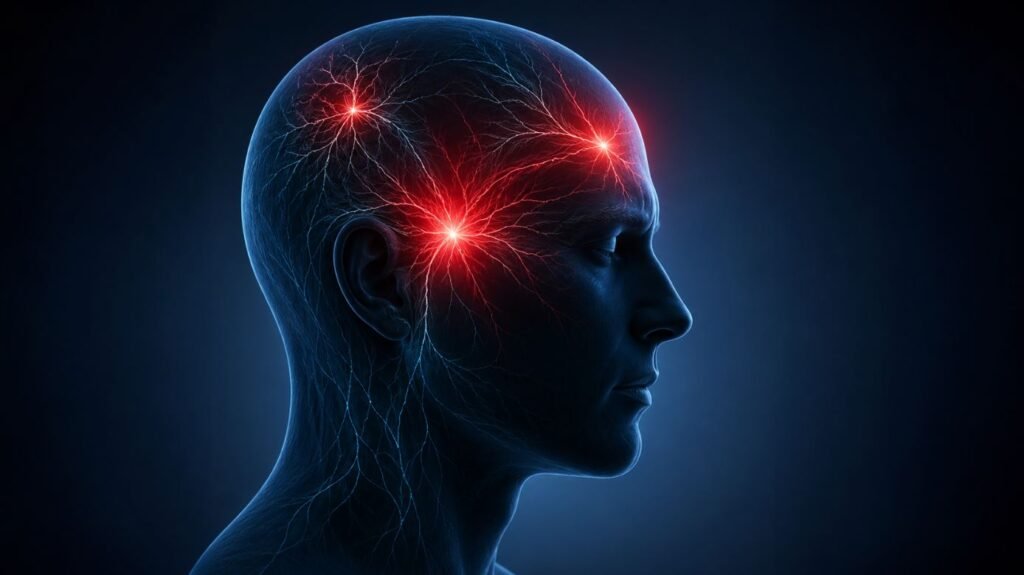
The 6 Red-Flag Patterns
Most headaches are tension-type or migraine. They hurt — sometimes badly — but they’re not dangerous. The six patterns below are different. They suggest something structural in the brain may need looking at: a small bleed, raised pressure, an inflammation, or a clot. None of these is common, but each is too serious to miss.
- The “thunderclap” — pain that hits maximum intensity in under 60 seconds, like being struck.
- A new pattern after age 50, especially in someone who has never had headaches before.
- Headache with fever, neck stiffness, or a rash.
- Pain that wakes you from sleep, or is worst first thing in the morning.
- Worse with coughing, bending, or straining.
- Combined with weakness, vision change, slurred speech, or confusion.
Why “It’s Just a Bad Migraine” Is the Trap
The most common mistake I see in clinic is patients with red-flag features assuming their bad headache is just a worse version of the usual. It is not. A migraine — even a severe one — follows a familiar shape. Familiar trigger. Familiar location. Familiar resolution.
A red-flag headache breaks the pattern. New character. New severity. New associations. That break is the signal. If your headache today does not feel like the ones you have had before, that itself is information worth acting on.
What To Do Next
If any of the six patterns above describe your headache:
- Stop self-medicating with painkillers — they can mask warning signs and delay diagnosis
- Note exactly when the headache started and what makes it better or worse
- See a neurologist within 24–48 hours, not “next week”
- Don’t drive yourself if there are visual or balance symptoms
- Bring a list of your current medications and any imaging done in the past
Most red-flag headaches turn out to be benign once investigated, and most patients walk out the same day with reassurance and a simple plan. But the small percentage that are not benign are exactly the ones where time changes the outcome completely. The sooner the cause is identified, the more options remain on the table.
Worried about a headache pattern?
Consult NeuroWellness for evaluation and treatment guidance

Dr. Ganesh Veerabhadraiah
Dr. Ganesh leads the neurology and neurosurgery practice at NeuroWellness India in Bengaluru, with over 15 years of experience in headache disorders, stroke care, and brain & spine surgery.