What Is a Migraine? (And Why It's Not Just a Headache)
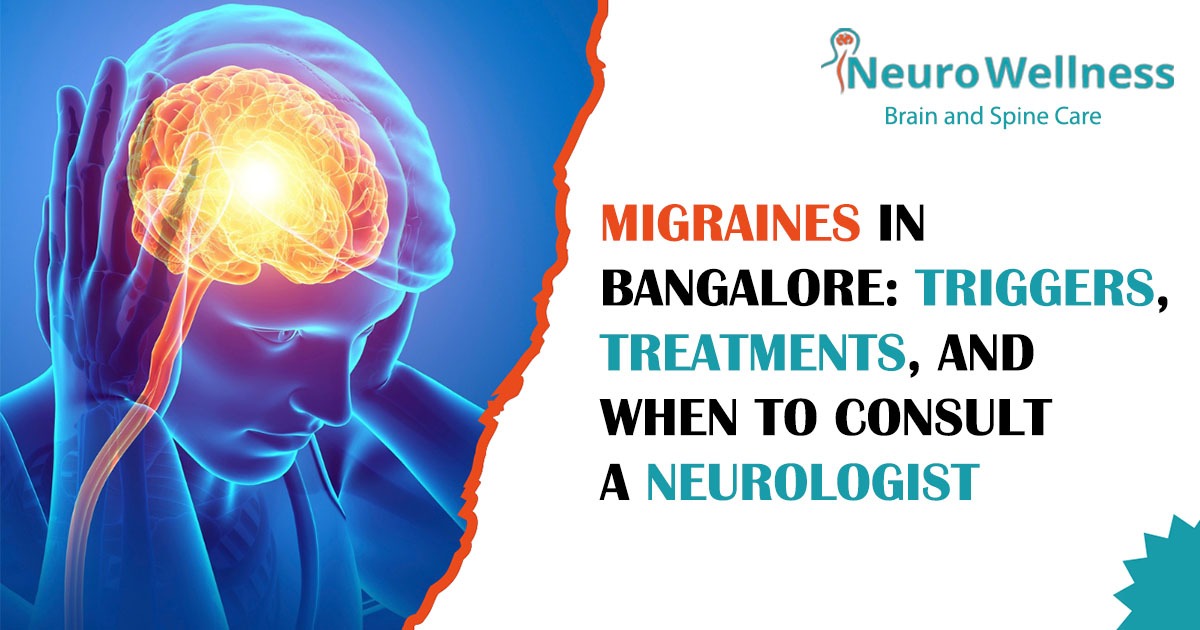
A migraine is a complex neurological condition — not an ordinary headache. It is characterized by intense, throbbing or pulsating pain, typically on one side of the head, and can last anywhere from 4 to 72 hours without treatment.
Migraines affect over 1 billion people globally (WHO, 2023) and are the second-leading cause of disability worldwide. In India, an estimated 150 million people suffer from migraines, with urban cities like Bangalore reporting rising incidence due to stress, pollution, and lifestyle changes.
Common symptoms of a migraine attack include:
• Severe, throbbing head pain (usually one-sided)
• Nausea and vomiting
• Sensitivity to light (photophobia) and sound (phonophobia)
• Visual disturbances or aura (flashes of light, blind spots)
• Dizziness or vertigo
• Difficulty concentrating or speaking
If you experience these symptoms regularly, it’s time to consult a neurologist in Bangalore for a proper diagnosis.
🚨 Are Your Migraines Getting Worse? Don’t wait for the pain to become unbearable. Early diagnosis saves you months of suffering. Dr. Ganesh Veerabhadraiah has helped hundreds of Bangalore patients reclaim their life from migraines. 📞 Call Now: 7259669911 (Jayanagar) | 74115 71002 (Electronic City) |
Types of Migraines – What Does Your Headache Mean?
Type | Key Feature |
Migraine without Aura | Most common type — throbbing pain without visual or sensory warnings |
Migraine with Aura | Visual/sensory disturbances 20–60 minutes before pain begins |
Chronic Migraine | Headaches on 15+ days/month for 3+ months |
Hemiplegic Migraine | Temporary weakness or paralysis on one side — needs urgent evaluation |
Menstrual Migraine | Triggered by hormonal changes around the menstrual cycle |
Vestibular Migraine | Dizziness and balance issues are the primary symptoms |
Silent Migraine (Acephalgic) | Aura symptoms WITHOUT the headache — often misdiagnosed |
Common Migraine Triggers in Bangalore
Bangalore’s unique environment creates a perfect storm for migraine sufferers. Understanding your triggers is the first step toward prevention.
1. Weather & Climate Changes
Bangalore’s unpredictable climate — sudden temperature drops, humidity spikes, and pre-monsoon pressure changes — are well-documented migraine triggers. Barometric pressure changes activate pain receptors in the trigeminal nerve.
2. High-Stress Urban Lifestyle
Long working hours in Bangalore’s IT hubs (Electronic City, Whitefield, Koramangala), poor work-life balance, and screen-heavy jobs elevate cortisol levels — a major migraine trigger. Studies show stress is responsible for 50–80% of migraines.
3. Dietary Triggers
Urban diets heavy in processed foods, excess caffeine, aged cheese, red wine, and skipped meals are common triggers. Dehydration — very common in Bangalore’s dry season — is also a major factor.
4. Sleep Disruption
Irregular sleep patterns, late-night work, and sleep deprivation disrupt the brain’s serotonin balance, directly triggering migraine attacks.
5. Environmental Pollution
Air pollution (PM2.5, nitrogen dioxide) and high noise levels in congested areas like Silk Board, Marathahalli, and Hebbal are increasingly linked to migraine frequency and severity.
6. Hormonal Changes (Women)
Hormonal fluctuations during menstruation, pregnancy, or menopause are a leading cause of migraine in women. Women are 3x more likely to experience migraines than men.
Recognize Your Triggers. Take Control Today.
Every migraine has a pattern. Dr. Ganesh Veerabhadraiah will help you identify YOUR specific triggers and build a personalized prevention plan — so migraines stop running your life.
Book Appointment Online → neurowellness.in
When Should You See a Neurologist for Migraines?
You should book an appointment with a neurologist in Bangalore if:
• Headaches occur more than 4 times per month
• Pain lasts more than 24 hours continuously
• Over-the-counter medications stop working
• Headaches are accompanied by vision loss, speech problems, or weakness
• Migraines are impacting your work, sleep, or daily activities
• You have a new or changing headache pattern after age 50
• You have a family history of migraines or neurological conditions
Dr. Ganesh Veerabhadraiah at NeuroWellness Clinic uses advanced diagnostic tools — including MRI, CT scans, and neurological examinations — to accurately diagnose migraine type and recommend personalized treatment.
How Are Migraines Diagnosed?
Accurate diagnosis is critical — many conditions mimic migraines (cluster headaches, tension headaches, sinus headaches). Dr. Ganesh follows a structured diagnostic protocol:
1. Detailed medical history and headache diary review.
2. Neurological physical examination
3. MRI Brain – to rule out tumors, lesions, or vascular abnormalities
4. CT Scan – for rapid assessment in acute cases
5. Blood tests – to rule out infection, thyroid issues, or anemia
6. EEG – if seizures are suspected alongside headaches
Migraine Treatment Options at NeuroWellness Clinic, Bangalore
1. Acute (Rescue) Medications
Used to stop a migraine attack in progress. These include triptans (e.g., sumatriptan), NSAIDs, anti-nausea medications, and ergotamines. Early intervention is critical — taking medication at the first sign of attack is most effective.
2. Preventive Medications
For patients with chronic or frequent migraines (4+ per month), preventive therapy significantly reduces frequency and severity. Options include beta-blockers, topiramate, amitriptyline, valproate, and newer CGRP inhibitors.
3. Botox Injections for Chronic Migraine
FDA-approved for chronic migraine (15+ headache days/month), Botox (OnabotulinumtoxinA) injections are administered every 12 weeks at specific head and neck points. Clinical trials show 50% reduction in migraine days for most patients.
4. CGRP Monoclonal Antibodies (Newer Biologics)
Drugs like erenumab, fremanezumab, and galcanezumab target the calcitonin gene-related peptide (CGRP) pathway — a key driver of migraines. These are monthly or quarterly injections with high efficacy for treatment-resistant cases.
5. Cognitive Behavioral Therapy (CBT)
For migraines with a strong stress/psychological component, CBT helps patients identify triggers, modify behaviors, and develop coping strategies. Combined with medication, it significantly improves outcomes.
6. Neuromodulation Devices
Non-invasive devices like transcranial magnetic stimulation (TMS) and transcutaneous electrical nerve stimulation (TENS) are emerging options for patients who cannot tolerate medications.
7. Lifestyle & Integrative Therapy
Dietary modifications, sleep hygiene, yoga, acupuncture, and biofeedback are evidence-based complementary approaches that form a key part of Dr. Ganesh’s holistic migraine management program.
🏆 Bangalore’s Trusted Migraine Specialist – Dr. Ganesh Veerabhadraiah From Botox injections to CGRP therapy — NeuroWellness Clinic offers every modern migraine treatment under one roof. No referrals. No long waits. Just expert care. ⭐ Trusted by patients from Jayanagar, Electronic City, Koramangala, Whitefield & HSR Layout Book Your Consultation: 7259669911 | Walk-in: Jayanagar 9th Block & Kauvery Hospital, Electronic City |
Migraine vs. Other Headaches – Quick Comparison
Feature | Migraine vs. Others |
Migraine vs. Tension Headache | Migraine: one-sided, pulsating, with nausea/light sensitivity. Tension: bilateral, pressing, mild-moderate, no nausea |
Migraine vs. Cluster Headache | Migraine: hours to days, nausea common. Cluster: 15–180 mins, around one eye, tearing, very severe |
Migraine vs. Sinus Headache | True sinus headache is rare. Most ‘sinus headaches’ are actually migraines — especially if they recur seasonally |
Migraine vs. Hypertension Headache | Hypertension headache: occipital (back of head), morning onset, resolves with BP control |
Lifestyle Tips for Migraine Prevention (Evidence-Based)
Tip | Why It Works |
Keep a consistent sleep schedule (7–9 hrs) | Irregular sleep disrupts serotonin levels, a key migraine trigger |
Drink 2.5–3 litres of water daily | Dehydration reduces cerebral blood flow and triggers pain |
Exercise 30 mins, 4–5 days/week | Regular moderate exercise reduces migraine frequency by up to 30% |
Practice mindfulness or yoga daily | Reduces cortisol and sympathetic nervous system activation |
Follow a headache-trigger diary | Identifying personal triggers enables avoidance and prevention |
Limit caffeine to 1–2 cups/day | Both excess and withdrawal trigger migraines |
Reduce screen exposure; use blue light filters | Digital eye strain elevates intracranial pressure |
Avoid skipping meals | Blood sugar drops are a well-known migraine precipitant |
Why Choose Dr. Ganesh Veerabhadraiah for Migraine Treatment in Bangalore?
Specialization: Neurosurgery & Neurology — extensive experience in complex migraine and headache disorders
Approach: Patient-first, evidence-based care with personalized treatment plans tailored to your migraine type, frequency, and lifestyle
Clinics: Jayanagar 9th Block (Central Bangalore) and Kauvery Hospital, Electronic City (South Bangalore)
Technology: State-of-the-art MRI, CT, EEG and neuro-diagnostic infrastructure
Availability: Outpatient consultations, second opinions, and teleconsultation available
Book Appointment: 7259669911 (Jayanagar) | 74115 71002 (Electronic City) |
| Visit : Neurowellness |
Frequently Asked Questions
1. What is the best treatment for migraine in Bangalore?
The best migraine treatment in Bangalore depends on the frequency and severity. For occasional migraines, triptans and NSAIDs are effective. For chronic migraines (15+ days/month), preventive medications, Botox injections, or CGRP inhibitors — available at NeuroWellness Clinic — offer the best outcomes. A neurologist consultation is essential for a personalized plan.
2. When should I see a neurologist for a headache in Bangalore?
See a neurologist if you have headaches more than 4 times a month, if OTC medications don’t help, if headaches are accompanied by vision changes, weakness, or confusion, or if migraines are disrupting your work or daily life. Dr. Ganesh Veerabhadraiah at NeuroWellness Clinic offers same-day consultations.
3. What is the difference between a migraine and a regular headache?
A migraine is a neurological condition involving intense, one-sided, pulsating pain lasting 4–72 hours, often with nausea, light sensitivity, and aura. A regular (tension) headache is bilateral, pressing, mild-to-moderate, and does not involve nausea or light sensitivity. Migraines significantly impair daily functioning.
4. Can migraines be cured permanently?
Migraines cannot be permanently cured, but they can be effectively managed with the right treatment plan. Many patients achieve an 80–90% reduction in migraine frequency with preventive therapy, Botox, CGRP inhibitors, and lifestyle changes. Early and consistent treatment produces the best long-term results.
5. What are the most common migraine triggers in Bangalore?
In Bangalore, the most common migraine triggers are: stress from high-pressure IT work environments, weather/barometric pressure changes, air pollution (especially near major traffic junctions), disrupted sleep, excessive screen time, dehydration, and dietary factors like caffeine and skipped meals.
6. Is Botox effective for migraines?
Yes. Botox (OnabotulinumtoxinA) is FDA-approved for chronic migraine treatment. When injected into 31–39 points on the head, neck, and shoulders every 12 weeks, it prevents migraines by blocking pain neurotransmitters. Studies show it reduces migraine days by 50% in most patients with chronic migraine.
7. How do I book an appointment with a neurologist for migraine in Bangalore?
To consult a migraine specialist in Bangalore, you can: (1) Call NeuroWellness Clinic at 7259669911 (Jayanagar) or 74115 71002 (Electronic City), (2) Book online at neurowellness.in, or (3) Walk in to the clinics in Jayanagar 9th Block or Kauvery Hospital, Electronic City.
8. Can migraines be a sign of something serious?
Most migraines are benign but recurrent. However, sudden severe ‘thunderclap’ headaches, migraines with new neurological symptoms (weakness, vision loss, confusion), or migraines in patients over 50 with no prior history should be urgently evaluated to rule out brain hemorrhage, tumor, or stroke.
Conclusion
Migraines are one of the most underdiagnosed and undertreated neurological conditions in India — and in Bangalore, where urban stressors, pollution, and high-pressure work culture are the norm, they are reaching epidemic proportions.
But here’s the truth: migraines are manageable. With the right neurologist, the right diagnosis, and the right treatment plan, most patients see a dramatic reduction in the frequency, duration, and intensity of their attacks — often within weeks.
Dr. Ganesh Veerabhadraiah and the team at NeuroWellness Clinic bring together:
• Decades of specialized neurology and neurosurgery experience
• State-of-the-art diagnostic technology (MRI, CT, EEG)
• Access to every modern migraine therapy — from triptans to Botox to CGRP inhibitors
• A genuinely patient-first approach that goes beyond prescriptions to address triggers, lifestyle, and long-term wellness
• Two conveniently located clinics in Jayanagar and Electronic City for patients across Bangalore
Whether you’ve been suffering for months or years — whether your migraines are occasional or daily — you don’t have to keep living with the pain.
Take the first step. Book your consultation with Dr. Ganesh Veerabhadraiah at NeuroWellness Clinic — Bangalore’s most trusted destination for migraine and neurological care.
📍 Clinic 1 – Jayanagar | 📍 Clinic 2 – Electronic City |