Written by Dr. Prapti Reddy
Consultant Neurologist | Cognitive Neurology
MBBS, MD – General Medicine, DM – Neurology
Kauvery Hospital, Electronic City, Bengaluru
What Is Cognitive Neurology?
Cognitive neurology is a specialized branch of neurology that focuses on disorders affecting memory, thinking, language, attention, judgment, behavior and other higher functions of the brain.
Our brain does much more than control movement and sensation. It allows us to remember people and events, communicate with others, make decisions, recognize familiar places, solve problems and manage our everyday lives. When diseases or injuries affect the areas of the brain responsible for these functions, a person may develop cognitive or behavioral changes.
A cognitive neurologist is a neurologist with a special interest and expertise in evaluating these problems and identifying their underlying neurological causes.
People often assume that increasing forgetfulness is simply a normal part of getting older. Mild changes can occur with healthy aging, but persistent or progressive memory problems should not automatically be considered normal.
Early neurological evaluation is particularly important when memory or thinking difficulties begin interfering with work, communication, finances, medication management, driving or other activities of daily living.
For individuals and families in Bengaluru noticing unexplained changes in memory, language, thinking or behavior, a cognitive neurological assessment can help determine whether these symptoms represent normal aging, a potentially reversible problem, mild cognitive impairment or an underlying neurological disorder.
What Does Cognition Mean?
Cognition refers to the mental processes that allow us to understand and interact with the world. It includes several interconnected brain functions:
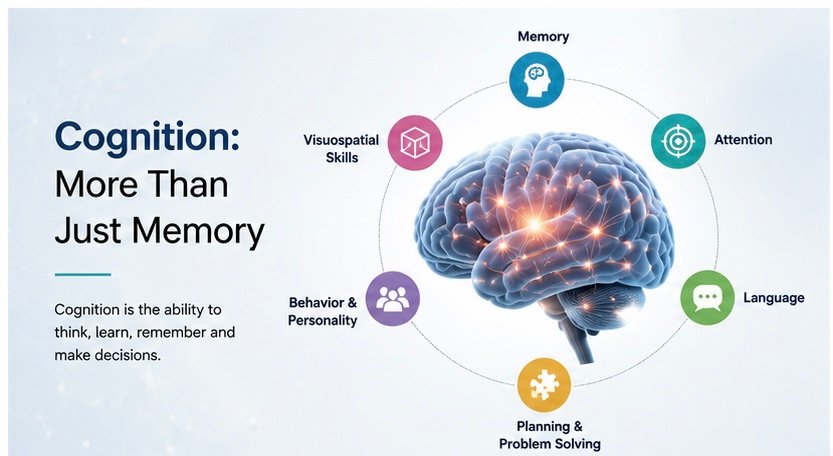
1. Memory
Memory allows us to learn new information, store it and retrieve it when required.
Memory difficulties may present as:
- Frequently forgetting recent conversations
- Repeating the same questions
- Forgetting appointments
- Misplacing objects repeatedly
- Difficulty remembering recent events
- Increasing dependence on reminders
- Forgetting familiar names or information
Occasionally forgetting where you kept your keys is common. Repeatedly forgetting important conversations or events, however, may require further assessment.
2. Attention and Concentration
Attention allows the brain to focus on important information and ignore distractions.
Problems with attention may cause:
- Difficulty following conversations
- Losing track while reading
- Difficulty completing tasks
- Becoming easily distracted
- Difficulty handling multiple activities
- Reduced efficiency at work
Poor concentration does not always indicate dementia. Sleep deprivation, stress, depression, anxiety, medications and several medical conditions can also affect attention.
3. Language
Language involves speaking, understanding, reading, writing and naming objects.
Neurological disorders affecting language may cause:
- Difficulty finding the right word
- Using incorrect words
- Difficulty understanding conversations
- Problems naming familiar objects
- Difficulty reading or writing
- Gradual reduction in vocabulary or speech
A progressive language disorder can sometimes be an early manifestation of a neurological condition rather than simply an age-related change.
4. Executive Function
Executive functions help us organize, plan, solve problems and make decisions.
They are essential for activities such as:
- Managing finances
- Planning travel
- Organizing work
- Following complex instructions
- Making appropriate decisions
- Managing multiple responsibilities
A person with executive dysfunction may have relatively preserved memory but struggle to organize tasks that were previously easy.
5. Visuospatial Function
Visuospatial abilities help us understand where objects are located in relation to ourselves and to one another.
Problems may lead to:
- Getting lost in familiar surroundings
- Difficulty judging distances
- Problems navigating while driving
- Difficulty recognizing spatial relationships
- Trouble performing familiar visual tasks
6. Social Cognition and Behavior
Certain areas of the brain regulate personality, motivation, emotional responses and socially appropriate behavior.
Neurological disease affecting these regions may cause:
- Personality changes
- Loss of motivation
- Socially inappropriate behavior
- Reduced empathy
- Impulsiveness
- Emotional changes
- Unusual repetitive behaviors
Sometimes these behavioral changes appear before obvious memory problems.
What Conditions Does Cognitive Neurology Treat?
Cognitive neurology covers a broad spectrum of conditions affecting cognition and behavior.
Mild Cognitive Impairment (MCI)
Mild cognitive impairment, commonly called MCI, describes cognitive difficulties that are greater than expected for a person’s age but do not significantly interfere with independent daily activities.
A person with MCI may notice:
- Increasing forgetfulness
- Difficulty remembering names
- Reduced concentration
- Slower thinking
- Difficulty finding words
- Greater dependence on notes or reminders
MCI does not automatically mean that a person will develop dementia.
Some people remain stable for years, some improve when contributing factors are treated, while others may eventually develop a progressive neurological condition.
This is why identifying the cause is important.
Dementia
Dementia is not one specific disease. It is a clinical syndrome in which deterioration in cognitive abilities becomes significant enough to interfere with independent everyday functioning.
Symptoms can involve:
- Memory
- Language
- Judgment
- Attention
- Planning
- Orientation
- Behavior
- Personality
- Visuospatial abilities
There are several causes of dementia, and determining the underlying cause is an important part of cognitive neurological evaluation.
Alzheimer’s Disease
Alzheimer’s disease is one of the most common causes of progressive dementia.
Early symptoms frequently involve difficulty learning and retaining new information.
A person may:
- Forget recent conversations
- Repeat questions
- Forget appointments
- Misplace belongings
- Have difficulty recalling recent events
As the condition progresses, other cognitive functions such as language, orientation, judgment and visuospatial abilities may also become affected.
Importantly, not every memory problem is Alzheimer’s disease.
A proper assessment is necessary before reaching such a diagnosis.
Vascular Cognitive Impairment
The brain depends on a continuous supply of blood and oxygen. Stroke and disease of the small blood vessels of the brain can affect cognitive function.
This is known as vascular cognitive impairment.
Risk factors may include:
- High blood pressure
- Diabetes
- High cholesterol
- Smoking
- Previous stroke or transient ischemic attack
- Other vascular diseases
Depending on the areas affected, patients may develop slowed thinking, reduced attention, executive dysfunction, memory problems or other cognitive changes.
Managing vascular risk factors therefore forms an important component of maintaining both brain and cognitive health.
Frontotemporal Dementia
Frontotemporal dementia, or FTD, is a group of neurological disorders predominantly affecting the frontal and temporal regions of the brain.
Unlike Alzheimer’s disease, early symptoms may involve behavior, personality or language rather than prominent memory loss.
Possible symptoms include:
- Significant personality change
- Loss of social inhibition
- Impulsive behavior
- Reduced empathy
- Lack of motivation
- Repetitive behaviors
- Changes in eating habits
- Progressive language difficulties
When unexplained behavioral or personality changes occur, particularly in a relatively younger adult, neurological causes should be considered.
Primary Progressive Aphasia
Primary progressive aphasia (PPA) is a neurological syndrome in which language abilities progressively deteriorate.
Depending on the subtype, a person may experience increasing difficulty with:
- Finding words
- Naming objects
- Forming sentences
- Understanding words
- Speaking fluently
- Reading or writing
Because speech difficulties can sometimes initially be mistaken for stress or psychological problems, careful neurological and language assessment may be necessary.
Cognitive Changes After Stroke
Stroke can affect much more than movement.
Depending on the location and extent of brain injury, a stroke survivor may experience problems with:
- Memory
- Attention
- Language
- Planning
- Judgment
- Processing speed
- Visual perception
- Behavior
These cognitive problems can influence rehabilitation, return to work and independence even when physical recovery is good.
Cognitive assessment can therefore be an important component of comprehensive stroke rehabilitation.
Cognitive Problems in Parkinson’s Disease
Parkinson’s disease is primarily known for symptoms such as tremor, stiffness and slowness of movement. However, some patients may also develop changes in:
- Attention
- Processing speed
- Planning
- Visuospatial function
- Memory
- Behavior
Recognizing cognitive symptoms allows the overall treatment plan to be adjusted appropriately.
Is Forgetfulness Always Dementia?
No.
This is one of the most important messages for patients and families.
Memory and concentration can be affected by many conditions other than dementia.
Possible contributors include:
- Poor sleep
- Chronic stress
- Anxiety
- Depression
- Thyroid disorders
- Vitamin deficiencies
- Certain medications
- Alcohol use
- Metabolic abnormalities
- Hearing or vision impairment
- Sleep apnea
- Neurological disorders
- Previous head injury
This is why self-diagnosing Alzheimer’s disease based on forgetfulness alone can create unnecessary fear.
The important question is not simply:
“Am I forgetting things?”
The better questions are:
“Is this a significant change from my previous ability?”
and
“Is it beginning to affect my everyday life?”
Normal Aging vs Concerning Memory Loss
Some slowing of information processing and occasional difficulty recalling names can occur with normal aging.
For example, forgetting someone’s name temporarily and remembering it later may not necessarily indicate disease.
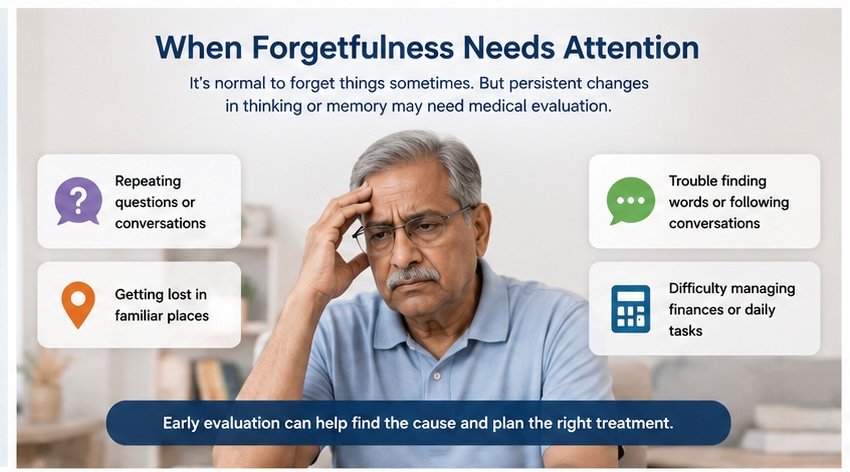
More concerning signs include:
• Asking the same question repeatedly
• Frequently forgetting recent conversations
• Getting lost in previously familiar locations
• Difficulty managing money or bank transactions
• Forgetting how to perform familiar tasks
• Increasing difficulty finding common words
• Making unusual or unsafe decisions
• Significant changes in personality or behavior
• Difficulty recognizing familiar people
• Increasing dependence on family members for previously independent activities
When these changes are progressive, a neurological evaluation should be considered.
Cognitive Health in Bengaluru’s Working Population
Bengaluru has a large population of professionals working in technology, healthcare, finance, education and other cognitively demanding occupations.
Long working hours, irregular sleep, frequent screen exposure, sedentary lifestyles and occupational stress can contribute to complaints such as poor concentration, mental fatigue and forgetfulness.
However, cognitive symptoms should not automatically be attributed to work stress.
A young or middle-aged person experiencing memory difficulties may have a completely different set of causes compared with an elderly person developing progressive memory loss.
The purpose of cognitive neurological assessment is therefore not simply to perform a “memory test.” It is to understand which cognitive function is affected, how significantly it is affected and why it is happening.
When Should You Consult a Cognitive Neurologist?
Consider seeking neurological evaluation when you or a family member develops persistent or progressive:
- Memory loss
- Repeated questioning
- Difficulty finding words
- Problems understanding language
- Difficulty concentrating
- Confusion
- Getting lost in familiar places
- Problems managing finances
- Difficulty performing previously familiar tasks
- Changes in judgment
- Personality or behavioral changes
- Cognitive problems after a stroke or brain injury
Family observations can be particularly valuable.
Sometimes the affected person may not recognize the extent of the change, while close relatives notice that their memory, behavior or ability to manage everyday responsibilities has changed.
Early assessment does not necessarily mean that a serious disease will be diagnosed. It means that the cause of the cognitive change can be investigated systematically.
What Happens During a Cognitive Neurology Consultation?
A cognitive neurology consultation usually begins with a detailed history.
The neurologist may ask:
- When did the symptoms begin?
- Were they sudden or gradual?
- Are they getting progressively worse?
- Which abilities have changed?
- Is daily functioning affected?
- Has personality or behavior changed?
- Are there sleep or mood problems?
- What medications is the patient taking?
- Is there a history of stroke or head injury?
- Are there vascular risk factors such as diabetes or hypertension?
- Is there a family history of neurological disease?
Whenever possible, information from a close family member or caregiver is helpful because cognitive disorders can affect a person’s awareness of their own symptoms.
The next stage may include neurological examination and structured assessment of different areas of cognition.
The goal is to move beyond the broad complaint of “memory loss” and identify the specific pattern of cognitive difficulty.
How Are Cognitive Problems Evaluated?
There is no single test that diagnoses every cognitive disorder.
A comprehensive cognitive neurological evaluation may include a detailed clinical history, neurological examination, cognitive assessment, laboratory investigations and brain imaging. Additional specialized tests may be recommended depending on the person’s symptoms and suspected diagnosis.
The aim is not simply to determine whether someone has “poor memory.” The neurologist tries to identify which areas of cognition are affected, the severity of the impairment and the possible underlying cause.
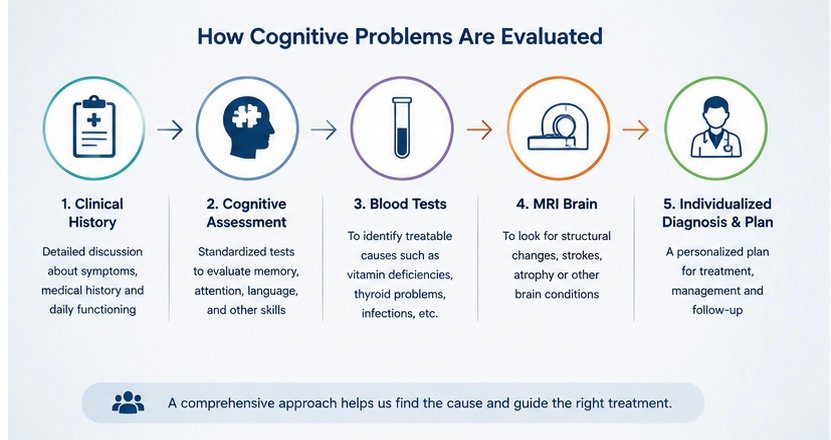
Cognitive and Memory Assessment
Cognitive assessment evaluates different functions of the brain, including:
- Memory
- Attention
- Concentration
- Language
- Orientation
- Executive function
- Problem-solving
- Visuospatial abilities
- Processing speed
Short screening tests may be performed during the initial consultation.
When a more detailed assessment is required, neuropsychological testing may be recommended. This involves structured tests designed to evaluate different cognitive abilities in greater depth.
The results can help establish a baseline and may also be useful for monitoring changes over time.
Importantly, cognitive test results should not be interpreted in isolation. Age, education, occupation, language, cultural background, hearing, vision and emotional health can all influence performance.
This is particularly relevant in a diverse city such as Bengaluru, where patients may be comfortable communicating in different languages.
Why Is a Family Member’s History Important?
When possible, a close family member or caregiver should accompany a person being evaluated for significant cognitive or behavioral changes.
This is important because some neurological disorders can reduce a person’s awareness of their own difficulties.
A family member may notice changes such as:
- Repeated questions
- Forgotten appointments
- Problems handling money
- Medication errors
- Getting lost
- Changes in cooking or household activities
- Reduced work performance
- Personality changes
- Socially inappropriate behavior
- Increasing dependence on others
Understanding how the person’s functioning has changed from their previous level can provide valuable information for diagnosis.
What Tests May Be Needed for Memory Loss?
The investigations required vary from person to person.
Blood Tests
Blood investigations may be performed to look for medical conditions that can contribute to cognitive symptoms.
Depending on the clinical situation, these may include evaluation for:
- Thyroid dysfunction
- Vitamin deficiencies
- Blood sugar abnormalities
- Electrolyte disturbances
- Liver or kidney dysfunction
- Anemia
- Infections or inflammatory conditions when clinically suspected
The neurologist decides which investigations are appropriate based on the patient’s age, symptoms, medical history and examination.
MRI Brain
An MRI of the brain is commonly used when evaluating significant or progressive cognitive symptoms.
MRI can provide information about the structure of the brain and may identify:
- Previous strokes
- Small-vessel ischemic changes
- Brain atrophy patterns
- Tumors or other structural lesions
- Hydrocephalus
- Previous brain injury
- Other neurological abnormalities
Different neurological conditions can sometimes produce characteristic patterns of brain involvement.
However, an MRI scan alone usually does not establish the complete diagnosis. Imaging findings must be interpreted together with the patient’s symptoms, examination and cognitive assessment.
Advanced Investigations
In selected patients, additional investigations may be considered.
These can include specialized brain imaging, biomarker testing, cerebrospinal fluid analysis, genetic evaluation or other investigations depending on the suspected disorder.
Not every patient with forgetfulness requires advanced testing.
The investigations should be individualized rather than performed as a standard package for everyone.
Can Cognitive Disorders Be Treated?
Treatment depends on the underlying cause.
Some cognitive problems may improve substantially when contributing conditions are identified and treated. Others are caused by progressive neurological diseases where treatment focuses on slowing deterioration when possible, controlling symptoms, maintaining independence and improving quality of life.
This is another reason why early evaluation is useful.
Treatment may include a combination of:
- Appropriate medications
- Management of vascular risk factors
- Cognitive rehabilitation
- Physical activity
- Sleep optimization
- Treatment of mood disorders
- Nutritional correction when deficiencies are present
- Occupational therapy
- Speech and language therapy
- Family and caregiver education
- Safety planning
- Regular neurological follow-up
Treatment should be individualized according to the diagnosis, severity of symptoms, associated medical conditions and the person’s functional needs.
Treatment of Alzheimer’s Disease and Dementia
Treatment of dementia begins with identifying the underlying cause because different forms of dementia require different management strategies.
For Alzheimer’s disease and some other dementias, medications may be considered to help manage cognitive symptoms in appropriate patients.
Treatment also extends well beyond medication.
A comprehensive plan may address:
- Daily routine
- Physical activity
- Nutrition
- Sleep
- Social engagement
- Cognitive stimulation
- Medication management
- Fall prevention
- Driving safety
- Financial safety
- Caregiver support
As cognitive impairment progresses, maintaining safety and independence for as long as reasonably possible becomes increasingly important.
Patients and families should also have an opportunity to understand the expected course of the condition and plan appropriately for future care.
Managing Vascular Cognitive Impairment
When cognitive impairment is related to cerebrovascular disease, controlling vascular risk factors becomes particularly important.
Management may include appropriate treatment of:
- High blood pressure
- Diabetes
- High cholesterol
- Smoking
- Obesity
- Physical inactivity
- Other cardiovascular and cerebrovascular risk factors
Stroke prevention and brain health are closely connected.
A person who has experienced a stroke should not only be evaluated for physical disability. Memory, language, attention, executive function and behavior may also need assessment when symptoms are present.
Can Memory Loss Be Prevented?
Not every cause of cognitive decline can be prevented. However, maintaining overall cardiovascular and neurological health may help support healthy brain aging.

1. Stay Physically Active
Regular physical activity benefits cardiovascular health and is also important for maintaining brain health.
Depending on age and medical fitness, activities may include:
- Walking
- Cycling
- Swimming
- Strength exercises
- Yoga
- Other forms of regular exercise
People with significant medical conditions should discuss an appropriate exercise plan with their healthcare professional.
2. Control Blood Pressure, Diabetes and Cholesterol
Conditions affecting blood vessels can also affect the brain.
Regular medical follow-up and appropriate management of hypertension, diabetes and abnormal cholesterol levels are therefore important components of long-term brain health.
3. Avoid Smoking
Smoking increases the risk of vascular disease and stroke and can negatively affect overall brain health.
4. Prioritize Good Sleep
Poor sleep can affect attention, concentration and memory.
Persistent snoring, excessive daytime sleepiness or suspected sleep apnea should not be ignored, particularly when associated with cognitive complaints.
5. Stay Mentally Active
The brain benefits from meaningful mental activity.
Examples include:
- Reading
- Learning a new skill
- Playing strategy games
- Music
- Writing
- Learning a language
- Engaging in intellectually stimulating hobbies
Mental activity does not guarantee prevention of dementia, but it can form part of a healthy and engaged lifestyle.
6. Maintain Social Connections
Regular interaction with family, friends and community can contribute to emotional well-being and cognitive engagement.
Social isolation, particularly in older adults, deserves attention.
7. Protect Your Brain From Stroke and Injury
Wear appropriate protective equipment where necessary, follow road-safety measures and seek immediate medical attention for symptoms suggestive of stroke.
Preventing brain injury is an important component of protecting long-term cognitive function.
Memory Problems in Young and Middle-Aged Adults
Memory clinics and cognitive neurology are not exclusively for elderly patients.
Young and middle-aged adults in Bengaluru may seek neurological advice because of forgetfulness, reduced concentration, mental fatigue or decreased work efficiency.
This can be particularly concerning for professionals working in cognitively demanding fields.
However, such symptoms do not automatically indicate early dementia.
Possible contributors include:
- Inadequate sleep
- Stress
- Anxiety or depression
- Medication effects
- Thyroid problems
- Vitamin deficiencies
- Sleep disorders
- Previous head injury
- Neurological disease
The pattern, duration and progression of symptoms help determine whether further neurological investigation is required.
Persistent cognitive symptoms that are affecting professional performance or everyday life deserve proper evaluation rather than self-diagnosis.
Sudden Confusion Is Different From Gradual Memory Loss
An important distinction is whether cognitive changes developed gradually or appeared suddenly.
Progressive memory disorders usually develop over months or years.
Sudden confusion developing over hours or days may have a completely different cause and can sometimes represent a medical emergency.
Possible causes include infection, metabolic disturbances, medication effects, seizures, stroke or other acute illnesses.
A person who suddenly develops confusion, speech difficulty, weakness, facial drooping, severe imbalance or altered consciousness should receive urgent medical assessment.
Do not wait for a routine memory-clinic appointment when symptoms appear suddenly.
When Should You Consult a Cognitive Neurologist in Bengaluru?
A cognitive neurology consultation may be appropriate when you or someone in your family develops:
- Progressive memory loss
- Frequent repetition of questions
- Difficulty remembering recent events
- Increasing word-finding difficulty
- Problems understanding language
- Difficulty concentrating
- Getting lost in familiar surroundings
- Difficulty managing finances or medications
- Declining work performance due to cognitive difficulties
- Personality or behavioral changes
- Cognitive problems after stroke
- Progressive difficulty performing familiar activities
- Concerns about mild cognitive impairment or dementia
You do not need to wait until memory problems become severe.
Early assessment can help distinguish normal aging from mild cognitive impairment, potentially reversible causes and progressive neurological conditions.
Cognitive Neurology and Memory Care in Bengaluru
Bengaluru has a growing population of both older adults and younger professionals seeking medical attention for memory, concentration and cognitive concerns.
A comprehensive cognitive neurology and memory evaluation should focus on identifying the cause rather than simply labeling every patient with forgetfulness as having dementia.
Depending on the symptoms, evaluation may involve a neurologist together with neuropsychology, psychiatry, speech and language therapy, rehabilitation or other specialties.
The central questions are:
What cognitive function has changed?
Why has it changed?
Is the condition reversible, treatable or progressive?
What can be done to maintain function, independence and quality of life?
Answering these questions requires careful clinical assessment rather than relying on symptoms or online memory tests alone.
Frequently Asked Questions About Cognitive Neurology
1. What is cognitive neurology?
Cognitive neurology is a branch of neurology concerned with disorders affecting memory, thinking, language, attention, behavior, judgment and other higher functions of the brain.
2. What is the difference between a neurologist and a cognitive neurologist?
A neurologist diagnoses and treats diseases of the brain, spinal cord, nerves and muscles. A cognitive neurologist has a particular clinical focus on neurological disorders affecting cognition, memory, language and behavior.
3. Is every memory problem Alzheimer’s disease?
No. Memory difficulties can occur for many reasons, including poor sleep, mood disorders, medication effects, vitamin deficiencies, thyroid disease, stroke and other neurological or medical conditions.
Alzheimer’s disease is one possible cause of progressive memory impairment, but proper assessment is required before making a diagnosis.
4. What are the early signs of dementia?
Possible early signs include increasing forgetfulness, repeated questions, difficulty managing finances, problems finding words, getting lost, impaired judgment and changes in personality or behavior.
Symptoms vary depending on the type of dementia.
5. At what age should memory problems be investigated?
There is no specific age threshold.
Persistent or progressive cognitive changes should be assessed when they represent a clear change from the person’s previous abilities or begin interfering with work, communication or everyday activities.
6. What is mild cognitive impairment?
Mild cognitive impairment, or MCI, refers to cognitive decline that is greater than expected for age but does not substantially interfere with independent everyday functioning.
Some individuals remain stable, while others may develop further cognitive decline. The underlying cause therefore needs evaluation.
7. Can stress cause forgetfulness?
Yes. Stress can interfere with attention and concentration, which can make remembering information more difficult.
However, persistent or progressively worsening memory problems should not automatically be attributed to stress without appropriate evaluation.
8. Can stroke cause memory problems?
Yes.
Stroke can affect memory, language, attention, executive function, processing speed and behavior depending on the area of the brain involved.
Cognitive rehabilitation may form part of post-stroke recovery in selected patients.
9. Does an MRI diagnose dementia?
MRI is an important investigation in many patients with cognitive symptoms, but it is only one component of the evaluation.
Diagnosis usually depends on the combination of clinical history, neurological examination, cognitive assessment and appropriate investigations.
10. When is memory loss an emergency?
Gradually increasing forgetfulness usually requires planned medical assessment.
However, sudden confusion, sudden speech difficulty, facial drooping, weakness, loss of balance, seizures or altered consciousness requires urgent medical attention, as conditions such as stroke may need to be excluded.
Take-Home Message
Cognitive health is an essential part of overall brain health.
Memory loss, language difficulties, poor concentration and behavioral changes should not automatically be dismissed as normal aging. At the same time, forgetfulness does not automatically mean Alzheimer’s disease or dementia.
The most important step is to identify the cause.
A structured cognitive neurological evaluation can help distinguish normal aging, mild cognitive impairment, potentially reversible causes, vascular cognitive impairment, Alzheimer’s disease and other neurological disorders.
Early recognition provides patients and families with an opportunity to understand the problem, address treatable factors, plan appropriate treatment and make informed decisions about long-term brain health.
For people in Bengaluru seeking evaluation for persistent memory loss, cognitive changes, dementia symptoms, language difficulties or unexplained behavioral changes, consultation with a neurologist experienced in cognitive disorders can provide a systematic approach to diagnosis and management.
Your memory, thinking, language and behavior are functions of your brain. When they begin to change, understanding why is the first step toward appropriate care.

About the Author – Dr. Prapti Reddy
Dr. Prapti Reddy is a Consultant Neurologist in Bengaluru with clinical interests including Cognitive Neurology, stroke, epilepsy, headaches and other neurological disorders. She holds a DM in Neurology from Bangalore Medical College & Research Institute (BMCRI) and currently practises at Kauvery Hospital, Electronic City, Bengaluru.