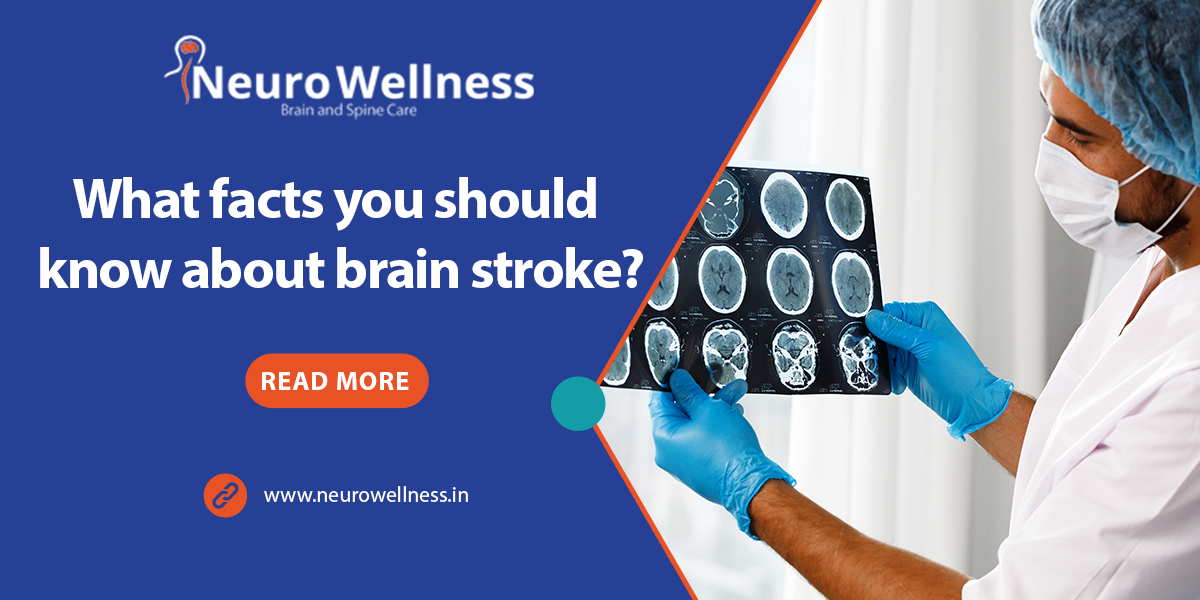
What is a brain stroke?

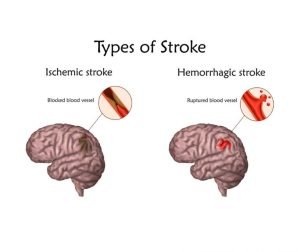
A stroke, also known as a brain attack, occurs when blood flow to the brain is interrupted(Ischemic stroke) or blood leaks out of the vessels(Haemorrhagic stroke). It’s a life-or-death situation. Parts of the brain are injured or die in both cases. A stroke can result in long-term brain damage, disability, or even death.

To function properly, the brain requires a steady supply of oxygen and nutrients. Even if the blood flow is interrupted for a brief period of time, this can cause issues. Without blood or oxygen, brain cells begin to die after only a few minutes.

Brain function is lost when brain cells die. It’s possible that you won’t be able to do tasks that require the particular section of your brain affected by stroke, resulting in paralysis, vision and speech issues, cognitive challenges, and personality changes, depending on which part of the brain is affected.

Brain Stroke statistics:

Stroke is the fourth leading cause of death globally. Individuals and their families might be devastated by a stroke, which takes away their freedom. Adult disability is most commonly caused by this condition. Approximately 795,000 Americans have a stroke each year, with approximately 160,000 dying as a result of stroke-related causes. The National Institute of Neurological Disorders and Stroke (NINDS) is dedicated to lowering this burden via biomedical research.

In this blog, you will be learning about various facts related to a brain stroke that you may haven’t  know before! These could save a life and may help you in gathering information as well.

What International studies says-

Facts that you need to know about a brain stroke. These are as follows:

Stroke was responsible for one out of every six deaths caused by cardiovascular disease in 2018.

Every 40 seconds, someone in the United States gets a stroke. A stroke kills someone every 4 minutes.

A stroke affects more than 795,000 people in the United States each year. The first or new strokes account for around 6,10,000 of these.

A total of 185,000 strokes occur in people who have already had a stroke, accounting for approximately one-fourth of all strokes.

Ischemic strokes, in which blood flow to the brain is blocked, account for about 87 percent of all strokes.

Between 2014 and 2015, the cost of stroke in the United States was nearly $46 billion. This figure includes the cost of health-care services, stroke-treatment medications, and lost workdays.

Stroke is one of the leading causes of long-term disability. More than half of stroke survivors aged 65 and up lose mobility as a result of their stroke.

Women account for more than half of all stroke deaths.

Men are more likely to suffer strokes, but women are more likely to die from them.

Every year 700,000 people have a new or recurrent stroke.

Because there are around 4.7 million stroke survivors alive today, stroke is the primary cause of serious, long-term impairment.

The annual healthcare expenses spent on heart disease and cancer combined are less than the annual healthcare dollars spent on stroke therapy.

Over the age of 65, nearly three-quarters of all strokes occur, and the chance of having a stroke more than doubles every decade after the age of 55.

Every year, stroke kills twice as many women as breast cancer.

High blood pressure is the leading cause of stroke, and one in every three African Americans suffers from it.

What Indian Statistics says?

Stroke caused 6,99,000 deaths in India in 2019, which was 7.4% of the total deaths.

Around 1.8 million people in India suffer from a stroke every year

Global Burden of Disease study shows that of the 9.4 million deaths in India, 619,000 were due to stroke and Disability Adjusted Life Years (DALYs) lost were 28.5 million

20-30% of strokes occur in people younger than 45 years and is more frequently seen in India compared to the west.

Prevalence rate of stroke range, 84-262/100,000 in rural and 334-424/100,000 in urban areas.

The incidence rate is 119-145/100,000.

Incidence of stroke increases with increasing age, but in our urban population it peaked in the highly productive age group of 46-65 years. The risk of stroke was lower in women as compared to men under the age of 45, it becoming equal in the age group of 46-65. However, with advancing age, women were more prone to ischemic stroke(infarct) above the age of 65 as compared to men. Incidence of intracerebral haemorrhage was found to be significantly higher in men than women under the age of 45years

There are new medicines that can considerably lessen the damage caused by a stroke, but you must go to the hospital where comprehensive stroke unit centres are there as early as possible of the onset of symptoms to avoid disability. Controlling hypertension could prevent 320,000 strokes each year.

During a stroke, two million brain cells die every minute, raising the risk of permanent brain damage, disability, or death.

WHO says-

There are17M Strokes

6.5 Millions  deaths

26 Million survivors

Specialized stroke units care increase the chances of survival by 14%

Clot bursting medications increases chances of good outcome by 30%

Clot retrieval treatment increases the chances of good outcome by more than 50%

Neurowellness provides Advanced Stroke treatment in Bangalore at affordable cost in comparison with the other medical treatment options world wide.
Successful MCA Stenting for TIA in a 46-Year-Old Patient: A Case Study

A 46-year-old gentleman from North Karnataka presented with complaints of left-sided weakness and difficulty speaking for 10 days prior to his arrival at 1224, G-Floor, 26th Main, 9th block, Jayanagar, Opp to Ragiguddada Anjaneyaswamy Temple Arch, Bangalore, Karnataka 560069. On examination, he was conscious, alert, and oriented, with no noticeable motor or sensory deficits. Further investigation led to a diagnosis of a Transient Ischemic Attack (TIA), a condition often referred to as a mini-stroke. Here’s an in-depth look into his diagnosis, treatment, and recovery process.

MRI
Minimally invasive pin hole surgery

Initial Diagnosis

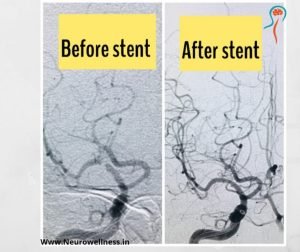
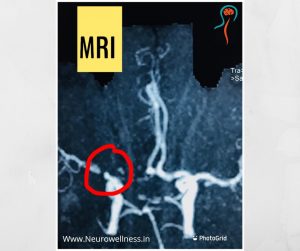
The patient underwent an MRI brain stroke protocol, which revealed watershed infarcts in the right middle cerebral artery (MCA) territory with high-grade stenosis of the MCA. To further evaluate the extent of the problem, a Digital Subtraction Angiogram (DSA) was performed, showing more than 95% focal stenosis, with significantly reduced blood flow into the distal branches of the M2 and M3 segments of the MCA.

This high-grade stenosis posed a significant risk of a major stroke, prompting the team to plan for MCA stenting after carefully explaining the benefits and risks to the patient.

What is MCA Stenting?

The Middle Cerebral Artery (MCA) is one of the major blood vessels supplying the brain. Stenting is a minimally invasive procedure that involves placing a small tube called a stent inside the narrowed artery to restore proper blood flow.

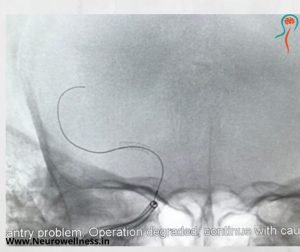
Unlike traditional brain surgery, MCA stenting doesn’t require opening the skull (craniotomy). Instead, thin wires and catheters, as small as a strand of hair, are inserted through a blood vessel in the thigh. These wires are guided all the way to the narrowed brain artery, where the stent is placed to open up the blocked area.

Procedure Overview

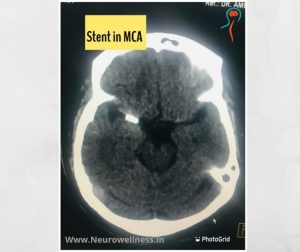
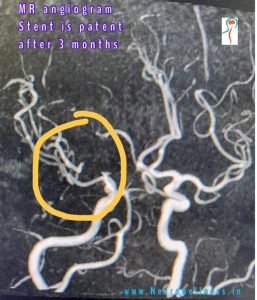
The patient was taken to the catheterization (Cath) lab for the procedure. A right femoral puncture was made to insert the guide wires and a micro-catheter. Using these tools, the team successfully reached the right MCA and placed a 2.25mm x 8mm stent in the brain vessel. The patient tolerated the procedure well, with no complications during or after the stenting.

Stenting
Brain Stroke

Post-Operative Results and Recovery

A post-operative CT scan showed no signs of bleeding or stroke. The patient experienced no complications and was able to walk the next day. He was discharged two days later, in good condition.

Stenting

Understanding Transient Ischemic Attacks (TIA)

A Transient Ischemic Attack (TIA), also called a mini-stroke, is a temporary blockage of blood flow to the brain. Unlike a major stroke, the symptoms of a TIA usually resolve within 24 hours. However, it is crucial to identify the underlying cause, as a TIA is often a warning sign of a more serious stroke.

Symptoms of TIA

ㆍWeakness in the face or limbs, typically on one side
ㆍDifficulty speaking or understanding speech
Dizziness or loss of balance
Temporary vision disturbances
Numbness or tingling sensations

CT scan

Diagnosing TIA

A variety of diagnostic tools are used to confirm a TIA and identify the cause:

ㆍDuplex scan
ㆍCT scan of the brain
MRI of the brain
MRA angiogram
Echocardiogram (ECHO)
Perfusion brain scan
DSA (Digital Subtraction Angiogram)

Importance of Early Detection and Treatment

TIAs are a critical warning sign, predicting a higher risk of a major stroke. Studies show that about 15% of people who experience a TIA will suffer a major stroke within three months. The risk increases to 30-40% within one year if left untreated. Therefore, prompt diagnosis and treatment are essential to prevent a future stroke.

CT scan

Preventive Treatments for Stroke

Several interventional procedures are available to prevent strokes in high-risk individuals, such as those who have experienced a TIA:

ㆍMCA Stenting: This is the procedure that was performed in this case to treat severe stenosis and restore blood flow to the brain.

ㆍCarotid Artery Stenting: This procedure is used to treat blockages in the carotid arteries in the neck, which supply blood to the brain.

ㆍMechanical Thrombectomy: This is an emergency treatment used to remove large blood clots during an acute stroke.

These minimally invasive procedures can dramatically reduce the risk of a major stroke, especially in patients with a history of TIA.

Conclusion

In this case, the timely diagnosis of MCA stenosis and the successful MCA stenting procedure helped prevent a major stroke for the 46-year-old patient. With the growing availability of advanced interventional treatments, it is possible to reduce the risk of life-threatening strokes in patients with conditions like TIA.

For those at risk, early medical intervention can make all the difference in ensuring a full recovery. If you experience symptoms of a mini-stroke, it’s essential to seek medical attention promptly.

This surgery was performed, Consultant Neurosurgeon specializing in brain and spine surgery.

Advanced MCA Stenting in Bangalore

“Minimally invasive pin-hole brain surgery can save lives after stroke. Consult Dr. Ganesh Veerabhadraiah at Neurowellness today.”

FAQs

1. What is MCA stenting?

MCA stenting is a minimally invasive brain procedure to open narrowed arteries and restore blood flow after a stroke.

2. Is MCA stenting safe?

Yes, when performed by skilled neurosurgeons, MCA stenting is a safe and effective way to prevent further strokes.

3. How long is recovery after MCA stenting?

Most patients recover within a few days in the hospital and can resume normal activities within weeks.

4. Who needs MCA stenting?

Patients with blocked middle cerebral arteries at high risk of stroke are recommended for MCA stenting.

5. Where can I get MCA stenting in Bangalore?

Neurowellness Brain & Spine Clinic offers advanced MCA stenting with minimally invasive techniques.

Ganesh

About Author

Dr. Ganesh Veerabhadraiah

Dr. Ganesh Veerabhadraiah, leading neurosurgeon and neurologist in Bangalore, has over 20 years of expertise in managing back pain, migraines, headaches, neuro disorders, and spine problems. His clinical excellence and patient-first approach make him one of the most trusted neuro doctors in Bangalore.

At Neurowellness Brain & Spine Clinic in Jayanagar and Kavery Hospital Electronic City, Dr. Ganesh provides comprehensive treatments ranging from minimally invasive spine surgery to advanced neurological care. As a respected back pain specialist and migraine doctor, he continues to deliver reliable outcomes for patients.

👉 Connect with Dr. Ganesh on LinkedIn

What steps can you take to avoid a stroke? Having a mother, father, or other close relative who has had a stroke makes us more susceptible to having one.

Although you can’t turn back the clock or change your family history, you can control many other stroke risk factors if you’re aware of them. Knowledge is a powerful tool. You can take steps to mitigate the effects of a risk factor that is sabotaging your health and predisposing you to a higher risk of stroke if you are aware of it.

What is a stroke?

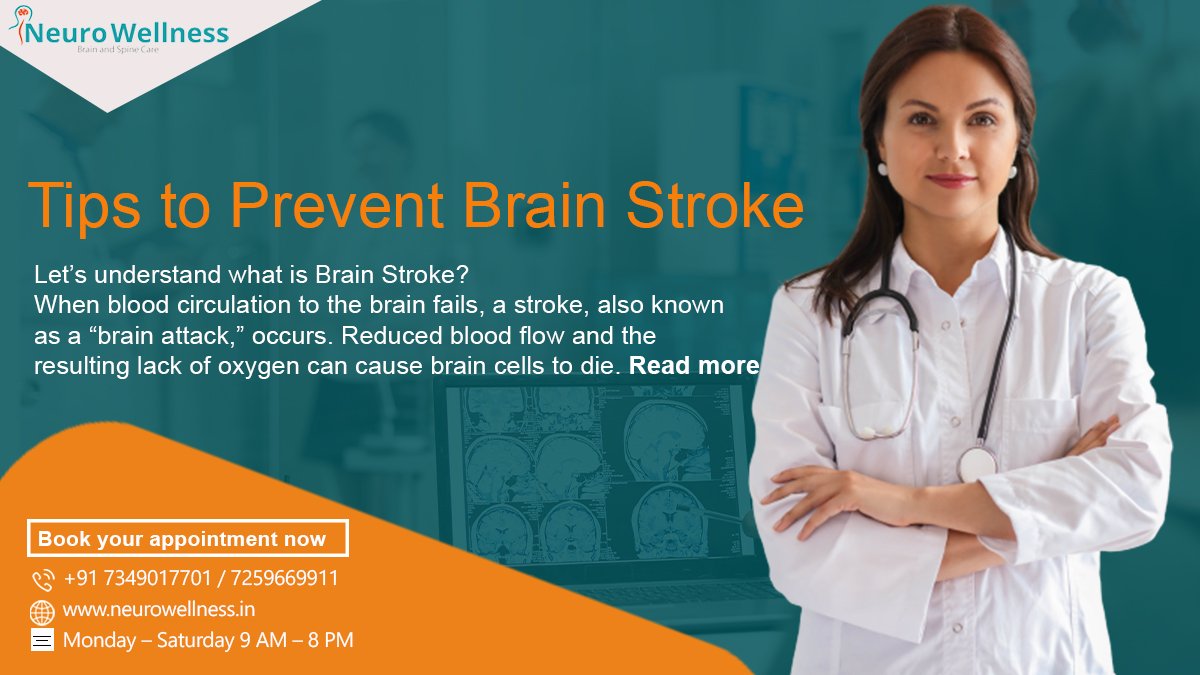
 When blood circulation to the brain fails, a stroke, also known as a “brain attack,” occurs. Reduced blood flow and the resulting lack of oxygen can cause brain cells to die. Strokes can be divided into two types: those caused by a blockage in blood flow and those caused by bleeding into the brain. Ischemic stroke, or a blockage of a blood vessel in the brain or neck, is the most common cause of stroke, accounting for about 80% of all strokes.

types of stroke

The formation of a clot within a blood vessel of the brain or neck, referred to as thrombosis; the movement of a clot from another part of the body, such as the heart, to the brain, referred to as embolism; or a severe narrowing of an artery in or leading to the brain, referred to as stenosis. The second type of stroke, hemorrhagic stroke, is caused by bleeding into the brain or the spaces surrounding the brain.

In brief, When the blood supply to a part of your brain is cut off, a stroke occurs. A clot or something else blocking the flow is the most common cause. Ischemic strokes are what they’re called. Bleeding in the brain is responsible for about 20% of the cases. Hemorrhagic strokes are what they’re called.

Top 10 Tips to Prevent Brain Stroke

✔️ Control Blood Pressure → Reduces main cause of strokes
✔️ Manage Diabetes → Prevents blood vessel damage
✔️ Quit Smoking → Lowers clot and blockage risks
✔️ Limit Alcohol Intake → Reduces high BP & irregular heartbeat
✔️ Exercise Regularly → Improves circulation & weight control
✔️ Eat a Balanced Diet → Lowers cholesterol & improves heart health
✔️ Maintain Healthy Weight → Prevents obesity-linked risk
✔️ Get Regular Health Checkups → Detects risks early
✔️ Manage Stress → Prevents BP spikes and hormonal imbalance
✔️ Follow Doctor’s Advice → Medication compliance ensures long-term safety

Prevention of a stroke:

• Lower your blood pressure

 Strokes are most commonly caused by high blood pressure. For more than half of them, this is the reason. Blood pressure readings of less than 120/80 are considered normal. If yours is consistently higher than 130/80, you may have high blood pressure, also known as hypertension.

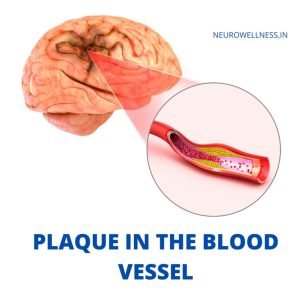
High blood pressure can make you 4-6 times more likely to have a stroke if it isn’t properly managed. This is due to the fact that it can thicken artery walls, causing cholesterol and other fats to build up and form plaques. If one of these breaks free, it can cut off the blood supply to your brain.

High blood pressure can also weaken arteries, making them more prone to burst and resulting in a hemorrhagic stroke.

Plaquue in Blood vessel

Work with your doctor to keep your blood pressure in a healthy range if you have high blood pressure. Medication and lifestyle changes, such as regular exercise and a healthy diet, may be beneficial.

• Quit smoking

 If you smoke, you increase your chances of having a stroke by twofold. Cigarette smoke contains nicotine, which raises blood pressure and carbon monoxide, which reduces the amount of oxygen your blood can carry. Even inhaling second hand smoke can increase your risk of having a stroke.

Tobacco is also responsible for :

1. Increase the amount of triglycerides in your blood.
2. Reduce the amount of “good” HDL cholesterol in your body.
3. Your blood will become sticky and more likely to clot as a result.
4. Increase the likelihood of plaque formation
5. Blood vessels thicken and narrow, causing damage to their linings.
6. Consult your doctor about quitting smoking. Nicotine patches and counselling may be of assistance. If you don’t succeed the first time, don’t give up.

• Manage your heart

 Some strokes are caused by blood clots and are caused by an irregular heartbeat called atrial fibrillation (AFib). AFib causes blood to pool in your heart, posing a clotting risk. If that clot travels to your brain, it can cause a stroke. You can have AFib because of high blood pressure, plaques in your arteries, heart failure, and other reasons.

Your heart can be put back into a normal rhythm with the help of medications, medical procedures, and surgery. Consult your doctor if you’re not sure if you have AFib but are experiencing heart flutters or shortness of breath.

• Control your diabetes

 A stroke is 2-4 times more likely if your blood sugar is high. Diabetes can cause fatty deposits or clots in your blood vessels if it isn’t properly managed. This can narrow the ones in your brain and neck, potentially cutting off the brain’s blood supply.

If you have diabetes, make sure to check your blood sugar levels on a regular basis, take your medications as directed, and visit your doctor every few months so they can monitor your levels.

• Exercise

 A sedentary lifestyle can lead to obesity, high cholesterol, diabetes, and high blood pressure, all of which are risk factors for stroke. So get to work. You are not required to run a marathon. It is sufficient to exercise for 30 minutes five days a week. Before you begin exercising, consult your doctor.

• Get proper diet

Healthy eating can help you lose weight and reduce your risk of having a stroke. Every day, eat plenty of fresh fruits and vegetables (broccoli, Brussel sprouts, and leafy greens like spinach are ideal). Choose foods that are high in fibre and lean proteins. Trans and saturated fats can clog your arteries, so avoid them. Reduce your salt intake and stay away from processed foods. They’re frequently high in salt and trans fats, both of which can raise blood pressure.

•Medications

Blood thinners are advised in medical conditions like stent in heart and neck vessels(angioplasty) and after bypass surgery of heart etc.  You may  be advised to manage blood parameters correctly.  Blood thinners are like double edged sword. If you don’t take correctly also cause problem,  if you won’t take/manage blood parameters properly also causes problem. Please follow doctors advise correctly – helps in stroke prevention.

Summary:

 Neuro Wellness spine and brain care centre does Advanced Stroke treatment in Bangalore with the best care. The specialists ensure cost effective and efficient treatment.

Stroke Prevention Clinic in Bangalore

“Prevent stroke before it happens. Neurowellness Brain & Spine Clinic offers personalized risk assessment, prevention guidance, and advanced care.”

Ganesh

Dr. Ganesh Veerabhadraiah

Consultant – Neurosurgeon, Neurointerventional Surgery, Spine Surgeon (Neuro)
23+ Years Experience Overall (17+ years as Neuro Specialist)

Available for Consultation: Jayanagar 9th Block & Kauvery Hospital, Electronic City 

FAQs

1. Can brain strokes be prevented naturally?

Yes. Lifestyle changes such as a healthy diet, exercise, and stress management help reduce stroke risk.

2. What foods help prevent stroke?

Fruits, vegetables, whole grains, nuts, and foods low in salt and trans fat support brain and heart health.

3. How does exercise reduce stroke risk?

Regular activity improves blood flow, controls BP, reduces cholesterol, and supports healthy weight.

4. Who is most at risk of brain stroke?

People with hypertension, diabetes, smoking habits, obesity, or family history of stroke.

5. Where can I get stroke prevention advice in Bangalore?

Neurowellness Brain & Spine Clinic provides stroke risk assessment and prevention guidance.

Ganesh

About Author

Dr. Ganesh Veerabhadraiah

Dr. Ganesh Veerabhadraiah, leading neurosurgeon and neurologist in Bangalore, has over 20 years of expertise in managing back pain, migraines, headaches, neuro disorders, and spine problems. His clinical excellence and patient-first approach make him one of the most trusted neuro doctors in Bangalore.

At Neurowellness Brain & Spine Clinic in Jayanagar and Kavery Hospital Electronic City, Dr. Ganesh provides comprehensive treatments ranging from minimally invasive spine surgery to advanced neurological care. As a respected back pain specialist and migraine doctor, he continues to deliver reliable outcomes for patients.

👉 Connect with Dr. Ganesh on LinkedIn