

20 Things Your Spine Loves: A Gen Z Guide to Spine Health

Yo, Gen Z! Your spine is talking to you.

You love your smartphone so much. You love Netflix binging, scrolling through Instagram, gaming, late-night conversations and spending hours with your laptop

But ever thought about what your spine likes?

Likely not.

Spine is one of the hardest working parts of your body. It supports your head, helps you to sit, stand, walk, dance, travel, exercise and even do those complicated moves while making Instagram reels.

But few of us think about our spines much until they start to ache.

Here’s the interesting thing: Your spine isn’t necessarily the enemy of your smartphone, laptop or gaming chair. It just doesn’t like to be in the same position for hours.

The good news is? You don’t need expensive equipment, complicated exercises or a lifestyle change to keep your spine healthy.

Sometimes it’s the small things that make the biggest difference.

Let’s explore 20 surprising things your spine secretly loves.

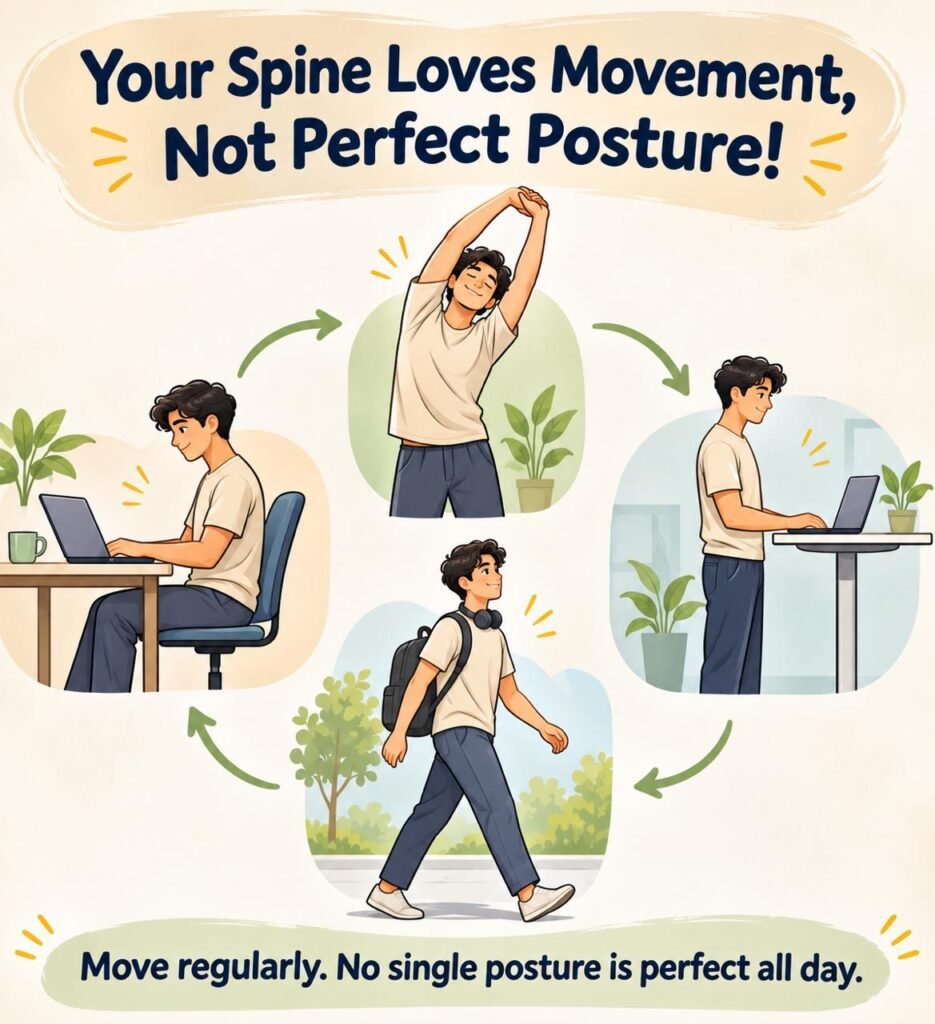
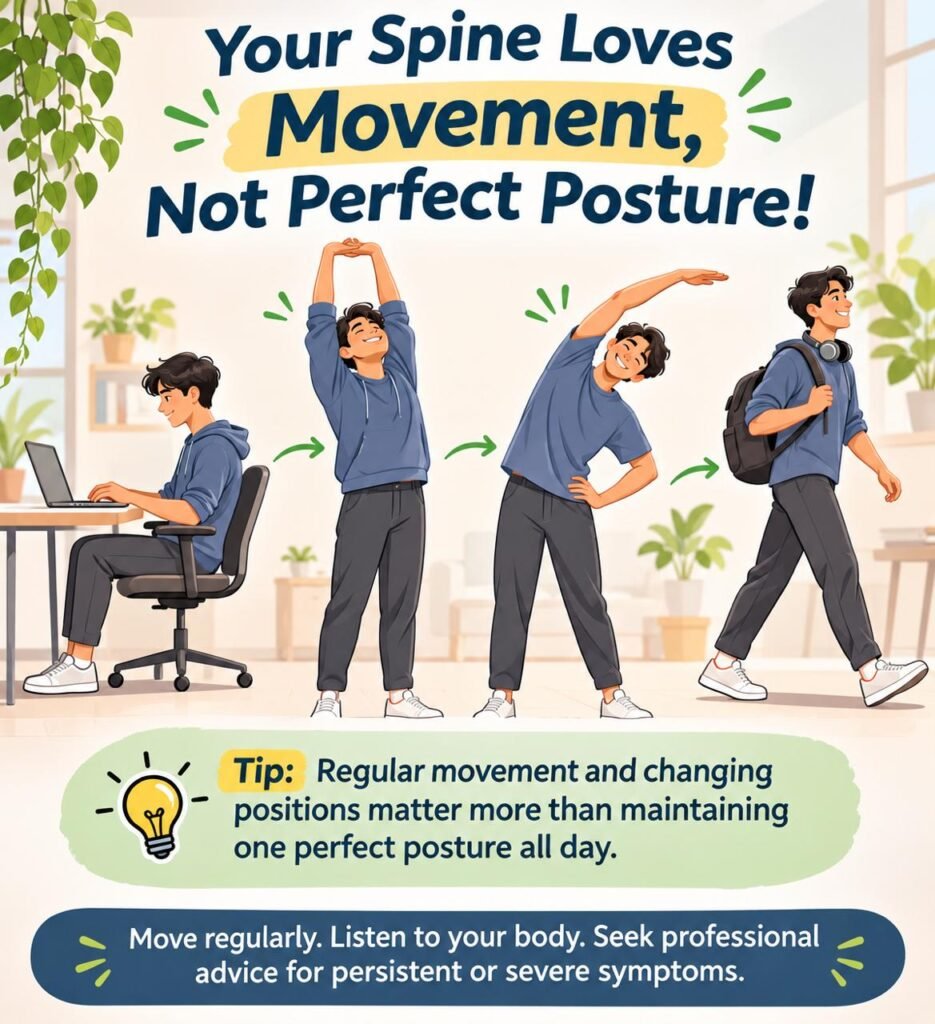
Your Spine Loves Movement More Than Perfect Posture

Learn more : prolonged sitting and neck discomfort

You’ve probably heard someone say, “Sit up straight! Don’t slouch!

But here’s the rub.

You don’t need to sit perfectly straight all day to keep your spine healthy. It needs you to move.

Even a good sitting position can become uncomfortable if held too long.

Changing position regularly helps your spinal muscles, joints and tissues around them.

You might try this: stand up and stretch or walk around for a minute or two every 30 to 60 minutes.

Remember: Your next posture is often your best posture.

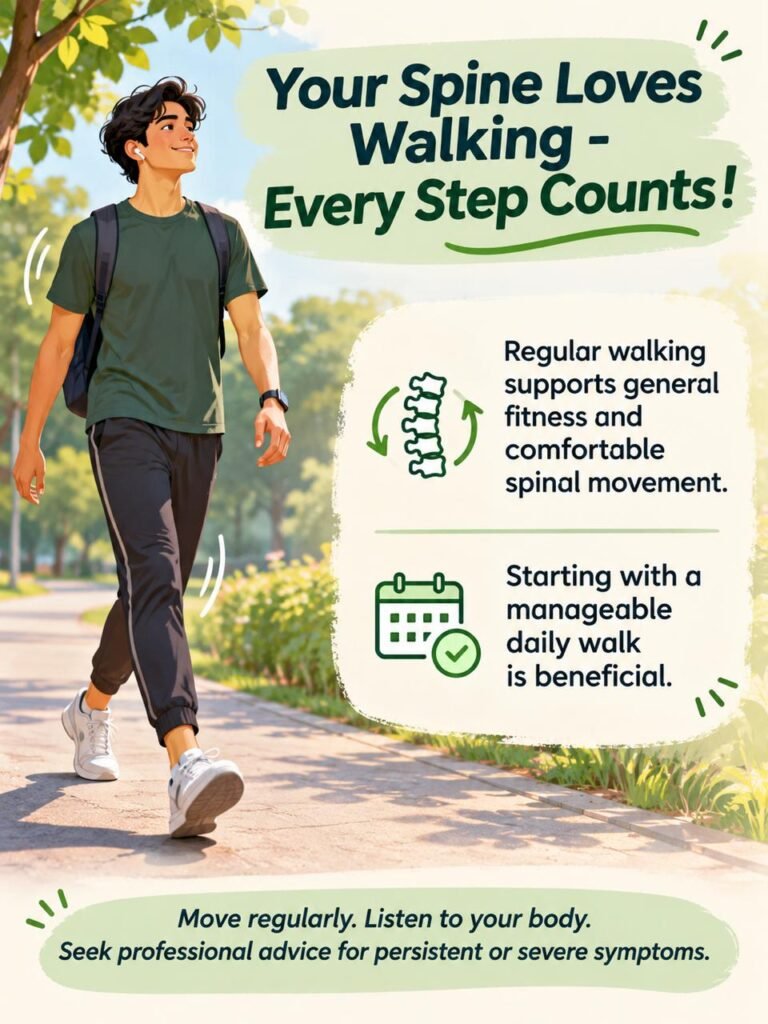
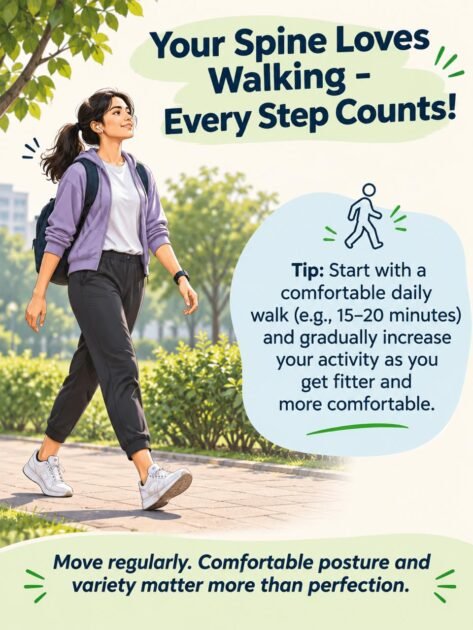
Your Spine Loves Walking (Even if Not 10,000 Steps)

Walking may not be as exciting as a gym workout but your spine is thankful.

Walking uses muscles that support your back, encourages comfortable movement and helps to maintain general fitness.

You don’t need to hit the 10,000 mark to get the benefits.

Begin small and at ease.

Talking with a friend, walking. Take a short walk after lunch. Take the stairs when you can.

Spine love tip: A daily 15-20 minute walk can be a great place to start. Gradually increase as you get fitter and more comfortable.
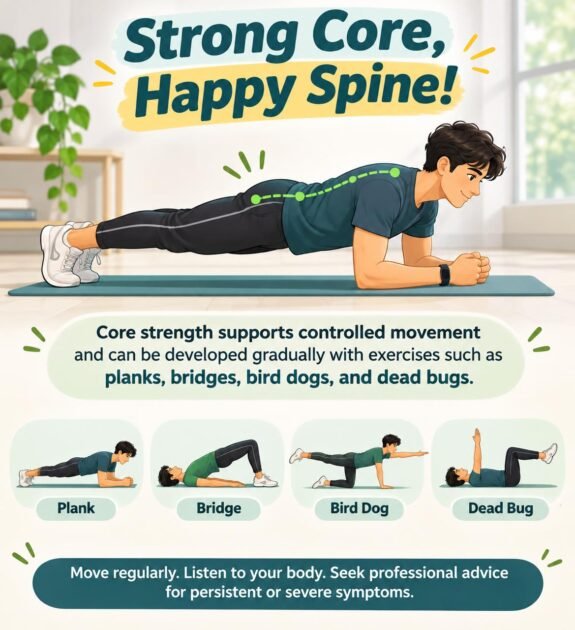
 

Your Spine Loves Strong Abs—Not Just a Six-Pack


That’s not something you always hear from gym influencers.

Your abdominal muscles weren’t just made for looking good in photos.

Your core is made up of your back muscles, diaphragm, pelvic floor and deeper stabilizing muscles.

They help you control your trunk when you move and lift.

Core strengthening exercises such as planks, bird dogs, bridges and dead bugs can help improve core strength and endurance.

You don’t need a six-pack to have a strong, functional core.

Try this: Begin with a comfortable 10-20 second plank, breathing normally and with good control.
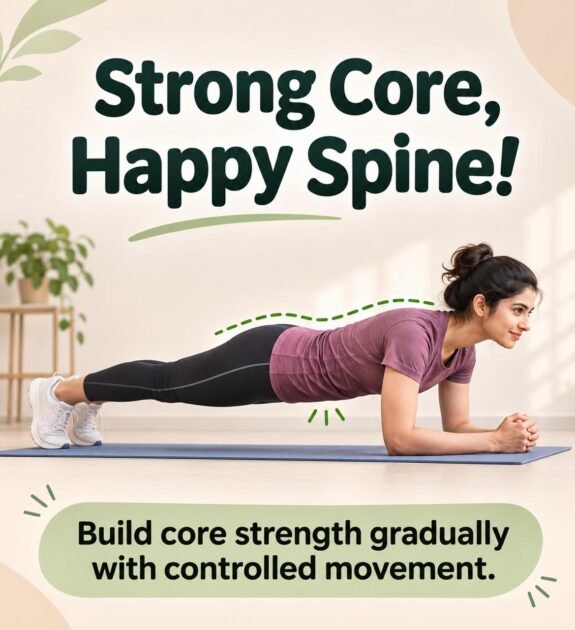
Your spine is way more concerned with what your muscles do than what they look like.
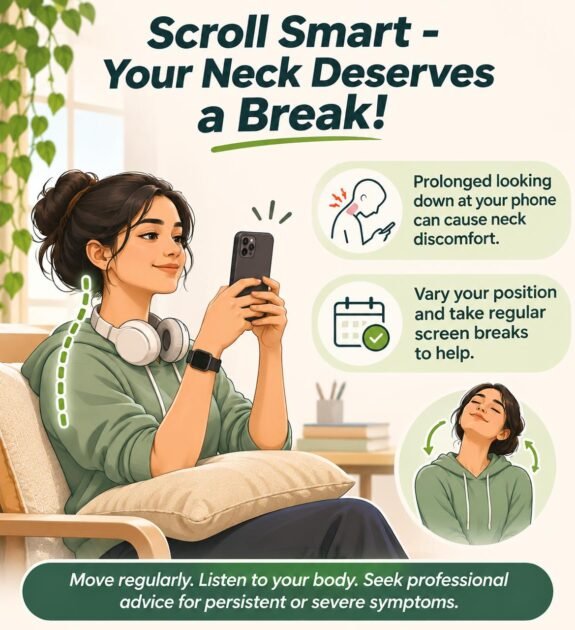
You’ll Make Your Spine Happy by Quitting Staring at Your Phone

Let’s talk about the infamous “text neck”:

Your phone isn’t just making your spine bad automatically.

But prolonged periods of looking down can lead to neck discomfort and muscle fatigue.

Think about how many times you bend your neck scrolling Instagram, watching reels, texting or playing mobile games.

If you hold the same position for a long time, your neck can also feel stiff or tired.

Try this: When ready, bring your phone in front of your eyes, support your arms and take lots of breaks.

You don’t need to give up social media.

Give your neck some variety.
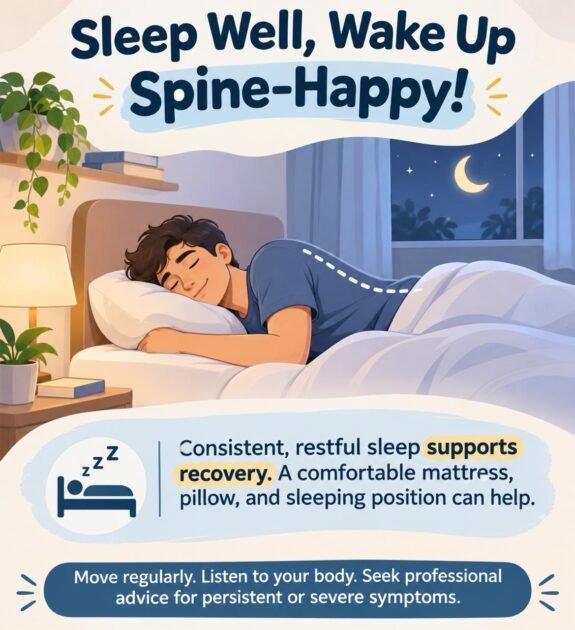
Your Spine Loves Sleep – Particularly Consistent Sleep


Your spine is working all day, but a good night’s sleep helps your whole body recover and feel good.

Poor sleep can make you more sensitive to pain, affect your mood and make existing back pain harder to manage.

Most adults need 7-9 hours of sleep. Teens 8-10 hours.

There is no single perfect sleeping position for everyone.

There are people who like to sleep on their side with a pillow between the knees or on their back with a pillow under the knees.

Spine love tip: Select a supportive mattress and pillow that will allow you to sleep comfortably and restfully.

The best position for sleeping is often the one that will let you sleep well without making symptoms worse.
Your Spine Loves Water But It’s Not a Magic Cure

You may have heard that drinking water helps keep your spinal discs healthy.

There is some truth to the connection but it needs to be explained.

The intervertebral discs are filled with water and help absorb and distribute loads between the vertebra.

Many of the functions of the human body including the health of muscles and other tissues require the body to be properly hydrated.

But the added water does not reverse disc degeneration or cure a slipped disk.

Do this: Take regular drinks during the day, especially when exercising or in hot weather.

Water is important for good health, but it is not a substitute for exercise, sleep or medical care when needed.

Strength Training is Good for Your Spine

Some are afraid that weightlifting will hurt their spine.

Resistance training, when properly designed, can actually help to strengthen the muscles that support your back and improve your physical capacity.

Squats, hip hinges, rows etc can be helpful when done with appropriate technique and progressions.

The trick is not to lift the heaviest weight you can .

It’s about learning good movement and slowly making it harder.

Try this: If you are new to training, start with bodyweight exercises or light resistance and get qualified guidance.

Your spine is meant to move and to carry load. It just takes time for it to adjust.

Your Spine Loves a Backpack That Doesn’t Feel Like a Luggage

laptop Charger; Books. Waterbottle. Head phones. An external battery pack.

Sounds familiar?

It’s easy to pack too much in your backpack.

A heavy bag can cause fatigue and discomfort, particularly if carried for long durations.

Here’s the solution: Keep the bag tight to your body with both straps and ditch what you don’t need.

And if you’re carrying a laptop every day, ask yourself if you really need to carry everything else, too.

Your shoulders and back will thank you for the lighter load.

Your spine loves to dance

Yes, seriously!

Dancing is a fun way to get physical activity.

It involves coordinated movements of the hips, trunk and limbs and can improve fitness, balance and confidence in movement.

If you love Bollywood, hip-hop, freestyle or dancing alone in your bedroom, moving can be good for you.

No need for professional choreography.

Just pick exercises that are appropriate to your fitness level, and don’t try to push through any true pain.

Spine love tip: pop on your favorite playlist and dance for 10 minutes.

Exercise doesn’t always feel like exercise.

Your Spine Will Thank You For Gaming Breaks


Gamers, this is for you.

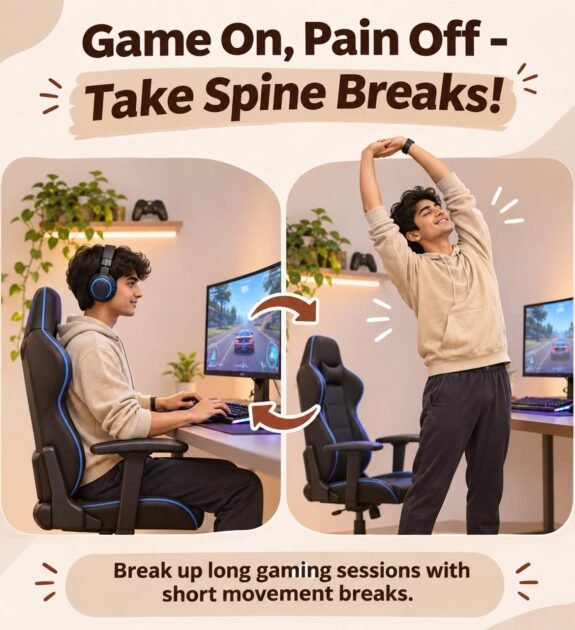
Gaming, in itself, is not necessarily bad for your spine.

The bigger issue is just being in the same position for several hours at a time.

If you stare at a screen for hours on end your neck, shoulders and lower back can get sore.

Your gaming setup can help, but even an expensive ergonomic chair can’t substitute for movement.

Try this: Between games get up, move around, shrug your shoulders and gently stretch your legs.
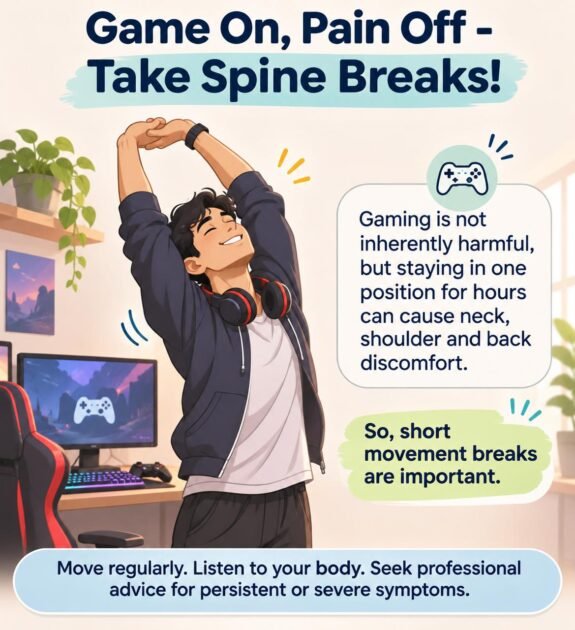
A short break for movement is time well spent gaming.

It’s investing in being comfortable for your next session.

Healthy Bones Are Good for Your Back

Your vertebrae are living bones and they are constantly remodeling.

Good bone health is the result of many factors, including nutrition, exercise, hormones and overall health.

Calcium and vitamin D are needed for the maintenance of normal bones.

Dairy foods, fortified alternatives and some other foods are sources of calcium. Vitamin D is available from appropriate sun exposure, diet and supplementation where indicated.

Weight-bearing and resistance exercises are also good for your bones.

“Eat healthy, stay active, do this.

Don’t start high-dose calcium or vitamin D supplements without a reason or professional advice.

Your Spine Loves Flexibility – Not Extreme Stretching

You don’t need to be able to touch your toes or do advanced yoga poses to have a healthy spine.

Comfortable movement is better than pushing your body into extreme positions.

Some gentle stretches and mobility work may help reduce stiffness and promote movement.

Try cat-cow movements, gentle trunk rotations, or hip flexor stretches.

Go slow and stay within a comfortable range.

Spine love tip: Moving gently for five minutes after sitting for a long period may help you feel less stiff.

Stretching should not be painful or “sharp” or cause numbness or radiating symptoms.

Learn more : gentle stretches and mobility work

Stress Management Is Good For Your Spine

Shocked?

Stress affects more than the mind.

It can also influence muscle tone, sleep, pain sensitivity and how your body responds to discomfort.

Some people get more neck tightness, headaches, or back pain during times of stress.

That doesn’t mean the pain is in their head.

Pain is affected by a variety of biological, psychological and social factors.

And here’s what you can do: Take a break, breathe slowly, move your body, or do something you love.

Your physical health is connected to your mental health.

A Comfortable Study Setup Your Back Will Thank You For

You might think it’s convenient to study on your bed with a laptop balanced on your knees.

But your neck and back might disagree after a few hours.

Working at a comfortable workstation makes studying easier.

Sit as close to eye level as you can, keep your shoulders relaxed, and rest your feet.

If you spend long stretches working on a laptop, look at an external keyboard and mouse.

Try this: Frequently change positions and alternate between sitting and standing.

No matter how good your workstation is, you can’t replace regular movement.

Healthy Body Weight Good for Your Spine No Crash Dieting

Your spine supports your body when you do everyday things.

Proper body composition and physical fitness may contribute to a reduction in mechanical demands and support overall musculoskeletal health .

But spine health is more than simply being thin.

Back pain can affect anyone, regardless of their size.

Other factors such as muscle strength, sleep, activity levels and genetics also count.

Here’s a tip: meals that are balanced, physical activity that’s fun and habits you can stick with.

Avoid crash diets and extreme weight loss challenges.

Strength, activity and nutrition are all good for your spine.

Your Spine Loves When You Pick Up Stuff Right

But have you ever bent down to pick up a heavy suitcase and felt a sudden sharp pull in your back?

Life involves lifting.

The point is not to never bend your spine again.

It is to control the weight and motion well.

Stand close to the object you are lifting, maintain a comfortable posture, and avoid sudden uncontrolled motions.

Use your back and your hips and legs.

Spine love tip: Ask for help if an object is too heavy or awkward.

Nobody gets a prize for carrying everything alone.

Your Spine Loves Sports & Outdoor Activities

Badminton, swimming, cycling, football, trekking and recreational sports all contribute to an active lifestyle.

Different activities challenge the body in different ways.

Some develop cardio endurance. Others get stronger or more balanced, coordinated or enduring.

There is no one sport that is a must for a healthy spine.

Pick something that you enjoy and can do safely.

Try this: As an adult, aim for at least 150 minutes (2 1/2 hours) of moderate-intensity physical activity each week, and muscle strengthening activity on 2 or more days a week.

The guidelines for exercise are different and usually higher for teenagers.

Your Spine Loves It When You Stop Believing Every Internet Myth

Social media is filled with dramatic claims about spine health.

“One wrong posture will ruin your spine.”

“Not every herniated disc needs surgery.

“Every cracking sound means your bones are breaking.”

These statements are not true.

Many of the changes seen in the spine on scans are in people who have no symptoms.

Most cases of simple lower back pain resolve without surgery.

And not every pop or click is a sign of a serious problem.

Spine love tip: Don’t diagnose yourself after watching a 30 second reel.

Seek out reputable medical information and consult a qualified healthcare professional if symptoms are persistent, worsening or alarming.

Early Attention to Warning Signs Is Good for Your Back

Not all back pain is dangerous.

But some symptoms should not be ignored.

Seek urgent medical assessment if back or neck pain is accompanied by any of the following:

Weakness in an arm or leg that’s new or getting worse.

New neurological symptoms with loss of bladder or bowel control or difficulty passing urine.

Numbness of the groin or saddle area.

Severe pain after a major trauma.

Fever and severe pain in the spine, particularly if feeling unwell.

New trouble walking or worsening balance, especially with clumsiness of the hand.

Sometimes these symptoms can be a sign of serious spinal or neurological problems.

Spine love tip: If you see neurological warning signs, don’t just stretch, get a massage or take painkillers.

Early assessment can have an important impact.

Your spine wants consistency, not perfection.

Here’s the biggest secret.

Your spine doesn’t need perfection in your life style.

It’s not telling you to stop gaming, put the phone down, stop traveling, or spend two hours a day at the gym.

It benefits from simple habits practised consistently.

Quick walk today.

Some movement breaks tomorrow.

Consistent weight training.

Get plenty of sleep.

A comfortable study setup.

Small habits pile up.

And if you miss a day, you don’t have to start all the way back over.

Just go back to your life.

numbness or tingling in the hands

7 Days, 7 Small Habits: The Spine-Love Challenge

Your weekly spine care monitor

Day 1:

Go for a 15-minute walk

Day 2:

Frequent screen breaks

Day 3:

Try 5 minutes of light mobility

Day 4:

Quick core workout

Day 5:

More comfortable, lighter backpack

Day 6:

Give yourself a full night’s sleep

Day 7:

Do something you really like

Final Thoughts: Your Spine Is Your Life Partner

Your phone changes every few years.

You could get a laptop upgrade.

Your favorite social media platform could disappear.

But your spine stays with you your whole life.

It supports your dreams, your trips, your workouts, your studies, your profession and your everyday life.

You don’t have to wait until you’re 40 or 50 to start taking care of your spine.

Now is a good time to start.

And taking care of your spine doesn’t have to mean a limited life. It’s about building the strength, mobility and confidence to enjoy life.

Your spine doesn’t require perfection. It just wants you to keep on keeping on, stay strong, rest well, and be aware when something’s not right.

So the next time you pick up your phone, remember:

All day your spine has been there for you.

Maybe it’s time to give it some love.

Frequently Asked Questions

Is sitting with perfect posture essential?

No single posture needs to be maintained all day. Comfortable positioning and regular movement breaks are more useful than trying to sit rigidly.

Does looking at a phone permanently damage the neck?

Phone use does not automatically cause structural damage. Long periods in one position may contribute to discomfort; vary your position and take breaks.

Do all slipped discs require surgery?

No. Many people improve with non-surgical care. Treatment depends on symptoms, neurological findings and clinical assessment.

When is back pain an emergency?

New or progressive weakness, loss of bladder or bowel control, saddle numbness, significant trauma or fever with severe spinal pain warrant urgent assessment.

Medically Reviewed By: Senior Consultant Neurosurgeon (Brain & Spine)

Neurowellness-Brain and Spine care