NEUROWELLNESS · SPINE CARE, BENGALURU
Spine Health & Back Pain Prevention
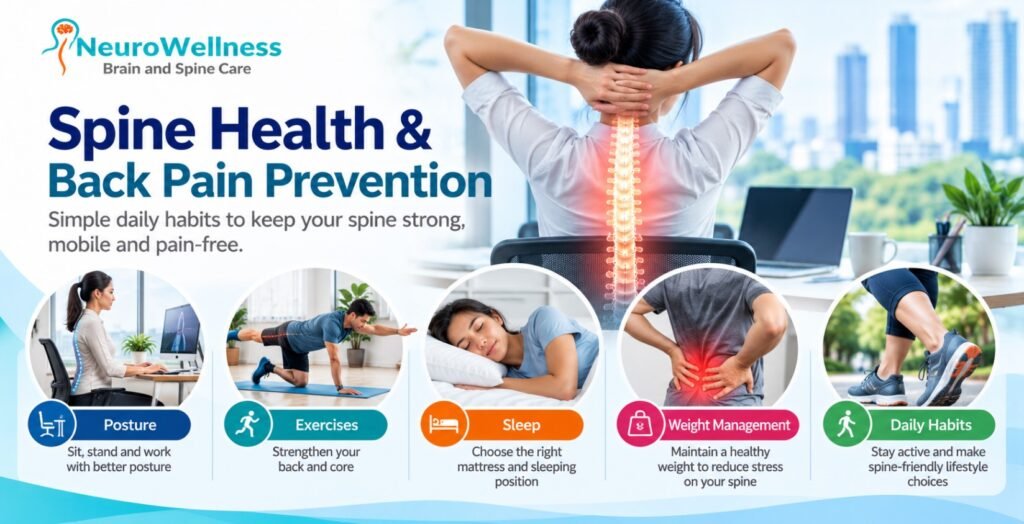
Most back and neck pain is preventable. For Bengaluru’s desk-bound, screen-heavy professionals, small daily habits make a big difference — here’s exactly how to protect your spine, from posture to exercises to sleep.
~70%
Of desk workers report neck or back pain from computer work
30 min
Move at least this often — sitting still is the real problem
Core
A strong core is your spine's best natural support
Preventable
Much everyday back & neck pain can be avoided
Start Here
Can back pain be prevented?
To a large extent, yes. While not every episode can be avoided, most everyday back and neck pain is driven by things you can change posture, prolonged sitting, weak core muscles, extra weight and smoking. Build a few simple habits and you dramatically lower your risk and recover faster if pain does strike.
This guide is built for how Bengaluru actually lives and works long hours at a screen, long commutes, and not enough movement. Here’s what genuinely helps.
🪑 Posture is the biggest lever
Desk setup and screen height matter more than almost anything else.
🏃 Movement beats stillness
Even brief, frequent breaks outperform occasional long workouts.
💪 Core strength protects
A few weekly sessions build your spine's natural support system.
🚗 Commutes count too
Long drives and bike rides need their own posture habits.
Your Workstation
Posture & desk ergonomics
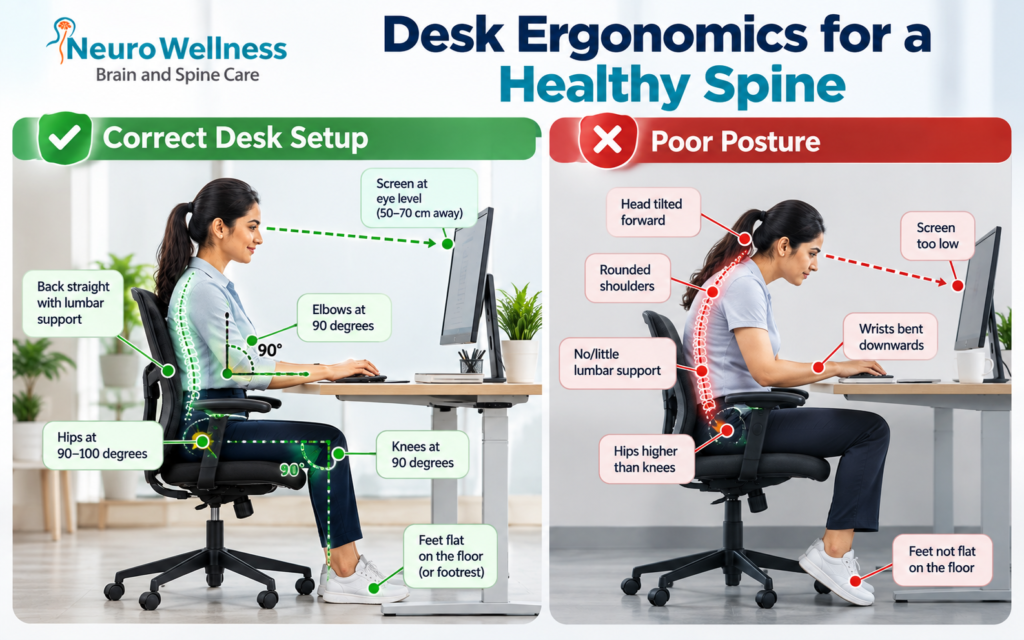
The single biggest lever for most professionals. Set up your workstation so your spine stays neutral — then keep moving.
- Screen at eye level— top third of the screen at your eye line, so you don’t look down.
- Elbows & knees ~90°, feet flat on the floor (or a footrest).
- Lower back supported— hips fully back in the chair, lumbar support or a cushion.
- Shoulders relaxed, ears in line with shoulders, chin gently tucked.
- Keyboard & mouse close, wrists straight — no overreaching.
- Move every 30 minutes— stand, stretch, walk. Consider a sit-stand desk.
The Modern Epidemic
"Tech neck" - and how to undo it
Tech neck is neck and upper-back strain from constantly looking down at phones and laptops — a forward head posture that loads the neck far more than an upright position. It’s increasingly common in people under 40. The fix is simple: bring devices up to eye level, break the habit often, and strengthen the muscles that hold your head back.
📱 Raise your phone
Hold it near eye level instead of dropping your head. Small change, big difference over a day.
⏱️ Break the pattern
Every 20–30 minutes, look up, roll your shoulders, and reset your posture.
💪 Chin tucks
Gently draw your chin back (making a “double chin”), hold 5–10 seconds. Repeat through the day.
Move to Protect
Spine exercises: core, stretch & decompress
A strong, flexible core is your spine’s built-in support. Aim for a few sessions a week, build up gradually, and combine with walking or swimming.
Core strengthening
Plank
Hold a straight line on forearms and toes, brace your core. Start with 15–20 seconds.
Bridge
Lie on your back, knees bent; lift hips until body is straight, squeeze glutes, lower slowly.
Bird-Dog
On hands and knees, extend opposite arm and leg, hold, switch. Keep your back level.
Stretch & decompress
Cat Cow
On hands and knees, gently arch and round your back in a slow, comfortable rhythm.
Knee to Chest
Lie on your back, hug one knee gently toward your chest; hold, switch sides.
Child's Pose / Hanging
Gentle forward fold, or a supported dead-hang, to lightly decompress the spine.
Yoga poses that help
🧘
Cobra
Gentle back extension
🐈
Cat–Cow
Mobilises the spine
🌉
Bridge
Strengthens glutes
🧎
Child’s Pose
Relaxes the back
Built For Bengaluru
Protecting your spine on the daily commute
Long drives, bumpy auto rides, and hours of traffic add up commuting is an underrated cause of everyday back and neck strain in this city.
🚗 Driving & cabs
Sit with hips back in the seat, lumbar support behind your lower back, and the seat close enough that you don’t lean forward. Adjust mirrors to avoid twisting your neck.
🛵 Two-wheelers
Keep your back as upright as possible; avoid overloaded backpacks that pull the shoulders back. Take breaks on long rides to stretch.
🎒 Bags & laptops
Use both straps of a backpack rather than one shoulder bag, and keep the load under about 10% of your body weight where possible.
Sleep Setup
Which mattress & pillow are best for back pain?
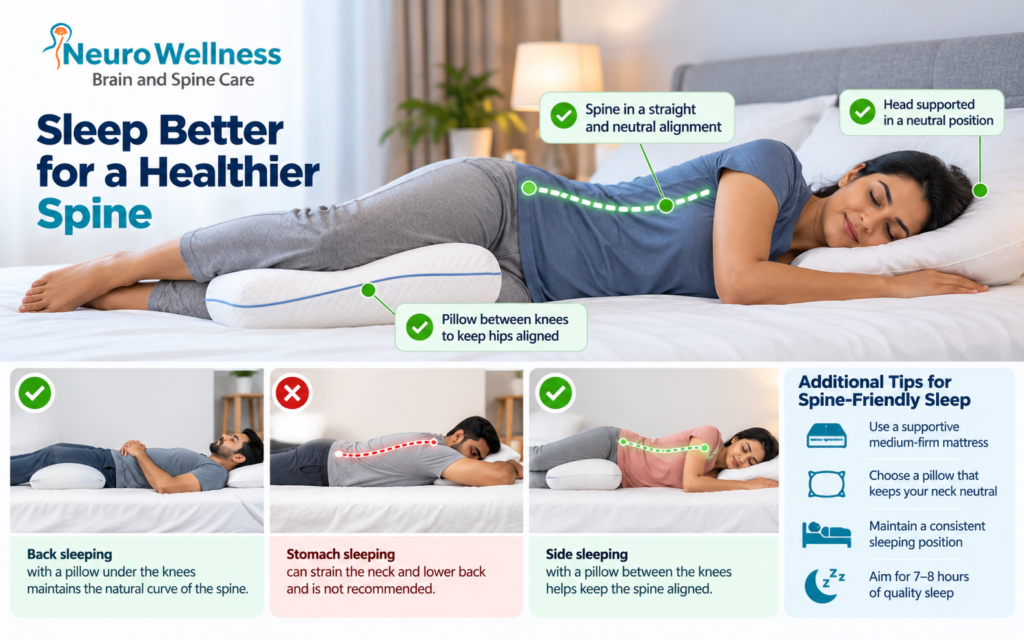
There’s no single “best” brand or type. What matters is even support that keeps your spine neutral. Most people do well on a medium-firm mattress — but firmness is ultimately personal comfort.
✓ Mattress: supportive, medium-firm; replace a sagging one.
✓ Pillow: keeps the neck aligned — not too thick, not too flat.
✓ Side sleepers: a pillow between the knees keeps hips level.
✓ Back sleepers: a small pillow under the knees eases the lower back.
✓ Avoid : sleeping face-down — it strains the neck.
Everyday Habits
Lifestyle factors that protect your spine
Everyday habits – weight, movement, sleep and not smoking – add up to a resilient spine over time
⚖️
Healthy weight
Less mechanical load on the spine
🚭
Don't smoke
Nicotine speeds disc wear
📦
Lift smart
Bend knees & hips, load close, don’t twist
🚶
Stay active
Walking & swimming keep the spine healthy
🦴
Bone health
Calcium, Vitamin D, weight-bearing exercise
👟
Supportive shoes
Good arch support aids alignment
💧
Hydrate
Discs need water to stay healthy
🧘
Manage stress
Tension tightens neck & back muscles
For Bengaluru Companies
Corporate Spine Wellness Programs
Back and neck pain is one of the biggest hidden causes of lost productivity in IT and corporate teams. NeuroWellness offers workplace spine-wellness sessions to help your employees work pain-free — on-site or online.
🎓 Awareness talks
Posture, ergonomics & tech-neck sessions for teams
🪑 Ergonomic assessments
Workstation setup guidance for staff
🩺 Spine health screening
Group screening & Q&A with a specialist
If Pain Persists
When prevention isn't enough
COMMON QUESTIONS
Spine Health & Prevention FAQs
Much of it, yes. While not every episode is avoidable, most everyday back and neck pain can be reduced through good posture, an ergonomic workstation, regular movement, core strengthening, a healthy weight and not smoking. These habits also speed recovery if pain does occur.
Sit with your hips fully back in the chair, lower back supported, shoulders relaxed, and ears in line with your shoulders. Keep your screen at eye level, elbows and knees at about 90 degrees, and feet flat. Most importantly, don’t hold any one position too long — move every 30 minutes.
Tech neck is neck and upper-back strain from looking down at phones and screens (forward head posture). Fix it by raising your phone and screen to eye level, taking frequent breaks, and doing chin-tuck and upper-back strengthening exercises.
There’s no single “best” mattress brand or type. What matters is good, even support that keeps your spine neutral — most people do well on a medium-firm mattress, but firmness is ultimately personal comfort. Pair it with a pillow that keeps your neck aligned.
Core-strengthening exercises (planks, bridges, bird-dog), gentle spine stretches (cat-cow, knee-to-chest), and regular low-impact activity like walking or swimming. Build up gradually and stop any exercise that causes sharp or radiating pain.
Yes. NeuroWellness offers on-site and online spine-wellness sessions for Bengaluru companies — awareness talks, ergonomic guidance and group screening. Enquire for your organisation →
Sit with your hips back and lower back supported, keep the seat close enough that you don’t lean forward, and adjust mirrors to avoid twisting your neck. On two-wheelers, avoid heavy one-shoulder bags and take breaks on long rides to stretch.
Yes. Calcium and Vitamin D support bone density and help prevent osteoporosis-related fractures, an anti-inflammatory diet rich in vegetables, fruit and fish is linked to lower chronic pain, and maintaining a healthy weight reduces mechanical load on the spine. Diet alone won’t fix a structural problem, but it meaningfully supports prevention and recovery.
Protecting your spine - or already in pain?
Prevention is best, but if pain has already started, don’t wait it out. Get an accurate diagnosis and a plan that starts with the least invasive option.
Medically reviewed by Dr. Ganesh Veerabhadraiah, HOD and Senior Consultant Neurosurgeon, NeuroWellness, Bengaluru. Last reviewed: 21-Oct-2026
Disclaimer: This content is for educational purposes only and is not a substitute for professional medical advice, diagnosis or treatment. Please consult a qualified specialist for guidance appropriate to your condition. Do not use this information for self-diagnosis or self-treatment. In a medical emergency, seek immediate care at the nearest hospital. NeuroWellness does not promote, endorse or recommend any particular doctor or procedure.